Why I LOVE The Star Wars Prequels (And I Don’t Care Who Knows It)

©Disney

Yesterday I traveled through time and space.

I visited an alternate reality, one in which I was able to watch Star Wars Episode III: Revenge of the Sith on the big screen.

It was EPIC.

Today, I’m back in my current reality. One where 20 years ago, I was living abroad as a missionary in a foreign country, unable to see any movies on the big screen for a period of 2 years. In an era of Harry Potter and the Goblet of Fire, Pirates of the Caribbean Dead Man’s Chest, Casino Royale, and Batman Begins, I longed for a galaxy far far away where I could escape my busy life on this solitary planet, and witness the monumental conclusion of the Skywalker saga.

While abroad, I caught glimpses of a long-haired Hayden Christensen with a light saber from pirated footage on occasional bus rides or video stores, but in an attempt to not spoil the story line and save myself for a at least a minimized DVD full experience when I returned home, I forced myself to look away. These were not the droids I was looking for.

Alas, once I returned home from my 2-year church mission, I entered the now ancient ruins of a Blockbuster near me and rented this experience alone from an itchy couch, cheap headphones, and crappy laptop. Far from the big screen, but even still, the Force was able to to penetrate through this admittedly Dark Side of a viewing experience and I absolutely LOVED THIS MOVIE.

I have loved it and watched it many many times since. But I always felt cheated in some way that this was the only Star Wars movie (besides the originals) I had never seen in a movie theater.

Until yesterday, when an opportunity in the form of an unexpected 20th Anniversary Celebration re-release presented itself as this movie returned to the big screen. I danced around the house with excitement that I could FINALLY experience this trilogy finale in all it’s immersive, Dolby Atmos, high resolution, popcorn chomping and soda popping glory! Mediocre plans and reasonable bedtimes were put on hold as I hauled my Jedi wife and padawan children to the movie theater, skipping all along the way.

As I watched the film, I reflected in my mind on why I love this and all the prequel movies.

Nostalgia

I will not deny that much of my love for these movies is deeply entrenched in nostalgia. Of COURSE it is. How can you not be romantic about Star Wars? I don’t own shelves of Star Wars memorabilia or anything, I just really enjoy movies with originality and creativity. And for a man like George Lucas to think up this incredible universe of Star Wars and share it with us, well, it really inspires me. I can only dream of creating something so memorable, entertaining, and profound.

In 1995 I was 10 years old and in 4th grade. Back then when it was Halloween, you did a parade around the halls of your elementary school to show off your fun costumes. You know, the good ol’ days. I’ll never forget seeing my friend Jared strolling down the hall wearing a Darth Vadar mask and black cape. He looked so cool! I stood there, wrapped in toilet paper, feeling embarrassed about my feeble attempt at a mummy costume, and decided I needed to know more. I knew OF Star Wars, but had never seen the movies. I knew OF Darth Vadar, but in reality had no idea who he was. All I knew was that he was a bad guy who carried a lightsaber and he was somebody’s father.

Over the next few years, between friends houses and recorded VHS tapes from our TV at home, I watched all the original Star Wars movies and fell in love. Lightsabers, blasters, spaceships, light-speed, super-natural powers, robots, aliens… as a 10-12 year old boy, what’s not to like????

At that age I even picked up on overarching themes of good vs. evil, light vs. dark, romance, friendship, loyalty, hope, honor, betrayal, destiny, redemption… Star Wars had it all.

Then in December 1998, shortly after my 13th birthday, I’m sitting in the movie theater with my family waiting for some movie to start, and I see a trailer for Star Wars Episode I: The Phantom Menace.

WHAT

I was stunned. I had no idea there would be more Star Wars movies. I did not fully understand that the Star Wars movies I had previously seen were part of a larger untold story. We were going to go back in time to learn how Darth Vadar became Darth Vadar???? ARE YOU KIDDING ME????

My 13 year old brain exploded. I was so excited. I was EXACTLY the target audience for this film. The following year when Phantom Menace came out, I went and saw it in theaters and loved every second of it. Zero complaints. Not even about Jar Jar Binks; he made me laugh. The pod racing scene was JAW DROPPING, I had never seen anything like it. My parents later got me the Pod racing computer game and I played it constantly. To this day it’s one of my favorite racing games I’ve ever played and I currently own the Nintendo Switch version of the game and play it occasionally with my young sons. I loved all of the new characters and couldn’t get enough.

Three years later in 2002 at age 16 I went and saw Star Wars Episode II: Attack of the Clones with my family. Then again with my friends. I remember discussing at length with my best friend Seth how much we loved the movie and all of our favorite parts, especially Anakin’s speeder chase scene on Coruscant, Obi-wan’s fight scene with Jango Fett, and of course the final battle arena scene on Geonosis. Oh and storm troopers are clones? And they used to be good guys? Yoda kicking ass with a lightsaber? HELL YES.

I was primed and pumped for the next and final installment of this trilogy. The nostalgia was real, and it continues to this day.

Narrative

It wasn’t until several months after seeing Attack of the Clones that I started to hear negative talk of the prequel movies. Keep in mind, I was in high school at the time and I lived a cell phone free and social media free life. The internet was a place I barely visited on our home computer except to do school assignments, download music on Napster, chat on msn messenger, and look up Homestarrunner videos. Other than that, I was basically unaware of what the outside world thought of the Star Wars prequel movies.

Over the next year or so, more and more people I knew hopped on the Star Wars prequel hate bandwagon. Hayden Christensen’s bad acting, overreliance on CGI, Jar Jar, cheesy dialogue, lack of emotional depth, and so on… I could see what people were saying, but I honestly just didn’t care. I did not want to hop on this hate bandwagon, but I was also a teenager desiring to fit in with my peers, so much like my love of N’SYNC music, I had to keep my love of the the Star Wars prequels to myself and my pleasure slowly transformed to the guilty variety.

I remained a closeted prequel fan for the next decade or so, only revealing to trusted family and friends just how much I love these movies. Some time around 2011 I finally bought episodes 1-6 on blu-ray and have watched them several times a year since.

Over the past decade, and especially over the last five years, I’ve noticed something happening. People are hopping off the prequels hate bandwagon. The narrative has changed. Audiences are tired of the corporate sludge movies and are desperate for creative original stories. They are more willing to overlook some movie making flaws and cling to the actual story being told.

For Star Wars, I believe this is mostly sparked by the critical response to the sequel movies, episodes 7-9. Now don’t get me wrong, I enjoy those movies as well! But there is one very clear difference that I think people are starting to realize, and it revolves around THE ultimate Star Wars hero-turned-villain-turned-hero again.

Yes, I’m talking about George Lucas.

Storytelling

Say what you will about George Lucas, but he made the movies he wanted to make, he told the story he wanted to tell, and nobody told him what to do. And for that, I give the man the highest creative praise. He was honored as a legend of creative story telling and movie making with the original trilogy, only to then be torn down and Death Star hate-blasted into oblivion after the prequel trilogy. He has probably endured more undeserved backlash than any creative writer and filmmaker out there. All for what? Telling the story he wanted to tell. Some people think that because George Lucas shared his story of Star Wars with the world, somehow this story belongs to everyone. I could not disagree more. Here’s why:

Take out George Lucas from Star Wars and what do you get? Star Wars episodes 7-9. Great movies, sure, but rather than a story being told by one man with a plan and a vision, it’s a story being told by a corporation. And I think that consumers of entertainment have realized that a concise and well told story with some bad acting and mediocre CGI, is preferable to sloppy money grabbing corporate machine-fed story, with great acting and amazing CGI.

George Lucas had a vision. He gave us an amazing hero’s journey with Luke Skywalker. We were all along for the ride. But he understood one of the most important aspects of any story:

Every story is only as good as the villain.

Imagine a world where 1977 Star Wars was the only Star Wars movie ever made. EPIC movie, obviously. But what do we really know about Darth Vader from this movie? Almost nothing. Cool villain, amazing name, master of evil, killed Luke’s father supposedly, and… that’s pretty much it. Good vs. evil. Good wins. Darth Vader defeated. Death Star blows up. The end.

George Lucas understood what a lot of story-tellers today still don’t understand about villains: They need to be relatable in some way. We need to understand what motivates them and maybe even care about them.

Every story is only as good as the villain.

So in 1980 when Empire Strikes Back came out, people were likely confused. Episode V? How can this be the 5th installment of a movie franchise that doesn’t exist? George Lucas took a huge risk in 1980 by letting the world know that he had a plan. He would finish his hero’s journey with Luke, but then there was a much larger plan that didn’t revolve around Luke Skywalker. And that story is much MUCH more interesting. In Empire Strikes Back we’re teased with possibly the greatest reveal of all time, Darth Vader IS Luke’s father. Ugh how I wish I could go back in time and experience THAT for the first time in a movie theater. It’s at that moment that George Lucas hooked us. He opened our minds. Made us ask questions. Questions the world wouldn’t get answers to for another 25 years.

Finally with the prequels, he took his time and he told that story.

I actually remember this moment, when I was walking into the movie theater to see Attack of the Clones for the first time, I walked by the door of a theater just finishing up the movie and I could hear John Williams amazing score of “The Imperial March” playing through the door. I thought to myself Oh my gosh, Darth Vader’s going to be in this movie! That’s his song! This is it! But that’s not what happened. Yes, the theme song played at the end of Attack of the Clones, but Anakin Skywalkers transformation had not fully taken place yet. George Lucas took his time, he knew exactly what he was doing. He had a plan.

He gave us innocence in a young child Anakin Skywalker, a slave with the gift of piloting a pod racer. He turned that innocence into a young adult Anakin: a talented jedi, arrogant, impulsive, tortured and afraid. He gave us Jedi heroes to admire, mainly a young and familiar Obi-wan Kenobi (Ewan McGregor truly is one of the BEST characters in the prequels). He created depth in a familiar villain, Palpatine, who tortured us as we, the audience, knew he was playing both sides, but the characters in the story did not. We got to see how that villain was able to manipulate Anakin all along the way, using his romantic relationship with Padme to get Anakin to complete his journey to the Dark Side.

IT’S A GREAT STORY. It’s RELATABLE. Cheesy line delivery and mediocre acting be damned, we CARE about Anakin. After seeing this on the big screen last night, I don’t care what anyone says: Revenge of the Sith has great emotional depth. What wouldn’t we do to save the ones we love? I really FEEL for Anakin as in a moment of desperation, he turns to a man he doesn’t realize is manipulating him, and pledges his allegiance to the Dark Side. Who hasn’t felt that feeling of Well, I’ve gone this far already, it’s too late to turn back, I might as well lean in. I know I have. We then witness Anakin become the “the very thing he swore to protect” and it truly is sad. We watch hate quickly consume Anakin and next thing we know, he is truly lost.

For me, the emotional peak moment of the Revenge of the Sith is when Obi-wan Kenobi, our constant beacon of light in this increasingly dark consuming world, after having defeated Anakin and left on the ground him limbless and dying, turns back to him and says:

“You were my brother Anakin, I loved you!”

It gets me every time.

The Best Part

I think good, authentic, original story-telling is making a comeback.

There will always be the corporate sludge; entertainment executives who have money to spend and no risk if it doesn’t work out. Just throw it all against the wall and see what sticks, as long as money keeps coming in and they check some political and cultural boxes, they’re happy to keep the machine running. In all sincerity, I don’t blame them. In fact, I think they are necessary. They are the counter-balance to true creativity. They help us see the creative stories more clearly. There is value in learning what not to do, as Anakin Skywalker’s prequel journey illustrates.

The best part is it’s not the end of the journey. Sure the Galactic Empire might rule and oppress the universe of creative stories for a while, but eventually a new creative hero comes along, reveals the Dark Side for what they are, defeats them, and reminds us all of a better way.

The icing on the cake is the story of redemption. Yes even those prequel movie critics, those bandwagon haters who unleashed upon George Lucas, Jake Lloyd, Hayden Christensen, and even Jar Jar Binx, might come around one day and speak the same words Anakin did to Luke at the end of his journey:

“You were right… you were right.”
LOST: The Best TV Show Ever

“While I enjoy being entertained as much as the next person, I would much rather be challenged. Yes, show me something I’ve never seen before, but also cause me to think about something I’ve never thought of before.”

Lost is hands down the best TV show to ever air on television.

When Season 1 of Lost aired on ABC in 2004, I was unaware of its existence. In fact, I was not aware of this show until 2007, well into Season 3. Now I have somewhat of an excuse. From 2005–2007 I was out of the country and otherwise preoccupied. I didn’t have a phone. Streaming wasn’t a thing. There was just no way for me to know that the best show ever made was being broadcast to 17–19 million viewers on American television every week.

Now to be fair, up until 2007, I barely watched any TV shows at all. TV shows to me were shows like Full House, Family Matters, Fresh Prince, Friends, and Seinfeld. Those last 2 I never really even watched, I was just aware of their existence due to their popularity. I was a teenager in those days and our family just didn’t watch a lot of TV shows.

However, once I was in college in 2007, I began to explore to the world of television as I’d never known it before. Now back in those days, you either bought the DVD’s (which I didn’t have the money to do) or figured out a way to watch it for free online. Hulu was barely a thing, along with a few other random websites, but mostly I watched TV shows on my laptop by going to the networks webpage and figuring out where to download the latest episode. If I was lucky, I would find someone who had actual cable TV somehow, and my friends and I would go watch it live as it aired. But that wasn’t the norm in a college town where most people could barely afford life, let alone TV.

I became invested in Lost because (and this is important) people were talking about it. It was the kind of show my friends constantly talked about. Watching the show was great, but talking about the show added another layer of excitement and intrigue. After hearing my friends talk about Lost and not understanding what they were talking about, I finally borrowed the DVD’s of seasons 1 and 2 from a friend and binged.

I was hooked.

Here are some things that make Lost the best TV show ever:

Large Cast

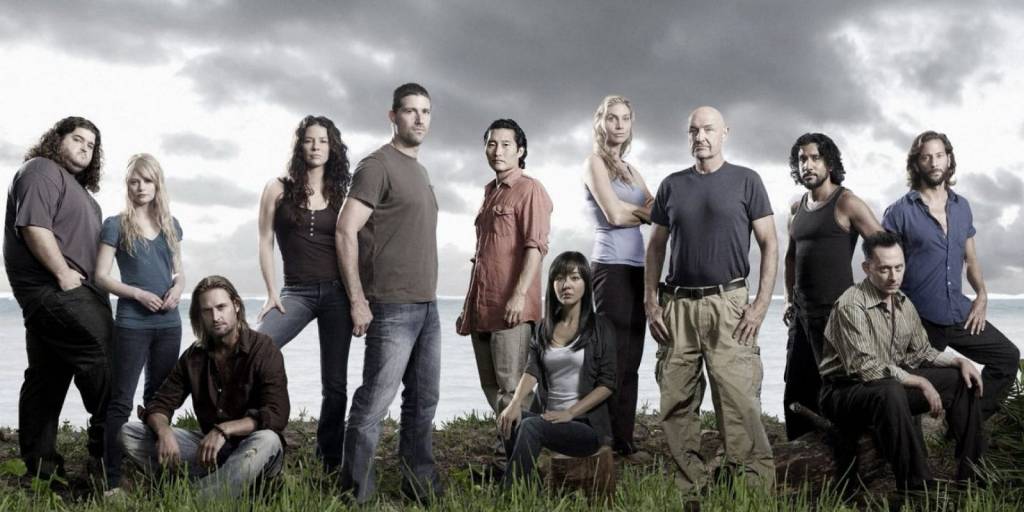
Lost has the biggest cast I’ve ever seen for a TV show. It’s an enormous undertaking. There just isn’t anything else out there like it. Having a large cast like this is a challenge because the question is, how do you give all these amazing actors enough screen time to showcase their character and venture through their character arc? 

Characters like:

Jack- A troubled but duty-bound tattooed doctor and reluctant leader with major daddy issues.

Kate- An escaped convict on the run, constantly torn in a love triangle between the hot doc and the sexy conman. Also some major step-daddy issues.

John Locke- A lowly manager at a box company with untapped potential as a knife weilding natural born leader, destined for life on the island. Oh yeah and, you got it, some major daddy issues.

Sawyer- Criminal that became an expert conman. Wishes he had a daddy.

Sayid- A soldier from Iraq, tortured by his torturing past of torturing people, including his late tortured wife, whom he also tortured.

Sun- Rich Korean woman in a strained and basically abusive marriage relationship. She may or may not secretly speak english. Mild daddy issues.

Jin- Lowly Korean fisherman causing the strain and abuse in his marriage relationship, due to his overbearing father-in-law who disapproved of the marriage to his daughter, until he realized Jin doesn’t mind beating people up for him.

Charlie- Merry from Lord of the Rings, but on drugs and in a rock band.

Claire- Expectant mother with a hot Australian accent. Falls in love with druggie rock band guy.

Hurley- Comic relief and everyone’s favorite character. Also uber rich cuz he won the lottery. Oh yeah and he’s crazy.

Desmond- Scottish crazy guy who lives in a hatch and presses a button to save the world.

Ben- Mr. Manipulative and winner of the yearly creepy stare contest.

Ok, some of those descriptions might not be helpful, and I could list about 20 more characters that are essential to the story, but you get the idea. It’s a lot of people!

How do you write for each character and involve them in the story in a way that’s interesting, engaging, and furthers the plot? Not that I have a lot of experience doing this myself, but the few small scripts that I have written involving a lot of characters becomes a tedious task of balance and boredom. Lost handles the large cast using a formula that not only executes this balance perfectly, but also keeps the audience engaged and caring about each of these characters. And this brings me to…

Flashbacks

While much of the story of Lost occurs while these characters are stranded on an island, nearly half of every episode is dedicated to a specific character and dives deep into their background through the use of flashbacks. The way Lost uses these flashbacks is very engaging.

They tell a deeper story of who this stranded island stranger is and why they are the way they are. It gives some much needed context into choices they make while on this mysterious island. But most importantly, it allows us, the audience, to fall in love with every character. We get to spend a significant amount of time with them. We get to understand them. Often times we’re surprised or even horrified at their mistakes of the past, and we admire the changes in their stressful and dire present situation. 

It was always exciting to see into which featured character we would dive that week. What questions would they answer? What would be revealed from their past? 

I’ll give an example: Hugo Reyes, AKA Hurley. He’s a happy go-lucky heavy set character that we immediately fall in love with. He is hilarious, good natured, and kind as he tries to be helpful with everyone. But he carries a deep secret. We find out through the use of flashbacks that he not only spent time in a mental institution, having regular hallucinations of people that weren’t there, but he also actually won the lottery a few years before boarding Flight 815, using mysterious numbers he overheard on the radio while institutionalized. From that time until the plane crashed on the island, he felt that the money he won was cursed. Everything started to go wrong for him, to the point that he didn’t want the cursed lottery money anymore. He also felt that because he was “cursed” that he was somehow responsible for the plane crashing on the island. He kept this information to himself for the most part, took everything in stride, and sought a new life on this island away from his cursed money. This added a lot of depth to his character.

Another example is the character of John Locke. His survival instincts and hunting abilities, along with his many knives, contribute extensively to the survivors on the island as he helps forage for food and fight off unknown island predators. However, we discover (spoiler alert!) through the use of flashbacks that up until flight 815 crashed, John Locke was paralyzed and in a wheelchair. 

I could go on and on about each individual character, but suffice it to say that if it weren’t f0r flashbacks for each of its many main characters, Lost would be a completely different show. Also a terrible one.

Mystery and Theories

Lost is full of mystery. Every episode seems to incite more questions than answers. You’re constantly wondering what in the world is going on. But not to the level of frustration or hopelessness that might cause you to be overwhelmed loose interest. It’s a great balance. It answers just enough questions to keep us engaged and guessing.

Here is where a show like Lost starts to shine. Like I said above, I first heard about lost not because I was in a room where somebody was watching it, but because my friends would constantly talk about it. Everyone would come up with their own theories about what they thought was going on. Then we would share these theories with each other and discuss. Lost gave a lot of wiggle room for questions and refused to answer many of them. Questions like:

What are the numbers?

Who are the Others?

What is the monster?

What’s wrong with Walt?

What’s the voice on the radio?

Who is Jacob?

And those are mostly just a few of the questions from season 1. And some of those answers don’t come until later seasons. That’s a lot of time to theorize and discuss. 

As the show was airing, I often heard people complain about the amount of mystery or questions that weren’t being answered. I would read blog posts about people getting tired of all the craziness going on on this island and how it was becoming too much. 

Not for me. I don’t need all my questions answered. I like a little bit of ambiguity. I like things being left open to interpretation. I think the writers intentionally left some things up to us, the audience, allowing us to become a part of the experience.

The Experience

Lost wasn’t just a show, it was an EXPERIENCE. A PHENOMENON. Shows like this are few and far between.

Every week I was desperate to find out what happened next! I wanted to be the first to watch. I wanted to see if my predictions came through, if my theories were correct, if my questions were answered. Waiting an entire week was too long! I would re-watch episodes to see if I missed any hints or clues to what was coming next. It was intoxicating! 

And what a fantastic premise! Take a bunch of people, strangers, with all sorts of different backgrounds and experiences, put them together on a crazy island in the middle of nowhere, and force them to not only get along and survive, but also deal with intense emotional, natural, and even supernatural events together. Their pasts are eliminated. They get to start over. Friendships form. Relationships even. People fight. People die.

But most importantly, people CHANGE.

Change

Lost takes us through the experience of watching people change. I’ll give the best example of perhaps my favorite character of the show and how he changes. 

James Ford AKA Sawyer. Seasons 1 and 2, I hated him. He’s a bad person. A criminal. Through flashbacks, we find out he went on a quest for revenge for the man who conned his parents out of all their money resulting in the death of his parents as a small boy. This quest turned him into a conman himself, and eventually a killer of an innocent man. Shortly after, he boards flight 815, the plane crashes, and now this grungy, rude, inappropriate and unpleasant conman is forced to survive with this group of strangers. He hates everyone, but he does make up rude (and often hilarious) nicknames for everybody, the only silver lining in the otherwise upsetting character of Sawyer.

However, as seasons 3, 4, and 5 of Lost slowly unravel, we start to notice some change in Sawyer. He starts to make friends. He starts to contribute. He starts to help people. He becomes less selfish. He even builds close personal relationships with several characters, and by the end of season 5, Sawyer is everybody’s favorite character. He’s a completely different person. Sure he has similar mannerisms and hilarious nick-naming habits, and he’s still often quite grumpy, but we love him. He contributes, he helps, he’s kind, he pursues successfully a loving relationship, and he creates a pretty good life for himself.

I could give similar stories for each individual character. They all slowly change. So slightly sometimes we don’t even realize it’s happening until we find ourselves rooting for the guy we once despised. Or hoping for the demise of a person we once admired. And everywhere in between.

The Ending

If you google “Lost ending” you’ll probably find that a lot people did not like how the show ended. And while season 6 (the final season) is not my favorite season (that would be season 5!), I think the show ended beautifully. 

I think the writers of Lost understood something that most TV shows don’t understand:

You don’t have to answer all of the questions.

One of the main reasons that people were upset with the ending of Lost was all of the unanswered questions. Or questions that seemed to be halfway answered, like the writers ran out of ideas. But I don’t think this is what happened.

I think we live in this entertainment world where we want something new and different, we expect to be entertained completely, and demand that it all end in a mind-blowing utterly satisfying way. Anything less than that deserves to be criticized. To me, this thought process is a little narrow-minded and disingenuous.

While I enjoy being entertained as much as the next person, I would much rather be challenged. Yes, show me something I’ve never seen before, but also cause me to think about something I’ve never thought of before. Trust me, your audience. Invite me into your world, explain how your world works, and let me be a part of the experience, not just be entertained by it. Let me escape into the creative recesses of your story and (much like real life) DON’T give me all the answers. Let me come to my own conclusions and allow room for my own interpretations. Who cares if I’m right or wrong, it’s just a story. Let that story enlighten our minds beyond the ever diluted dopamine craved shallow forefront of our creative consciousness. Let the message penetrate deeper so that we feel moved, encouraged, and maybe even inspired, to not only explore these ideas on our own and in our own way, but also to expand on them and share them with the world, whether it’s a song, a movie, or a lowly blog post on the internet about a TV show from 20 years ago.

The large cast. The flashbacks. The mystery. The theories. The experience. The change. All managed with care, passion, and intrigue. I wouldn’t go as far to say it’s a perfect show (that declaration belongs to “Breaking Bad”) but something doesn’t need to be perfect to be the best. Everything needs a little imperfection.

Needless to say, in my opinion, Lost is the best TV show ever. There are many shows that come close, and many more I have yet to see for myself, but so far nobody has quite surpassed what Lost was able to accomplish.

If you missed the hype when it came out, and never gave Lost a chance, trust me, it’s worth it. If you’re too young or have no idea what show I’m talking about, go look it up and give it a try. It’s better than most shows streaming today anyways. 

Or if you’re like me, and you’ve already seen the entire series several times but it’s been a little while, consider watching it again.

Go back to the island.

Namaste.

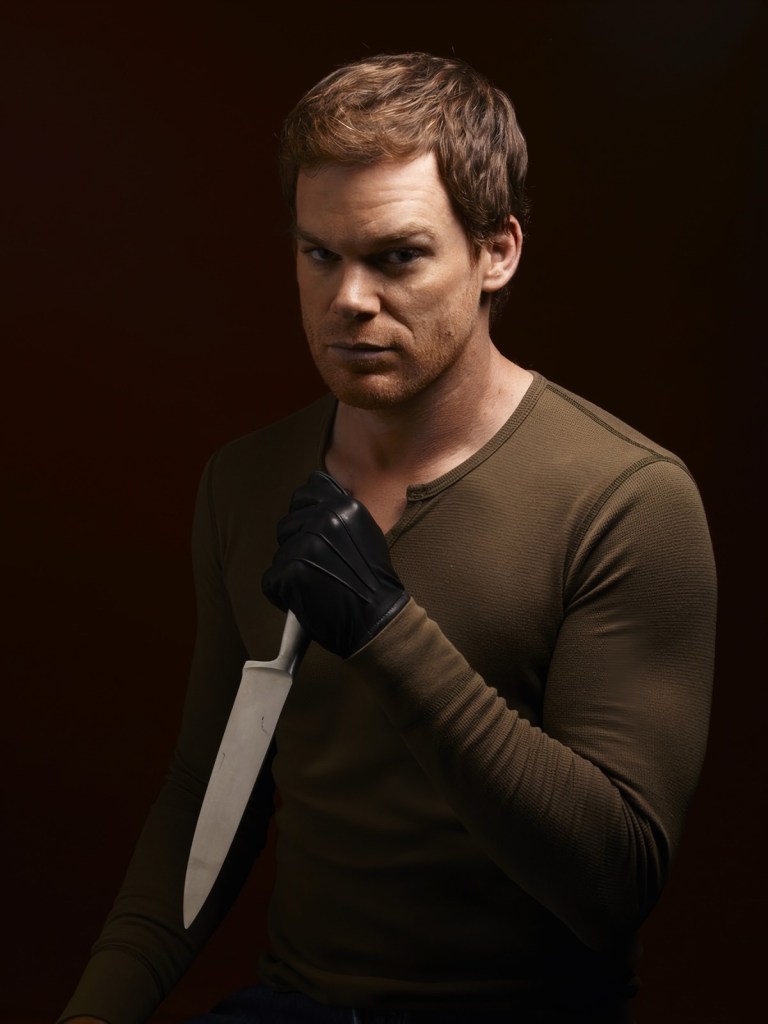
Dexter- Five Reasons Why I Love TV’s Greatest Dark Comedy

About 15 years ago I was introduced to a show called Dexter by a cousin of mine. You know how sometimes you tell someone else the premise of a show or a movie, and you realize while you’re explaining it that you just aren’t doing it justice by your explanation?

That’s how it was for me when my cousin gave me a brief overview of the show. Her restrained excited tone did not match the show’s seemingly odd and somewhat morbid description. At this point in my life, I had never seen a show like Dexter, so I’ll admit the initial idea of this type of show was a new idea for me and something I perhaps didn’t quite grasp.

After all, Dexter is a serial killer. He murders people. Lots of people. And he is the main character of the show.

I don’t understand the science behind YouTube and how they recommend videos to watch, but for whatever reason, as I was scrolling through YouTube today, some Dexter shorts started popping up. Of course since now I’ve seen the entire series (several times) and absolutely love this show, I clicked on the shorts and watched a few. Just these little 20–30 second long shorts got me so excited, and reminded me that there is a new prequel show coming out next month called “Dexter: Original Sin.”

The original Dexter actor, Michael C. Hall, who I think is absolutely brilliant in this role, is now too old to be playing a younger version of Dexter (although it looks like he will be providing the narration, which is very exciting and something I’ll talk more about in a few minutes). Instead, the younger version of Dexter will be played by Patrick Gibson, an actor who is still new to me and I only know from his appearance as Steve Winchell in the incredible series “The OA” (another amazing show I’ll have to discuss another time).

Anyways, back to Dexter. As I watched these YouTube shorts of Dexter today, I found some time later tonight to satisfy the urge to re-watch the first episode of the first season of Dexter.

I absolutely LOVE this show. And I just had to hop on and write down a few reasons why. FIVE reasons, to be exact. But first I’ll give my brief rundown of what the show is about.

Yes indeed, Dexter is a serial killer. But not only that, he is a serial killer that works in forensics for the Miami Police Department and he is an expert blood spatter analyst. So boy oh boy does he know how to clean up his own crime scenes. However, Dexter isn’t just any serial killer. He’s a serial killer that lives by a certain code…

Ok, now my reasons for why I love this show:

1. Michael C. Hall. He IS Dexter. Some people just embody characters so well and understand them so completely that they not only bring that character to life, but also look like they are having so much fun doing it. I don’t have to watch interviews of Michael C. Hall talking about how much he loves this role, I can just see it in his face on screen. What an incredibly fun character to play.

Now I’m no movie or TV star, but years ago, I had an opportunity to play a villain in a play (Mordred from “Camelot”). It’s my only experience playing a villainous character in my short lived high school acting career, but I will never forget it. I was new to acting at the time and especially being able to play a character who is nothing like me was a new experience. But the more I dove into a character who behaved, spoke, laughed, and even sang so differently than me and my own mellow personality, the more I realized that being a villain is much more fun than being a hero.

As a general rule, a movie, show or play is only as good as its villain. Which brings me to my next reason (and also reason #5)

2. Dexter is an interesting and exciting character. We all know murder is wrong. That simple morally sound idea means that everything Dexter does, no matter how he justifies it, is wrong. He’s a murderer. He’s a liar. He’s a bad person. Well, if so then why do we, the audience, continue to cheer Dexter on? We root for him. We are impressed by how smart he is. How resourceful he has to be. We WANT him to get away with it. We’re grateful when he finally gets rid of the scumbags who got away with whatever atrocity was committed. We feel a sense of satisfaction that against all odds and at tremendous personal risk, Dexter delivers much needed justice. It’s dark and terrible, but we can’t wait to watch Dexter figure it out, deceive the good guys, and stop the bad guys.

3. The entire show is not only delivered from Dexter’s perspective, but it’s also narrated by Dexter. We hear his thoughts, live, as the episodes play out. Things he wants to say in the moment, but can’t. So he invites us, the audience, into his mind to get his real reactions and thoughts, and then we watch how he navigates the lie that is his life. Having this kind of exposure to the mind of Dexter naturally means that we are with him along for the ride, and we start to understand his perspective.

We also start to see the flaws in his thinking. Where he might justify his actions, or tell himself he is in control, we can see the cracks in Dexter’s armor start to form. He might not actually be in control. He might be lying to himself. He’s not as careful as he thinks he is. He may not actually be justified in what he’s doing. We start to question our misguided faith in a severely morally flawed human being, and this in turn makes us question ourselves. How did we get lured in? How did we ever think Dexter was justified in his actions? Why do we keep wanting him to get away with it? Why are we feeling satisfied after he himself commits a horrible act in return?

These kinds of inner turmoil questions we start to ask ourselves, wavering back and forth through this hypothetical grey area of justification and morality, is what really makes the show interesting for me.

Any movie or television show that can get you to root for the bad guy is a pretty good sign that it’s worth watching.

Dexter takes all that and then goes one step further…

4. Dexter is a comedy. A Dark Comedy. The theme is heavy. You can feel the weight of everything going on. It’s intense and puts you on the edge of your seat. However, mostly through narration from Dexter, I find myself laughing out loud at some point during every episode. Dexter is awkward. He’s kind of a nerd. He lives in his own world and it makes it hard for him to interact naturally with everyone around him. Therefore his attempts to imitate what he believes is “normal” personality and conversation, are often laughable. And because he has some kind of understanding of who he is and why he is the way he is, flawed though that understanding may be, he’s also somewhat charming. And it’s genuinely enjoyable to watch.

5. The final reason why I enjoy Dexter is because it’s extremely well written. Seasons 1–4 are significantly better than seasons 5–8 (as well as Dexter: New Blood, the sequel season that aired several years later). While Dexter is what we might call an “Anti-hero”, rather than the villain, the actual villains in each season are very intriguing. We get to know them, we get to see Dexter interact with them. We get to see the “real” Dexter have “real” connections with these villains as they play cat and mouse with each other, or become friends, and start to trust each other. Our misguided sympathetic feelings we have for Dexter are slightly relieved when we start to get glimpses that maybe Dexter can get some help, change, and become a better person. After all, watching how characters change is another sign of a great movie or show. But could someone so far gone like Dexter actually change for the better?

As the series progresses, the overall looming question is:

“How will this all end?”

Dexter has to get caught, right? He can’t just keep doing this. He belongs in jail, or a mental hospital, or the electric chair.

Maybe, like “Catch Me If You Can,” he has so much insight as a criminal that he can still serve some value to the Miami Police Department from within a padded cell?

Or maybe he gets in over his head and has to skip down and continue to satisfy his dark urges elsewhere?

Or maybe he dies and never has to truly face the consequences of his actions?

I won’t say how the show actually ends, obviously, because it’s that looming question that keeps you watching. Keeps you coming back to see what he’s going to do next.

Yes, I believe Dexter is TV’s Greatest Dark Comedy. There just isn’t another show like it.

Some people are skeptical of the prequel series “Dexter: Original Sin” that comes out next month. Many people weren’t thrilled with the last few seasons of Dexter, or the sequel series “Dexter: New Blood.” In fact many people are straight up angry at how the story ended.

I’m not angry. If you’re looking for outrage at how Dexter ended, you won’t find it here. My love for this show and this character vastly outweighs any negative feelings I may have.

I’m just excited to dive deeper into the world of how it all started.

But I mostly hope we get to see more of Dexter’s morning routine.