
Asking Questions: How To Level Up In Life

Photo by Adi Goldstein on Unsplash

“Can I ask you a question?” -Taylor Swift

Occasionally as a family, we get together in a “quiet” (just go with it for a second) setting like our living room, and attempt to sit calmly (haha) on the couch to have a little family pow wow. Sometimes we’ll watch a quick spiritual video of some kind, or we’ll read scriptures, or sometimes just discuss what’s going on with everybody that week.

When I say a few minutes, it really is a few minutes before the kids start throwing couch pillows, sitting on each others faces, or laughing uncontrollably at something someone said which all turns into wrestling on the floor.

Sounds crazy, I know… 🙂

Every now and then, unprovoked by my wife and I, we’ll get some genuine comments and questions from the kids. I love it when it happens because it means that our home has become, at least in that tiny moment, a place where our child can feel comfortable speaking his mind and being vulnerable enough to ask sincere questions from his heart.

Our son Jett, who just happens to be turning 11 this week, is an amazing boy. He doesn’t often speak his mind or show sincere emotion, but when he does, you know it’s real.

I’ll give a quick example. At the beginning of this last school year, Jett and his fellow 5th graders were getting ready to go to 5th grade camp. They would be gone for several days, camping in cabins with their classmates and school teachers. Jett was excited to go, and didn’t show any hesitation at all. We got everything packed up, and the morning of the first day, as we were about to head out the door to drop him off at the school with all of his camping gear, something inside him unleashed. Something he hadn’t even hinted towards, and my wife and I were somewhat surprised at what was going on. He was in tears as he told us over and over that he didn’t want to go. That he was scared. That he didn’t want to be away from home without us. That home was where he felt safe, and he didn’t want to leave that. We had no idea he was feeling this way. And it was true, as a 10 year old boy, he had never spent the night anywhere else without us, or some immediate family member that he knew and trusted. This would be the first time he would be “on his own” for several nights in a row in a strange new place.

Long story short, after some emotional and difficult conversations, while sitting on the curb outside the school with all of the other kids on the buses ready to go, and with some strong encouragement to him on my part, he ended up going. Of course, he had a blast and was glad he went, as were we.

The reason I share that quick story is to speak to Jett’s tender heart. While he keeps getting older and is becoming more and more guarded against his parents, and less willing to share his true feelings with us, he’s still got a soft spot for his safe place he calls home.

Ok, back to our family pow wow. I can’t even remember exactly what we were discussing at the time, but whatever it was, Jett decided to ask: “How do I even know that what you’re saying is true? What if you’re just making it up? How do we know what anybody says about anything is true? Any story that anyone tells about something else, or somebody else who isn’t alive anymore, or that happened a long time ago, how can we actually know if it happened or not? People could just be making things up.”

I had to take a minute as I realized my son was not just making jokes and being silly, he was sincere. He was speaking about real concerns from his heart. I don’t know that I gave him a very good answer in the moment, I probably said something about how the Gift of the Holy Ghost helps us know the truth of all things, and the only way we can know truth is by learning, studying, and prayer. At least that’s been my experience.

But more than my answers, I was fascinated and pleased at the wonderful questions my son was asking. I have no idea what prompted them, but in that moment I was proud that he felt the need to ask, that he felt home was a safe space in that moment to open up.

This prompted me to think about the importance of asking questions.

Video Games

Have you ever played a role player game? My son Jett loves this game called The Legend of Zelda. I’ve watched him play, and it’s really quite fun. It’s essentially a story that you get to play out. There are missions to accomplish, items you need to collect, and enemies you need to thwart. It’s an open world game where you can pretty much go anywhere you want. If you really wanted, you could wander around aimlessly for hours.

However, if you’d like to actually progress through the story of the game, you need to interact with the NPC’s, the Non-Player Characters. These characters can be quest-givers, vendors, companions, or even enemies. These interactions contain a lot of questions. Questions posed by the NPC, or by your character, something to help guide you on your way and dropping little hints for whatever you need to do next. By interacting with these NPC’s, you then discover clues about what you need to do next and where you need to go.

Simply said, asking questions is how you level up. It’s how you learn. It’s how you discover things you otherwise might not have noticed or thought about. And the more questions you have, the better you can progress. Until eventually, you beat the game.

I’ll be honest, I don’t have a lot of patience with these kinds of video games. I find myself too often wandering aimlessly trying to figure things out myself before I end up getting stuck, frustrated, and just quit.

Yikes am I relating video games to life? I guess video games can actually be helpful. I can see my wife rolling her eyes at the notion… (by the way, the only reason I know anything about the rules of football is because of Madden ‘94 on the Super Nintendo)

Ask Questions

I’m sure we’ve all been in this scenario, I know I have a hundred times: Usually a school or a work setting. Somebody opens up an opportunity to ask questions about a topic. In my brain, tons of questions are firing off, whether from a lack of understanding or paying attention or a desire to discuss more, I have questions… but I say nothing. I hold my tongue. I wait to see if maybe somebody else in the room will ask the question I have. I’m embarrassed to ask the question. Although I look around the room, and I get the sense that other people have the same concern or question, I still don’t want to put myself out there. I’d rather stay silent than give myself an opportunity to learn. Finally, some brave soul does decide to ask the question and I’m glad that I didn’t have to put myself out there. I sure would have felt stupid asking that question, and now I could pretend like everyone else that I knew the answer the whole time.

Yet there is something admirable in that person who asked the question. They understood how to level up and just needed to ask.

What’s the best way to behave on a first date?

Ask questions.

What’s the best way to sell a product or service?

Ask questions.

What’s the best way to understand and connect with your spouse?

Ask questions.

What’s the best way to understand anything you don’t understand?

Duh, ask questions. (Side note: Those last 2 questions are in no way connected…)

I don’t know why we are so afraid to ask questions sometimes. To put ourselves out there and be vulnerable just for a minute. To not care how people might judge us because there’s something we don’t understand.

Questions are like a secret super power to getting through life. A hidden key to unlock an unseen door. A tool that if used correctly and sincerely, can chisel and shape you and the people you talk to into stronger, more capable and connected versions of yourselves. You might even reveal truths and life experiences that were before hidden in plain sight. And you might empower someone within ear shot who maybe isn’t quite ready to ask questions, or be vulnerable, but is now one step closer to leveling themselves up.

Don’t you love it when somebody asks you questions? When somebody wants to know how you’re doing, and engages with you in conversation about your life? It feels good. It’s fulfilling. And when you also respond with questions, and allow others to open up, it creates this open environment where people can build a connection.

As the great philosopher of our time, Taylor Swift, has said (or rather, sang- from her Midnights album): “…it’s just a question.”

It’s all easier said than done. Myself included.

And once again, I’m glad I have my children in my life to remind me of the simple importance of just asking questions.

🎵 Ba da da da da da daaaaa da da da daaaaaaa 🎵 (to the tune of Super Mario finishing a level)

The Most Important Step A Man Can Take

“I have found, through painful experience, that the most important step a person can take is always the next one.” -Dalinar Kholin, Oathbringer

If you’ve read Brandon Sanderson’s third installment of “The Stormlight Archives,” those words are not only familiar, but memorable. Impactful. Inspiring.

Especially for me.

Oathbringer

In 2024, I ventured for the first time into the Cosmere- the high fantasy universe of Brandon Sanderson. I started with the “Mistborn” trilogy and now I’m halfway through the five-book series of “The Stormlight Archives.”

It’s possible I’m a little late to the party, but I have never read anything like it. The world building is intense and incomparable. The magic systems are fascinating and original. But most of all, the characters and their journeys are powerful and relatable. Brandon Sanderson knows how to tell a hell of a story.

I’ll admit I was hesitant to rove into these books initially because I had been warned of their intensity and vastness. But I’m a reader, I enjoy a good story, and I was sure I could handle it. Or so I said to myself. And more than anything I trusted my Sanderson advisor and navigator and took her at her word that the experience, the commitment, and the journey would be worth it.

After all, journey before destination, right?

Without spoiling any plot points, I’ll simply state that one of the titular characters of “Oathbringer,” Dalinar Kholin, is struggling with a lot of pain from his past. Pain that he caused from difficult choices he made and has been tormented with for years. This pain seems to be more than he can bear, and he is not sure he can live with it. To dull the pain, he looses himself in the thrill of war and the drink.

He’s a soldier, a warrior, a leader. He’s a friend, a husband, a father. He bears an enormous responsibility for uniting the world in which he lives. And he is haunted and tortured by his past. He believes that his past, his pain, will always get in the way of who he is and what he is meant to accomplish.

So at one pivotal point in the story, he is offered an opportunity to have his pain removed. To have someone else bear the thing that is holding him back. To allow him to become who he is destined to become. All he has to do is succumb to the offer to give that pain to someone else, and it will all go away. He’ll be free of it.

He courageously refuses. He declares that his pain is his, and nobody else can have it.

This is I believe the culminating statement statement and message of the book:

“A journey will have pain and failure. It is not only the steps forward that we must accept. It is the stumbles. The trials. The knowledge that we will fail. That we will hurt those around us. But if we stop, if we accept the person we are when we fall, the journey ends. That failure becomes our destination. To love the journey is to accept no such end. I have found, through painful experience, that the most important step a person can take is always the next one.”

It’s difficult to put into words the effect that this statement, and this story, has had on me. But here I am giving it a try.

Unemployment

2024 was a tough year for me. While I’m always someone who tends to look on the bright side and squint my eyes through the mists of pain around me in search of a silver lining, I’ll admit that last year, perhaps more than I ever have before, my squinted eyes closed on more than one occasion and those silver linings just weren’t bright enough to see.

The resulting inner turmoil and pain, while not literally relatable to Dalinar Khonlin’s experience of war and nobility, was enough for me to also question my own purpose, fulfillment, and sense of accomplishment.

At the beginning of 2024, we decided to move. There were certain needs and struggles we were experiencing as a family, and we felt impressed, inspired even, to pick up, move, and settle in a new place. Up until then, I had a great job and career path that was very promising, exciting, and fulfilling. I may not have always loved my job, but I felt valued, needed, and more importantly I felt I was fulfilling my duty as a father to provide for my family, something that has always brought me great happiness. Caring for my family is and has always been my number one priority.

Not long after we moved to a new area, we bought a house, we got settled, and we were feeling pretty good about things, aaaaand… then I found myself for the first time in my life…

…unemployed.

One of my greatest fears was realized. My principal role of being able to provide for my family was now in jeopardy.

I spent a lot of last year unemployed, and it was not a good feeling. Now I’ll be the first to tell anyone that there are more important things than money, and it’s true, but when you suddenly have zero income, money all of a sudden becomes extremely important. It becomes what you think about constantly. You start dreaming up creative ways to earn money. You start wondering why you ever spent any money ever on anything. And you start worrying as you watch your savings account start to dwindle and die an unexpected and pitiful quick death.

Loss of Purpose

But more important than the money, I felt I had lost my purpose. I am the provider. I have a family to care for. They depend on me, and all of a sudden I was undependable. Who was I as a father and a husband if I wasn’t taking care of the essential needs of my family? I had hung so much weight of my self-worth on being able to provide them, and now that worth was financially and figuratively, less.

I know there are many out there who have suffered through unemployment longer that I have, and perhaps on multiple occasions. For me, this was my first time. It was a new experience. And for a while, I was at a loss. I was naive and thought I would snag another job easily in a few weeks time. I took a lot of first steps, mainly hundreds of job applications. However, one month and a few interviews later, nothing came of it. It was very discouraging. I was dedicating nearly all of my time to job hunting. And I hated being home in the middle of the day on a weekday. There was just something off about that. I didn’t belong there, like a puzzle piece in the wrong box.

But I wasn’t going to just sit around. I couldn’t. I had to continue to take the next steps. More job applications, working on my side business, working temp jobs here and there, and even Door Dash. We entered what many have called, survivor mode.

Journey Before Destination

Now I’d love to say that after so much time, after all those next steps, it all worked out, I’ve got a great job now and everything’s great! But this isn’t that kind of story. And it’s also kind of the point.

Perhaps I used to have the mindset that if I could just accomplish X or achieve Y, that I’d reach this euphoric landing place in life where pain subdues, failure doesn’t exist, feelings of worthlessness would be gone, and happiness glows in abundance. That this seemingly miserable journey would be over and I could enjoy the carefree bliss of this distant bright destination. And once I got there, I could ultimately, finally, enjoy life.

It’s a lie. It’s always been a lie. No such place exists, at least not in this life, and I suspect as well in the life to come.

Journey before destination. There’s an eternal principle in there.

I have felt like a failure on so many levels over the past year. That failure has brought pain and a lot of it. But it’s my pain. Nobody can have it. I need it. It’s my fuel to keep going. I take great comfort in the worlds of Dalinar Kholin: “But if we stop, if we accept the person we are when we fall, the journey ends. That failure becomes our destination.”

I don’t accept that. I CAN’T accept that. I may not have the weight of an entire kingdom on my shoulders, but I’ve got something better, something more motivating for me: A family who means everything in the world to me.

I’m still in the thick of it. It’s still painful. It’s not over. But it will never be over. One year from now, five years from now, or twenty years from now, there will be different painful experiences and always a next step to take.

And the most important step I can take is always the next one.

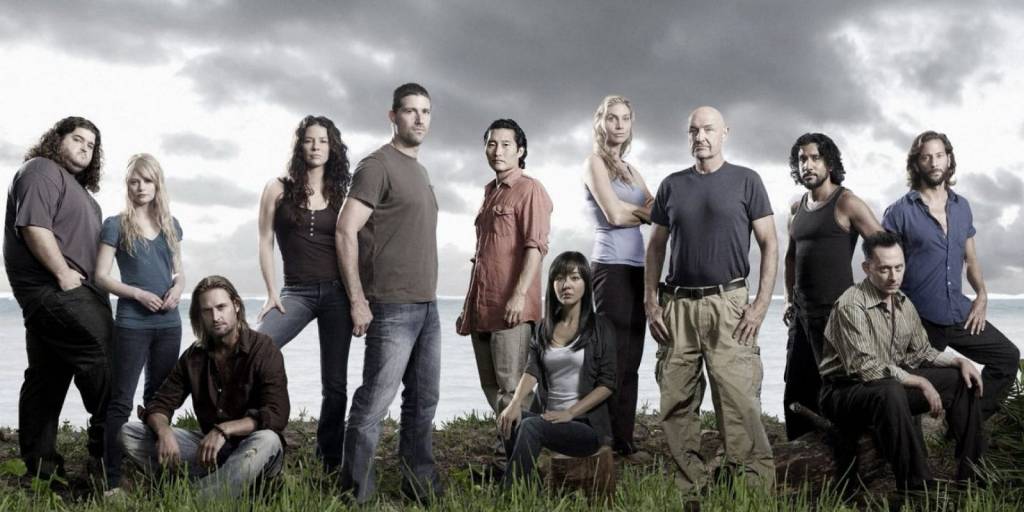
LOST: The Best TV Show Ever

“While I enjoy being entertained as much as the next person, I would much rather be challenged. Yes, show me something I’ve never seen before, but also cause me to think about something I’ve never thought of before.”

Lost is hands down the best TV show to ever air on television.

When Season 1 of Lost aired on ABC in 2004, I was unaware of its existence. In fact, I was not aware of this show until 2007, well into Season 3. Now I have somewhat of an excuse. From 2005–2007 I was out of the country and otherwise preoccupied. I didn’t have a phone. Streaming wasn’t a thing. There was just no way for me to know that the best show ever made was being broadcast to 17–19 million viewers on American television every week.

Now to be fair, up until 2007, I barely watched any TV shows at all. TV shows to me were shows like Full House, Family Matters, Fresh Prince, Friends, and Seinfeld. Those last 2 I never really even watched, I was just aware of their existence due to their popularity. I was a teenager in those days and our family just didn’t watch a lot of TV shows.

However, once I was in college in 2007, I began to explore to the world of television as I’d never known it before. Now back in those days, you either bought the DVD’s (which I didn’t have the money to do) or figured out a way to watch it for free online. Hulu was barely a thing, along with a few other random websites, but mostly I watched TV shows on my laptop by going to the networks webpage and figuring out where to download the latest episode. If I was lucky, I would find someone who had actual cable TV somehow, and my friends and I would go watch it live as it aired. But that wasn’t the norm in a college town where most people could barely afford life, let alone TV.

I became invested in Lost because (and this is important) people were talking about it. It was the kind of show my friends constantly talked about. Watching the show was great, but talking about the show added another layer of excitement and intrigue. After hearing my friends talk about Lost and not understanding what they were talking about, I finally borrowed the DVD’s of seasons 1 and 2 from a friend and binged.

I was hooked.

Here are some things that make Lost the best TV show ever:

Large Cast

Lost has the biggest cast I’ve ever seen for a TV show. It’s an enormous undertaking. There just isn’t anything else out there like it. Having a large cast like this is a challenge because the question is, how do you give all these amazing actors enough screen time to showcase their character and venture through their character arc? 

Characters like:

Jack- A troubled but duty-bound tattooed doctor and reluctant leader with major daddy issues.

Kate- An escaped convict on the run, constantly torn in a love triangle between the hot doc and the sexy conman. Also some major step-daddy issues.

John Locke- A lowly manager at a box company with untapped potential as a knife weilding natural born leader, destined for life on the island. Oh yeah and, you got it, some major daddy issues.

Sawyer- Criminal that became an expert conman. Wishes he had a daddy.

Sayid- A soldier from Iraq, tortured by his torturing past of torturing people, including his late tortured wife, whom he also tortured.

Sun- Rich Korean woman in a strained and basically abusive marriage relationship. She may or may not secretly speak english. Mild daddy issues.

Jin- Lowly Korean fisherman causing the strain and abuse in his marriage relationship, due to his overbearing father-in-law who disapproved of the marriage to his daughter, until he realized Jin doesn’t mind beating people up for him.

Charlie- Merry from Lord of the Rings, but on drugs and in a rock band.

Claire- Expectant mother with a hot Australian accent. Falls in love with druggie rock band guy.

Hurley- Comic relief and everyone’s favorite character. Also uber rich cuz he won the lottery. Oh yeah and he’s crazy.

Desmond- Scottish crazy guy who lives in a hatch and presses a button to save the world.

Ben- Mr. Manipulative and winner of the yearly creepy stare contest.

Ok, some of those descriptions might not be helpful, and I could list about 20 more characters that are essential to the story, but you get the idea. It’s a lot of people!

How do you write for each character and involve them in the story in a way that’s interesting, engaging, and furthers the plot? Not that I have a lot of experience doing this myself, but the few small scripts that I have written involving a lot of characters becomes a tedious task of balance and boredom. Lost handles the large cast using a formula that not only executes this balance perfectly, but also keeps the audience engaged and caring about each of these characters. And this brings me to…

Flashbacks

While much of the story of Lost occurs while these characters are stranded on an island, nearly half of every episode is dedicated to a specific character and dives deep into their background through the use of flashbacks. The way Lost uses these flashbacks is very engaging.

They tell a deeper story of who this stranded island stranger is and why they are the way they are. It gives some much needed context into choices they make while on this mysterious island. But most importantly, it allows us, the audience, to fall in love with every character. We get to spend a significant amount of time with them. We get to understand them. Often times we’re surprised or even horrified at their mistakes of the past, and we admire the changes in their stressful and dire present situation. 

It was always exciting to see into which featured character we would dive that week. What questions would they answer? What would be revealed from their past? 

I’ll give an example: Hugo Reyes, AKA Hurley. He’s a happy go-lucky heavy set character that we immediately fall in love with. He is hilarious, good natured, and kind as he tries to be helpful with everyone. But he carries a deep secret. We find out through the use of flashbacks that he not only spent time in a mental institution, having regular hallucinations of people that weren’t there, but he also actually won the lottery a few years before boarding Flight 815, using mysterious numbers he overheard on the radio while institutionalized. From that time until the plane crashed on the island, he felt that the money he won was cursed. Everything started to go wrong for him, to the point that he didn’t want the cursed lottery money anymore. He also felt that because he was “cursed” that he was somehow responsible for the plane crashing on the island. He kept this information to himself for the most part, took everything in stride, and sought a new life on this island away from his cursed money. This added a lot of depth to his character.

Another example is the character of John Locke. His survival instincts and hunting abilities, along with his many knives, contribute extensively to the survivors on the island as he helps forage for food and fight off unknown island predators. However, we discover (spoiler alert!) through the use of flashbacks that up until flight 815 crashed, John Locke was paralyzed and in a wheelchair. 

I could go on and on about each individual character, but suffice it to say that if it weren’t f0r flashbacks for each of its many main characters, Lost would be a completely different show. Also a terrible one.

Mystery and Theories

Lost is full of mystery. Every episode seems to incite more questions than answers. You’re constantly wondering what in the world is going on. But not to the level of frustration or hopelessness that might cause you to be overwhelmed loose interest. It’s a great balance. It answers just enough questions to keep us engaged and guessing.

Here is where a show like Lost starts to shine. Like I said above, I first heard about lost not because I was in a room where somebody was watching it, but because my friends would constantly talk about it. Everyone would come up with their own theories about what they thought was going on. Then we would share these theories with each other and discuss. Lost gave a lot of wiggle room for questions and refused to answer many of them. Questions like:

What are the numbers?

Who are the Others?

What is the monster?

What’s wrong with Walt?

What’s the voice on the radio?

Who is Jacob?

And those are mostly just a few of the questions from season 1. And some of those answers don’t come until later seasons. That’s a lot of time to theorize and discuss. 

As the show was airing, I often heard people complain about the amount of mystery or questions that weren’t being answered. I would read blog posts about people getting tired of all the craziness going on on this island and how it was becoming too much. 

Not for me. I don’t need all my questions answered. I like a little bit of ambiguity. I like things being left open to interpretation. I think the writers intentionally left some things up to us, the audience, allowing us to become a part of the experience.

The Experience

Lost wasn’t just a show, it was an EXPERIENCE. A PHENOMENON. Shows like this are few and far between.

Every week I was desperate to find out what happened next! I wanted to be the first to watch. I wanted to see if my predictions came through, if my theories were correct, if my questions were answered. Waiting an entire week was too long! I would re-watch episodes to see if I missed any hints or clues to what was coming next. It was intoxicating! 

And what a fantastic premise! Take a bunch of people, strangers, with all sorts of different backgrounds and experiences, put them together on a crazy island in the middle of nowhere, and force them to not only get along and survive, but also deal with intense emotional, natural, and even supernatural events together. Their pasts are eliminated. They get to start over. Friendships form. Relationships even. People fight. People die.

But most importantly, people CHANGE.

Change

Lost takes us through the experience of watching people change. I’ll give the best example of perhaps my favorite character of the show and how he changes. 

James Ford AKA Sawyer. Seasons 1 and 2, I hated him. He’s a bad person. A criminal. Through flashbacks, we find out he went on a quest for revenge for the man who conned his parents out of all their money resulting in the death of his parents as a small boy. This quest turned him into a conman himself, and eventually a killer of an innocent man. Shortly after, he boards flight 815, the plane crashes, and now this grungy, rude, inappropriate and unpleasant conman is forced to survive with this group of strangers. He hates everyone, but he does make up rude (and often hilarious) nicknames for everybody, the only silver lining in the otherwise upsetting character of Sawyer.

However, as seasons 3, 4, and 5 of Lost slowly unravel, we start to notice some change in Sawyer. He starts to make friends. He starts to contribute. He starts to help people. He becomes less selfish. He even builds close personal relationships with several characters, and by the end of season 5, Sawyer is everybody’s favorite character. He’s a completely different person. Sure he has similar mannerisms and hilarious nick-naming habits, and he’s still often quite grumpy, but we love him. He contributes, he helps, he’s kind, he pursues successfully a loving relationship, and he creates a pretty good life for himself.

I could give similar stories for each individual character. They all slowly change. So slightly sometimes we don’t even realize it’s happening until we find ourselves rooting for the guy we once despised. Or hoping for the demise of a person we once admired. And everywhere in between.

The Ending

If you google “Lost ending” you’ll probably find that a lot people did not like how the show ended. And while season 6 (the final season) is not my favorite season (that would be season 5!), I think the show ended beautifully. 

I think the writers of Lost understood something that most TV shows don’t understand:

You don’t have to answer all of the questions.

One of the main reasons that people were upset with the ending of Lost was all of the unanswered questions. Or questions that seemed to be halfway answered, like the writers ran out of ideas. But I don’t think this is what happened.

I think we live in this entertainment world where we want something new and different, we expect to be entertained completely, and demand that it all end in a mind-blowing utterly satisfying way. Anything less than that deserves to be criticized. To me, this thought process is a little narrow-minded and disingenuous.

While I enjoy being entertained as much as the next person, I would much rather be challenged. Yes, show me something I’ve never seen before, but also cause me to think about something I’ve never thought of before. Trust me, your audience. Invite me into your world, explain how your world works, and let me be a part of the experience, not just be entertained by it. Let me escape into the creative recesses of your story and (much like real life) DON’T give me all the answers. Let me come to my own conclusions and allow room for my own interpretations. Who cares if I’m right or wrong, it’s just a story. Let that story enlighten our minds beyond the ever diluted dopamine craved shallow forefront of our creative consciousness. Let the message penetrate deeper so that we feel moved, encouraged, and maybe even inspired, to not only explore these ideas on our own and in our own way, but also to expand on them and share them with the world, whether it’s a song, a movie, or a lowly blog post on the internet about a TV show from 20 years ago.

The large cast. The flashbacks. The mystery. The theories. The experience. The change. All managed with care, passion, and intrigue. I wouldn’t go as far to say it’s a perfect show (that declaration belongs to “Breaking Bad”) but something doesn’t need to be perfect to be the best. Everything needs a little imperfection.

Needless to say, in my opinion, Lost is the best TV show ever. There are many shows that come close, and many more I have yet to see for myself, but so far nobody has quite surpassed what Lost was able to accomplish.

If you missed the hype when it came out, and never gave Lost a chance, trust me, it’s worth it. If you’re too young or have no idea what show I’m talking about, go look it up and give it a try. It’s better than most shows streaming today anyways. 

Or if you’re like me, and you’ve already seen the entire series several times but it’s been a little while, consider watching it again.

Go back to the island.

Namaste.

The Water We Bring

“It’s not really about how much water we bring. It’s more about the change that occurs once we’ve brought whatever water we could.”

Recently we have been watching as a family the TV show “The Chosen.” This show depicts not only the life of Jesus Christ, but also many biblical people associated with Jesus during his earthly ministry. 

The show definitely takes some creative liberties in terms of dialogue and events from the Bible, but I absolutely love it. In fact I’d say it’s kind of the point of the show; to not only teach the stories we know and love, but bring them to life. And what better way to bring them to life than to re-enact these events, filling in the gaps with creative and culturally accurate portrayals of real people and what they might have been like or what they might have said.

Jesus Himself is portrayed not just as a teacher, philosopher, and eventually Savior, but also a person. Someone who smiles and cracks jokes with His disciples and the people who follow Him. He is handy with His carpenter skills. He sometimes lives in a tent and has to fend for Himself. He attends events and participates in conversations, dances, and festivities of the culture of His time. We find ourselves smiling and laughing at not only Him, but His disciples and followers. They all seem like normal people, just like us.

Water Into Wine

Recently we watched the episode where Jesus is attending a wedding and performs the well known miracle of turning water into wine. To be completely honest, I’ve never really thought much about this miracle. It always seemed kind of unimportant and silly to me. Among His many wondrous miracles, this never ranked very high. Of course it’s impressive, but I never really understood the meaning or reasoning behind it.

The show provides some creative and historical context for the need to perform this miracle, and that was helpful, but there was something else about this miracle that struck me. 

In the show, Jesus is summoned to a room where there are giant empty jars spread out on the ground. These jars had just recently been relieved of the last bit of wine for the wedding, and they had a big problem. They needed more wine! Jesus stands there silent for a moment, then he asks those with Him (including Thomas, one of his future disciples who would later be known as “Doubting” Thomas) to fill these jars with water. Thomas just looks at Jesus like He is crazy. But others, trusting that Jesus knows what he is doing, even if they don’t understand, go and get water to fill the jars.

My Question

The question I asked myself was this: Why couldn’t Jesus just make the wine appear?

He probably could have. He produced fish and loaves of bread in a later miracle. He obviously had the power summon wine at His command. But instead, he asked those with Him to fill the jars with water.

Why?

If I were Thomas, what would I do? Sure this is a familiar Biblical story now, but at the time, I may have felt more like Thomas than I care to admit. I’m sure my own brain would be thinking “What are you talking about? I need WINE, not WATER. What’s water going to accomplish? That seems like a lot of work for an unacceptable solution to our problem.”

Yes, often times when I read scripture, I find myself relating more to the doubters and the neigh-sayers than the fast responding faith-filled followers of Jesus.

I imagine it took some time to get those jars filled up with water. They couldn’t just turn on a faucet. But even if they could, that’s a lot of jars to fill. I get impatient just filling up my over-sized water bottle in the mornings for work.

The Water We Bring

Now obviously I don’t know Jesus’ reasoning for why He does what He does. As I understand it, scripture is meant to be read, felt, internalized, and interpreted in a way that is meaningful and impactful for us. Several people can read the same passage of scripture and derive different meanings and applications for their life. Or something that never provided much meaning before, all of a sudden will.

What impacted me while watching this episode was not just the declared faith in what Jesus said to do, but the mobilized faith put into action of doing what Jesus asked them to do. 

He asked them to bring water.

I began to think about the “water” that I bring. What actions of faith am I bringing? Am I bringing anything? Am I recognizing that Jesus has asked me to act, and not just declare my faith in Him? Declaring faith in my Savior is an important step in my personal faith journey, but sometimes it only brings me as far as “doubting” Thomas, who was perhaps slow or resistant to act or believe unless given some explanation or reason to do so.

I know I’m not the only one out there who sometimes stops and asks myself, “Wait, why am I doing this? What’s the meaning behind this? I want to understand this better.” Then I bring everything I have, all of my understanding, all of my strength, all of my doubting faith, and do my best to fill the empty jars before me.

The Power To Change

In this miracle, it was only after they brought water and filled all of the jars that Jesus changed the water into wine.

Jesus, with the almighty power to make wine appear if He so wished, thought instead that it was important to invite His followers to act. To bring their water and fill the jars. To participate in what would be an important miracle. A miracle that displayed the power to change.

It’s not really about how much water we bring. It’s more about the change that occurs once we’ve brought whatever water we could. Maybe it’s a few drops, a few cups, or a few waterfalls. It doesn’t really matter. What matters is the change, the real miracle, that comes from Jesus.

The power of this miracle is not in the amount of water we bring to fill the jars, but the power of change that only our Savior can give us.

Does He always require something of us before he decides to help us? No. His grace is given freely however he chooses. But sometimes, SOMETIMES, He does ask us to bring some water.

Sometimes I don’t understand why, and it may not seem like very much water, but I know He can work with whatever I bring.

Dexter- Five Reasons Why I Love TV’s Greatest Dark Comedy

About 15 years ago I was introduced to a show called Dexter by a cousin of mine. You know how sometimes you tell someone else the premise of a show or a movie, and you realize while you’re explaining it that you just aren’t doing it justice by your explanation?

That’s how it was for me when my cousin gave me a brief overview of the show. Her restrained excited tone did not match the show’s seemingly odd and somewhat morbid description. At this point in my life, I had never seen a show like Dexter, so I’ll admit the initial idea of this type of show was a new idea for me and something I perhaps didn’t quite grasp.

After all, Dexter is a serial killer. He murders people. Lots of people. And he is the main character of the show.

I don’t understand the science behind YouTube and how they recommend videos to watch, but for whatever reason, as I was scrolling through YouTube today, some Dexter shorts started popping up. Of course since now I’ve seen the entire series (several times) and absolutely love this show, I clicked on the shorts and watched a few. Just these little 20–30 second long shorts got me so excited, and reminded me that there is a new prequel show coming out next month called “Dexter: Original Sin.”

The original Dexter actor, Michael C. Hall, who I think is absolutely brilliant in this role, is now too old to be playing a younger version of Dexter (although it looks like he will be providing the narration, which is very exciting and something I’ll talk more about in a few minutes). Instead, the younger version of Dexter will be played by Patrick Gibson, an actor who is still new to me and I only know from his appearance as Steve Winchell in the incredible series “The OA” (another amazing show I’ll have to discuss another time).

Anyways, back to Dexter. As I watched these YouTube shorts of Dexter today, I found some time later tonight to satisfy the urge to re-watch the first episode of the first season of Dexter.

I absolutely LOVE this show. And I just had to hop on and write down a few reasons why. FIVE reasons, to be exact. But first I’ll give my brief rundown of what the show is about.

Yes indeed, Dexter is a serial killer. But not only that, he is a serial killer that works in forensics for the Miami Police Department and he is an expert blood spatter analyst. So boy oh boy does he know how to clean up his own crime scenes. However, Dexter isn’t just any serial killer. He’s a serial killer that lives by a certain code…

Ok, now my reasons for why I love this show:

1. Michael C. Hall. He IS Dexter. Some people just embody characters so well and understand them so completely that they not only bring that character to life, but also look like they are having so much fun doing it. I don’t have to watch interviews of Michael C. Hall talking about how much he loves this role, I can just see it in his face on screen. What an incredibly fun character to play.

Now I’m no movie or TV star, but years ago, I had an opportunity to play a villain in a play (Mordred from “Camelot”). It’s my only experience playing a villainous character in my short lived high school acting career, but I will never forget it. I was new to acting at the time and especially being able to play a character who is nothing like me was a new experience. But the more I dove into a character who behaved, spoke, laughed, and even sang so differently than me and my own mellow personality, the more I realized that being a villain is much more fun than being a hero.

As a general rule, a movie, show or play is only as good as its villain. Which brings me to my next reason (and also reason #5)

2. Dexter is an interesting and exciting character. We all know murder is wrong. That simple morally sound idea means that everything Dexter does, no matter how he justifies it, is wrong. He’s a murderer. He’s a liar. He’s a bad person. Well, if so then why do we, the audience, continue to cheer Dexter on? We root for him. We are impressed by how smart he is. How resourceful he has to be. We WANT him to get away with it. We’re grateful when he finally gets rid of the scumbags who got away with whatever atrocity was committed. We feel a sense of satisfaction that against all odds and at tremendous personal risk, Dexter delivers much needed justice. It’s dark and terrible, but we can’t wait to watch Dexter figure it out, deceive the good guys, and stop the bad guys.

3. The entire show is not only delivered from Dexter’s perspective, but it’s also narrated by Dexter. We hear his thoughts, live, as the episodes play out. Things he wants to say in the moment, but can’t. So he invites us, the audience, into his mind to get his real reactions and thoughts, and then we watch how he navigates the lie that is his life. Having this kind of exposure to the mind of Dexter naturally means that we are with him along for the ride, and we start to understand his perspective.

We also start to see the flaws in his thinking. Where he might justify his actions, or tell himself he is in control, we can see the cracks in Dexter’s armor start to form. He might not actually be in control. He might be lying to himself. He’s not as careful as he thinks he is. He may not actually be justified in what he’s doing. We start to question our misguided faith in a severely morally flawed human being, and this in turn makes us question ourselves. How did we get lured in? How did we ever think Dexter was justified in his actions? Why do we keep wanting him to get away with it? Why are we feeling satisfied after he himself commits a horrible act in return?

These kinds of inner turmoil questions we start to ask ourselves, wavering back and forth through this hypothetical grey area of justification and morality, is what really makes the show interesting for me.

Any movie or television show that can get you to root for the bad guy is a pretty good sign that it’s worth watching.

Dexter takes all that and then goes one step further…

4. Dexter is a comedy. A Dark Comedy. The theme is heavy. You can feel the weight of everything going on. It’s intense and puts you on the edge of your seat. However, mostly through narration from Dexter, I find myself laughing out loud at some point during every episode. Dexter is awkward. He’s kind of a nerd. He lives in his own world and it makes it hard for him to interact naturally with everyone around him. Therefore his attempts to imitate what he believes is “normal” personality and conversation, are often laughable. And because he has some kind of understanding of who he is and why he is the way he is, flawed though that understanding may be, he’s also somewhat charming. And it’s genuinely enjoyable to watch.

5. The final reason why I enjoy Dexter is because it’s extremely well written. Seasons 1–4 are significantly better than seasons 5–8 (as well as Dexter: New Blood, the sequel season that aired several years later). While Dexter is what we might call an “Anti-hero”, rather than the villain, the actual villains in each season are very intriguing. We get to know them, we get to see Dexter interact with them. We get to see the “real” Dexter have “real” connections with these villains as they play cat and mouse with each other, or become friends, and start to trust each other. Our misguided sympathetic feelings we have for Dexter are slightly relieved when we start to get glimpses that maybe Dexter can get some help, change, and become a better person. After all, watching how characters change is another sign of a great movie or show. But could someone so far gone like Dexter actually change for the better?

As the series progresses, the overall looming question is:

“How will this all end?”

Dexter has to get caught, right? He can’t just keep doing this. He belongs in jail, or a mental hospital, or the electric chair.

Maybe, like “Catch Me If You Can,” he has so much insight as a criminal that he can still serve some value to the Miami Police Department from within a padded cell?

Or maybe he gets in over his head and has to skip down and continue to satisfy his dark urges elsewhere?

Or maybe he dies and never has to truly face the consequences of his actions?

I won’t say how the show actually ends, obviously, because it’s that looming question that keeps you watching. Keeps you coming back to see what he’s going to do next.

Yes, I believe Dexter is TV’s Greatest Dark Comedy. There just isn’t another show like it.

Some people are skeptical of the prequel series “Dexter: Original Sin” that comes out next month. Many people weren’t thrilled with the last few seasons of Dexter, or the sequel series “Dexter: New Blood.” In fact many people are straight up angry at how the story ended.

I’m not angry. If you’re looking for outrage at how Dexter ended, you won’t find it here. My love for this show and this character vastly outweighs any negative feelings I may have.

I’m just excited to dive deeper into the world of how it all started.

But I mostly hope we get to see more of Dexter’s morning routine.