
Everything’s Fine

There does come a time where trying to convince myself “Everything’s Fine” is not the answer.

Tonight I was on a plane taking off from Portland destined for Phoenix. It’s a work trip, and a flight I take frequently. As the flight took off, I read my book until my eyes grew heavy, and I dozed off. Thirty minutes later, I woke up, really for no specific reason, but I noticed that there were more people chatting amongst each other.

Just overly friendly passengers. Everything’s fine.

It was about 6:00pm and the sun was on it’s way to setting and shining through the window to my right. Almost annoyingly so. But I was in the middle seat, and as everyone knows, if you find yourself in the middle seat on a plane, you have no rights. So there was nothing I could do about it.

My first hint that something wasn’t right was as I was looking between the seats in front of me, I saw Vin Diesel and Paul Walker steal a safe with some cars. Then Jason Mamoa started chasing them in his own car. I hadn’t seen this latest Fast and Furious movie yet. But I was enjoying eaves-watching on his phone, using Alaska Airlines Wifi movie service, until all of a sudden it stopped working. I watched the person in front of me tap pause and play and rewind and fast-forward. Nothing worked. That’s strange. Maybe they turned the Wi-Fi off for some reason. After a few minutes, he turned his phone off, frustrated. Did they escape with the safe? Also what about all the collateral damage to roads and bystanders and passing cars? I guess I’ll find out later.

Oh well, I’m sure everything’s fine.

About 10 minutes later, the plane tipped to the right and started to turn. The glare of the sun moved from my right and towards the front of the plane and out of sight. Hm. Well that’s odd.

I’m sure everything’s fine.

Well now that the sun wasn’t an annoyance, I tried going back to sleep, but couldn’t. Ok, I guess I’ll read a little bit more of my book. About a minute later, the captain hopped on the intercom. I already knew what he was going to say, because the sun was clearly on my left now. We were heading back to Portland.

The captain also informed us that apparently there had been some strange fumes throughout the plane, and some people were not feeling well as a result. So out of an abundance of caution, they decided to turn the plane around.

Strange fumes. Hm. Ok. Everything’s fine.

The woman on my left is fidgeting and nervous, I can sense her frustration. The young man on my right, also sensing something wrong, finally tore his eyes away from the Taylor Swift concert he had been watching (and grooving to) on his phone. He removed his headphones, and asked what was happening. I opened my mouth to answer, but the nervous woman on my left jumped in and explained the situation before I could (because again, I had no rights).

I look around and can tell that people are nervous. What could be wrong with the plane to cause fumes strong enough to turn the plane around?

No idea. But the captain has a calm and soothing voice. I’m sure he knows what he’s doing.

Be strong like Taylor Swift. Shake it off. Everything’s fine.

There’s nervous tension for the next 20 minutes or so as the captain informs us that we will land soon and the flight crew needs to prep the cabin. As they do this, for some reason I didn’t understand, they don’t turn on the cabin lights, and the captain asks us all to turn on our reading lights so the flight crew can see and correct our improperly stowed items, lowered tray tables, and barely inclined seats. My light was already on as I had returned to reading my book, and therefore wasn’t paying attention to why we were instructed to do this. Does the plane not have enough power to turn on the lights? Yet somehow this powerful hunk of metal we sit in propels through the air at tremendous speeds just fine?

Oh boy. Ok well, maybe this is normal in this kind of situation? I’m sure everything’s fine.

We are a few minutes away from landing, and the captain lets us know, in his most captainy voice, that some fire trucks and emergency services will escort us to the gate once we land. We land and sure enough, we’re surrounded by flashing lights and guided in. Die hard 2 flashes through my mind.

Yippee Ki-Yay. Everything’s fine.

We pull in and the captain preps us for some fireman who board and walk up and down the isle. Ok, that wasn’t so bad. I walk off the plane and there are no less than 30 fireman at the gate waiting for us to de-plane. I don’t know if I’ve ever seen that many fireman all together before. What in the world was going on?

I have no earthly idea. But in the end, everything was, in fact, fine.

And that’s the last concerning thought I have. I head over to a new gate and prep myself to hop on a new plane. Of course, there’s some time to kill now, so I decide to make the most of it and begin to write about my the experience. Even though nothing of consequence happened and everything and everyone is ok, I wanted to capture some of my thoughts in the moment, or shortly thereafter.

What’s interesting, and a somewhat serendipitous in a haunting sort of way, is before I even boarded the fuming plane this evening, I was already thinking about my next blog post. I was going to write about how back in 2009 my wife and I, along with the entire BYU Folk Dance team, once boarded a plane in San Fransisco headed for Beijing, and we had to turn the plane around and head back.

And tonight, for the first time since then, it’s happened again.

Yes, believe it or not, this is not the first time something like this has happened to me. Although tonight’s experience was much calmer than the experience from 15 years ago.

Fifteen years ago I was attending Brigham Young University and had a wonderful opportunity to be a part of the BYU International Folk Dance Ensemble. It was on that folk dance team that I had met and married my wife. In May of 2009, we were 5 months freshly married and sitting next to each other on a plane. It was exciting! We were heading to China for a month to perform in multiple cities from Beijing to Hong Kong. Also, for the only the 2nd time in my life, I was crossing the Pacific Ocean on a plane. It was going to be a long flight.

The flight left late at night, so we settled in and, similar to tonight, I dozed off pretty quickly. About 30 minutes into the air I happened to wake up and I looked out the window.

And what did I see?

Flames.

Bursting!… From engine three.

Ok I don’t know if it was really engine three. But I did know there were 4 engines. And one of them was on fire.

My wife was already awake and panicking, grabbing my arm. I was still in a dream-like stupor, not even sure if what I was seeing was real. I sat there for a minute, staring out the window, and then calmly said to my frantic wife, in an overly casual and non-concerned voice:

“Everything’s fine. They have three more engines.”

I turned my head away, closed my eyes, and tried to go back to sleep.

The plane ended up turning around, going in circles for a while dumping fuel into the ocean so we could land back in San Fransisco and catch a different plane in the morning.

Obviously, and fortunately, everything did in fact turn out fine. Nobody was hurt, the flaming engine was shut off, the plane landed safely, and the BYU folk dance team, as well as many other passengers to Beijing, were mildly inconvenienced in their travel plans.

Oh yeah and my wife became much more anxious about flying for the next 10 years or so.

I learned some things about myself then.

1. I was a terrible husband. I went back to sleep and left my wife alone to panic in silence as the flaming engine roared outside the window, our eminent doom assured.

2. Don’t binge watch LOST before getting on an airplane flying over the Pacific Ocean (4, 8, 15, 16, 23, 42…).

3. I’m a conflict avoider. I’ll do anything and everything I can to avoid any kind of tense, anxious, scary, dangerous, contentious, or difficult situation. I can literally face the flames of death right outside my airplane window and convince myself that everything’s juuuuust fine.

For most of my life, I saw this as a positive aspect of my personality. I’m an optimist! I look on the bright side! I’m Mr. Happy-Go-Lucky-Nothing-Ever-Gets-Me-Down! Isn’t that how we’re supposed to be?

To some extent, yes. It’s a good trait to have. There’s nothing wrong with a positive outlook on life.

But there does come a time where trying to convince myself “Everything’s Fine” is not the answer. In the fifteen years since the flamey plane ride, up to today’s fumey plane ride (as I write this, I’m currently on plane number 2 now, so far so good…) I have learned over and over again that everything is not, in fact, fine.

Sometimes it is. Sometimes it’s more than fine and things are great! Other times things just plain suck. They’re miserable. And sometimes, well sometimes you just wish that everything would end. You can’t see how you’re ever going to get out of this mess you’re in and it would be so much easier to just disappear off into oblivion. Put me out of my misery. I can’t endure this.

But here’s the thing. You can. And like most things, it just takes practice. Because I spent my entire life avoiding conflict, I sucked at dealing with conflict when I was forced to. And guess what, if you’re married, or in any kind of meaningful, committed, and lasting relationship, conflict is the main event!

And guess what else? Conflict is GOOD. It creates friction. It allows us to be human. It helps us feel more deeply. It gives us an opportunity to test our patience. To be more understanding. To open our minds to other ideas. I’m glad I’ve had conflicts. I’m glad I’ve had to learn how to sludge my way through the tense, anxious, scary, dangerous, contentious, difficult, and even heart wrenching situations.

I’m no expert by any means, but I’m slowly making my way from “Everything’s fine” to “Bring it on.” From conflict avoider to conflict navigator. From passive observer to assertive practitioner.

I’ve got a long way to go, and there’s a lot of years ahead to get there still. But as I sit here 35,000 feet in the air, crammed in my middle seat, my elbow and human rights currently stripped from me, perhaps I can look out the window to my right and see in the distance a China-bound plane, and a newly married man, heading out over the Pacific Ocean, and there’s a lot of things I could say to him about what lies ahead, but instead I’d just say: good luck buddy…

…everything’s going to be just fine.

Oh and one more lesson I’ll probably learn before the end of this trip:

I don’t got friends, I got family.

Thanks Vin.
“No Vale”

You have tremendous worth. Inherent worth. More than you can possibly imagine.

When I was 19, I spent 2 years in the wonderful country of Ecuador serving as a missionary for The Church of Jesus Christ of Latter-day Saints.

My Mission Call

Like a lot of young men my age who graduated from high school and went to a semester of college, the next step for me was always to serve a mission. I was mission bound. There was never even a second thought! I had three older brothers who all went on missions, and I spent my teenage years writing them on Sundays and reading their letters they would write back. Their mission stories and experiences were uplifting and inspiring, and I wanted a chance to serve! I wanted to be prepared.

So much so that when I left for my first semester at BYU, I didn’t go the route that a lot of BYU freshman go. My older brothers told me all about freshman dorms, and the cafeteria food, and freshman wards, and staying up late, and getting bad grades their first semester because they couldn’t balance school and their new-found freedom away from home… At the time, I didn’t want to do that (which proved harder to do than I thought…). I already had three brothers at BYU. How fun would it be to just live with them instead? Off campus. With a bunch of returned missionaries. In a singles ward full of slightly older non-freshman girls who, (I came to find out, and to my advantage) were tired of dating gung-ho marriage bound returned missionaries, and needed a break, so they’d go out with me because I was “safe.” It was actually a lot of fun. But that’s a story for another time…

The point is, I lived in housing off campus with my brothers, and I was the only freshman in the entire complex and in the ward.

Unlike the freshman dorms at BYU where hundreds of young men were getting mission calls every week, I was the only one waiting for a mission call in my ward! It was a big deal! The entire ward gathered in our apartment and I read out loud that I’d be serving in the Ecuador, Guayaquil South Mission. Wow! What a feeling. I’m getting goosebumps now just thinking about it. I would get to learn Spanish! I would get to live in a foreign country! I would get to serve the Ecuadorian people! I couldn’t wait.

Ecuadorian Currency

This might sound funny, but one of the experiences I was looking forward to while living in a foreign country was the experience of using foreign currency! My oldest brother had served in Ukraine where the currency is hyrvnia! My 2nd oldest brother went to Dominican Republic where the currency is the dominican peso! And my 3rd oldest brother went to Japan where the currency is yen. I looked up the currency in Ecuador and… the American dollar.

Yup. They use the American dollar in Ecuador. The currency used to be sucres, but Ecuador had apparently experienced a financial crisis back in 98-99 and switched to the American dollar.

Although disappointed, I’d collect old sucres anyways during my time there, even if they were worth nothing more than a fun souvenir.

For anyone who may not know, when you serve a mission for The Church of Jesus Christ of Latter-day Saints, you pay for it. My parents had been wise with our money since I was a child and put plenty into our savings so that we could save up for our mission. I had made some money as a child model in Japan (another story for another time) and also received a yearly Permanent Fund Dividend as an Alaskan resident for the entire time I lived there. While my friends would spend their PFD’s on snowboards and video games, mine went into savings. I’m sure I griped at the time, but I’m grateful that by the time my mission came around, I didn’t need to worry about finances.

“No Vale”

While serving in Ecuador, we used cash (again, the American dollar…) to pay for pretty much anything. We had ATM cards to pull out cash, but any food or supplies we bought, it was all cash. American dollars. We walked everywhere on my mission. No bikes. No cars. All walking. We carried as little cash as possible around with us and prayed we didn’t get robbed, an occasional occurrence among my fellow missionaries (and once almost to me, but he was too drunk to do any harm while he fumbled for his knife).

While exchanging cash among the Ecuadorians, I learned something pretty quick about how they view money. And it was extremely odd.

We were on the street and stopped to buy some food from a vendor. I pulled out a $20 bill and attempted to pay. The vendor looked at my $20 bill, shook his right hand like he was doing jazz hands, then shook his head, and said to me:

No vale

(Pronounced “Noh bah-leh.”)

At first I didn’t understand what he was saying. It took me a second to work out the conjugation of the word “valer” which means “to be worth.” I looked at my Panamanian companion for help, but he just smiled. I barely understood him anyways. Why was this vendor saying my $20 bill wasn’t worth anything? It’s a $20 bill! I attempted again to hand the vendor the $20 bill saying “Si! Si vale! Vale veinte dolares!” Yes, it’s worth $20! As a new missionary, there wasn’t much I was sure about, but as a born and raised citizen of the United States of America, from which this here $20 bill came from, I can unequivocally tell you that this is worth $20! It’s possible, Mr. Vendor sir, that I might have more authority than you on this subject! Now take it! And give me my food!

No, no vale!” he said again, this time pointing to the corner of the $20 bill I held in front of him. Trying to not get frustrated, and seeking to understand, I looked at what he was pointing at. In the upper left corner of my $20 bill, there was a small, almost microscopic tear. I hadn’t seen it. But even if I had, who cares! It doesn’t matter. Money gets crumpled and torn all the time. It doesn’t diminish the value of the currency. In broken Spanish, I tried to explain that just because there is a tear in the corner of the $20 bill does not mean it’s worthless. It was still very much in tact. But he refused. No matter what I did, he would not take it, and eventually we walked away.

As we made our way to our apartment, my Panamanian companion explained to me that I need to watch out for any cash that comes to me that might be damaged in any way. When getting change from vendors or stores, I had to inspect each bill carefully, because if I got stuck with any imperfections in my money, I wouldn’t be able to spend it. And if I did have any damaged money, I had to do the best I could to hide it when I exchanged it. It sounds ridiculous, but it’s something I had to get used to.

Perception of Worth

What happened in Ecuador? Who decided that just because paper money is slightly torn, it all of a sudden is worth nothing?

When it comes to money, what’s the difference between us and the Ecuadorians?

Perception.

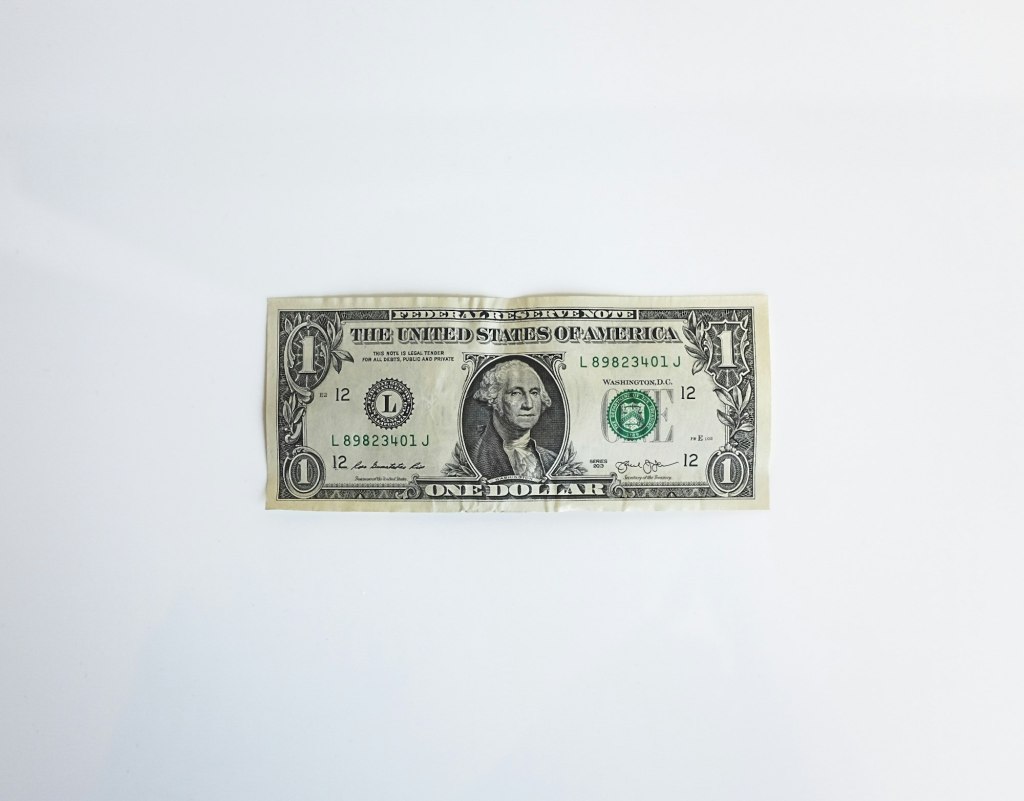
Our perception of worth for that dollar bill does not change based on its worn and torn condition. In my experience, at least here in the U.S., even if a dollar bill has some rough edges and minor tears, we still see value. We still see worth.

It goes without saying that just because someone comes along and decides, for whatever perceived reason, that your dollar bill is not worth something, does not make it true. You know your dollar bill is worth exactly $1. Regardless of what anyone else says or thinks.

I wish I could have waved a magic wand over Ecuador and gotten rid of this negative perception, especially for a poor country that needs to use all the currency it’s people have so they can afford to live! If they could just change their perception and see the inherit worth in the money they carried, regardless of the imperfections, it would only help everyone!

Your Worth

What does it mean to have worth?

I don’t really have a good answer.

But I do know that no outside influence can determine your worthiness. Your worth is not conditional. It doesn’t matter what anyone else thinks about you. It doesn’t matter what anyone else says about you. It doesn’t matter how anyone else judges you.

You have worth. Tremendous worth. Inherent worth. More than you can possibly imagine.

Your tears and stains and beautiful imperfections do not diminish that worth. If anything, they add to it. They make you unique. They help make you YOU.

Others may look at you and decide that you’re less than worthy. They may see your differences and think they can decide your fate. They might even forget about their own rips and tears because they’re so focused on yours. They may even laugh at you, belittle you, and tell you just how unworthy you are.

But that’s just their perception. Who cares what they think they know? You know the truth.

You know your worth.

And if you can see your own worth, and perceive the God given worth of those around you, regardless of their imperfections, you can just ignore anyone who tries to tell you…

…”No vale.”

Lead and Follow

When should you lead, and when should you follow?

When should you lead, and when should you follow?

Moving to Alaska

When I was nine years old, my family moved from California to Alaska. I still remember telling my next door neighbor and best friend at the time, Danny Bueno, while we played Sonic the Hedgehog on his Sega Genesis, that we were moving to Alaska. He paused the game, let the controller fall, and looked at me.

“What? Alaska? You mean where the eskimos live? Why are you going there?”

I also had this picture in my mind of snow and igloos and eskimos because, well, I was nine. I didn’t know what to expect. I explained to Danny that my dad was in the Air Force and that meant we had to move around a lot, and this time, my parents chose Alaska.

My family and I drove up the Al-can highway that summer and found a house in Eagle River, Alaska. Turns out that in the summer time, Alaska is pretty amazing. Even though I was a military brat and lived several different places in my formative years, when people ask me where I’m from, I say Alaska. Partly because that’s where I spent the most time, and because it’s literally the coolest place ever.

But what does a family of nine do in the winter time in Alaska? I had no idea. I hadn’t really experienced snow before. It never snowed in California, and that’s as far back as my memory went.

Learning to Ski

Turns out that back in the day, my dad, who grew up in Utah, was quite a skier. Our first winter in Alaska, he wisely decided to begin a new family tradition as we were invited to partake of the wonder and joy of skiing. I’ll never forget pulling up to Hillberg, a very small ski slope on Elmendorf Air Force Base, in our 12-passenger van, gazing out the window at what we were about to experience. It was scary. I watched as people rode up the one (yes one) chair lift and then flew down the hillside. How did they not crash? How could they stay balanced and controlled? It seemed impossible.

We all got beginner skis and started on the bunny hill. My brother and I, after a few times down the bunny hill and our confidence somewhat boosted, decided that before we left, we would go down the big hill.

And we did. And it was epic. At least for us.

We spent years going to Hillberg, and only Hillberg, perfecting our skiing skills. The reality is that Hillberg is a pretty lame ski hill. It takes 3 minutes to ride up the lift and 15 seconds to fly down. This allowed us plenty of time to get creative. We would build jumps, play follow the leader, play tag, race, scoop up snow on our skis as we got on the lift, and then dump the snow on the heads of siblings or friends or strangers passing underneath. We’d steal each other’s gloves and hats (nobody wore helmets…) while riding the lift and toss them on the ground, then race to be the first to pick it up. We’d even try to knock each other’s skis off as we rode up, although I don’t think we ever succeeded. I’m surprised we didn’t fall off ourselves, we were so rambunctious and chairs back then didn’t have cross bars to lower in front of you. I also eventually branched out into snowboarding. Now I could switch back and forth (Bi-skidoral?… sure why not). There was nothing else to do on such a small ski slope. But we didn’t care, it was a wonderful family event that we all looked forward to.

Dad. The Boring Skier.

Most of my memories of skiing at Hillberg involve my siblings. I’m number 5 of 8, so I had plenty of siblings around me to play with. I loved growing up in a big family.

But while we were off finding ways to injure ourselves at unnecessary speeds on a bunny-hill of a ski slope, where were mom and dad?

Well my mom was also new to skiing, so my dad stuck with her of course. And there was Jarom, my little brother, who needed a little more care and attention than us older and more skilled children (Although Jarom now skis better than the rest of us ever did, and is still going strong! Guess that’s what happens when you start at 3!).

The point is, I wanted to see my dad SKI. Go fast with us! Show us his master ski skills! Race and be crazy with us! But… he never did. He was perfectly content to do his slow-quick turning, controlled, 1970’s style paralleled skiing, at a boring pace, sticking with mom and the younger siblings. We’d yell and wave to him while riding the lift, he would wave back and mosey on his way… Yawn. How could he possibly be having any fun?

Even when we eventually graduated to Aleyeska Resort level (an actual awesome resort in Girdwood Alaska, with double black diamonds and everything!), we would still just watch him take the green circle routes with mom and be perfectly content. I don’t think I’ve ever seen him do a black or double black diamond.

Skiing with my kids

Since I’ve left home and been on my own, skiing has only become more and more expensive, and my frequency of going has been less and less over the years. But I will still try and go a few times a year. I’m decent, and can pretty much do anything on a ski slope. But my perspective has drastically changed.

Based on my own experience of learning to ski as a kid, I wanted to impart that joy upon my own children. Again, it’s ridiculously expensive… so we haven’t gone very much. But the last few years, I’ve been able to take the kids one-on-one and begin to teach them. I’m not that great of a teacher, but they seemed to pick it up pretty well on a very beginner level.

Zoe, my oldest and now nearly 12-year old daughter, has really taken a liking to it. She picked it up very fast, and has a lot of fun when we go. We mainly stay on groomed trails, veering off every now and then into some powder or trees or little jumps here and there. Circle trails, maybe some Squares. But certainly no black diamonds.

I have never had more fun skiing than I have right now, skiing with Zoe. I’ll take skiing with Zoe or any of my kids, over flying down double black diamonds through the trees. Not because I can’t. I probably could. But I don’t want to. Yes, my skill level has probably died down over the years, and I am pushing 40 now, but even still… I’m perfectly content to ski with my kids on the easy trails. More than content. I’ll do it all day long.

I have become my dad. The boring skier. And I love it.

Lead and Follow

A little over a month ago, I went skiing with Zoe. We had a wonderful time. Just me and her, chatting, making videos to show mom, and finding new trails to explore.

One of the challenges I encountered while skiing with Zoe was going back and forth between leading Zoe, or following Zoe. As we got off the lift, I would sometimes say “Ok Zoe, lead the way!” and then I would follow her. But then she would start to head a direction I didn’t want her to go, or where I knew there might be something she might not be able to handle yet. She’s good, but she is still a beginner skier. My instinct to protect her would kick in, and I would yell “Stop!” and then suggest a different way. I would lead the way for a few minutes, and once I could see a safe path ahead, I would say “Ok Zoe, go ahead and lead the way!” Then I would follow her. This repeated 4 or 5 times as we made our way back to the bottom of the hill. We would stop and rest and chat occasionally about which direction to go, and she usually started out leading the way. But we never made it down the mountain without me taking over at some point and leading her a different direction.

I noticed this and I decided to test myself, and Zoe. I told Zoe to lead the way and she could decide every path we took, and I would follow wherever she went. This worked for a little while, she played it pretty safe and I just followed along. We got to a point where there was some deeper powder and a few small trees, and she said “I want to go into those trees!” I had been in those trees before, they were more like bushes and I knew that as long as she was careful, she would be ok. I also knew that if she went too far into the trees, it eventually led to a steeper hill she probably didn’t have the skill level to do yet.

Well, ten seconds into the deep powder and small trees, she “biffed it” as we say and ran into a small tree. One of her skis popped off and was now buried in the snow. We were on a bit of a steeper slope and I happened to stop a little bit below her and couldn’t really get up to help her. I made sure she was okay, but she was struggling to find her ski. For anyone familiar with this predicament, once you do find the ski, putting it on again on a slope in deep powder, is no easy task, even for advanced skiers. Once she found her ski, I watched her struggle for about 5 minutes to put it back on. I resisted the urge to take off my skis and hike back up to help her. I just waited and watched, giving some verbal help and instructions. Eventually she got it, got herself turned around, and I followed her back over to the main trail.

What if I only ever led Zoe down the safe paths? What if I never allowed her to decide which way to go, and I protected her from all potentially dangerous terrains? What if she begs and pleads “Please dad, please can we go through the trees or in the deep powder or down a black diamond?” And I refuse. What if we only stuck to the Blue and Green easy trails because my singular concern was to keep her safe from harm?

I think that strategy leads to two outcomes. 1- She might (MIGHT!) be safer for a slightly longer period of time, only to then be completely un-prepared when she is older and out of my control and protection. Or 2- She sneaks off on her own and tries black diamonds anyways without me, ill-prepared, and increases her chances of severely injuring herself or worse.

Both of these outcomes suck. And whether I like it or not, I have to accept the fact she cannot and will not remain under my protection forever.

My only option, therefore, is to prepare her. That doesn’t mean I stop protecting her cold turkey. She is still mine to protect and love and care for. I will still lead her down paths I decide for her. But every now and then, I need to be able to say “Ok Zoe, go ahead and lead the way!” Maybe I still yell “Stop!” from behind. Maybe we rest occasionally and discuss which way to go together. Maybe I let her “biff it” on a tree and struggle to get her bearings.

Maybe she deserves to be empowered and have feeling of my confidence behind her, letting her lead the way while she can still hear my voice of support and encouragement from behind.

Because soon she won’t hear my voice right behind her. It will be somewhere in the back of her mind, and she may or may not decide to follow it. And there’s nothing I can do about that.

The most I can do is prepare her. There is no alternative.

In the mean time, I’ll happily be the boring ski dad who is perfectly content to mosey along with my kids and spend as much time as possible leading, and following, my children down whatever paths lay ahead for them.

And I’ll wave to them as they ride up the lift on their own.

The Beauty of Dissonance

Dissonance, alone, is not enjoyable or beautiful. But mixed in with musical harmonies, all of a sudden it becomes the most interesting and beautiful part of the song.

Dissonance

When I first think about Dissonance, I think about it in terms of music. Dissonance is a lack of harmony between music notes.

Like only playing the first part of the song “Chopsticks” on the piano. I’m cringing just thinking about it. There’s nothing beautiful about banging on 2 or more piano keys right next to each other. It’s cute when my young kids used to do it, but not pleasant.

That being said, there is a time and place for it. One of my favorite piano songs I learned as a teenager is entitled “All of Me” by Jon Schmidt. At the climax of the song there’s a brief moment where you literally bang your right forearm on all the keys for one measure! It’s fun! It’s interesting! It’s exciting and loud! It makes an audience cheer as they’re not quite sure what just happened! And it’s a wonderfully exhilarating song to play.

So how can dissonance on the piano go from cringe to making people cheer?

I think it depends on the what comes before and what comes after.

Dissonance, alone, is not enjoyable or beautiful. But mixed in with musical harmonies, all of a sudden it becomes the most interesting and beautiful part of the song.

Cognitive Dissonance

I often feel a mental toll on my mind from the world I perceive around me with endless contradictory information and ideas. I feel this cognitive dissonance at home, at work, in politics, religion, community, social relationships… My mind is sometimes screaming at me to get a grip. To get out from the cringe. To run away from the uncomfortableness of being undecided or uncommitted one way or the other.

As an overall very passive individual, running away from a difficult thing is an unfortunate special skill I possess.

Back when I was in college, I was a horrible procrastinator. Unlike high school, college facilitated an element of freedom in regards to schedule, classes, and studies. I would frequently put off large assignments or sufficient study time for a test. This of course resulted in everything coming crashing down at the end of the semester. My brain could not handle it. My mental capacity would be overloaded, and in the moment I should have been frantically studying or preparing myself for end of term projects and exams, I would find myself distracted with music or games, or simply just fall asleep, too exhausted to endure the mental load. I would just let myself escape and run away from the consequences of my choices, and deal with whatever result came about later.

School is behind me, and now I deal with the much more pressing burden of providing for my family and daily survival. I often feel this same mental strain I felt in college in regards to cognitive dissonance, but multiplied a hundred fold. The stakes are much, much higher now.

If I fail, I won’t just get a low grade and a bad test score. I might not be able to pay the mortgage or make the car payment. I might forget to do this or that task at work and risk failing at or losing my job. I might make terrible parenting decisions and unintentionally hurt one of my children with my words or lack of attention and care. I’ve had to learn how to apologize and ask forgiveness from my children on more than one occasion. If only I could be as quick to forgive as they are…

I could write a novel on my own parenting fails. But I can save that for another time.

The point is, the mental toll is there. And I don’t always know what the right thing is to do.

The Beauty of Dissonance

But that not knowing. That undecidedness. Those mistakes and errors. Those are not something to be afraid of. To be ashamed of. To run away from. They’re actually quite beautiful.

Maybe not alone, by itself. But mixed in among the beautiful harmonies before and after.

Over the past few years, I’ve learned to be more comfortable in the uncomfortable. I’ve found more joy among sadness. I’ve discovered how to navigate the bridge of Assertiveness between Passive and Aggressive peaks. I’ve tried to be less judgmental and more open-minded. If something doesn’t make sense to me, I try not to be consumed by it. This might sound odd, but I’ve learned to enjoy sometimes NOT knowing. NOT having the answers. Letting the mystery of whatever I’m trying to figure out keep me on my toes. Keep me wondering. I relish relaxing in the hammock of dissonance held up by two contrary concepts or ideas. Not out of laziness or indifference, but simply taking the time to step back, think, ponder, pray, prioritize, and not worry so much about the outcome.

Nowadays anyone can look up the answer to anything at any time. Even in my own home, we have little Google Home speakers that mykids will constantly ask questions to. In fact, they will fact check me! They’ll ask me a question, I’ll give them an answer, and then they’ll turn around and ask Google the same question! How rude! I wish I could have fact checked my parents when I was a kid!

I feel fortunate to have grown up in a time that I didn’t have that kind of access to information. When I was a kid, if I didn’t know something, I had no choice but to just sit there and wonder. Maybe I could ask a parent or consult an encyclopedia, or go ride my bike to the library to look it up, but those were pretty much my only options. I had no other distractions. No readily available contradicting information. And as a result, I had to use my imagination as my guide through childhood.

Both as a child and even now as an adult, I learn a lot by trial and error. Maybe I’ll just make a choice and if it’s the wrong one, so be it. I can always correct my own course. I’ve always thought of myself as building my own path as I go along, instead of following it. It’s not a straight one. There’s a lot of U-turns. Probably a few abandoned piles of rocks along the way as well. But those are MY rocks. May they serve as beautiful landmark reminders of what NOT to do, of where NOT to go, and what did NOT work.

My 11-year old daughter Zoe has a little visible scar over her left eyebrow. She got it when she was 5 years old and fell off a rock at the Zoo. I tell her it’s her “Beauty Mark.” Because it is. She is the most beautiful little girl I have ever seen in my life, and that little scar is part of that beauty. It hurt. It wasn’t fun to get it. But there among the beautiful and wonderful person that is Zoe, it’s beautiful.

I want to continue to live my life surrounded by the Beauty of Dissonance. I don’t want the music I listen to to only have perfect harmonies. I don’t want everything to turn out exactly the way I planned it. I don’t want what’s easy. Life is hard, and I like it that way. An easy life is a boring life. No struggle means no dissonance means no beauty.

When I’m playing the piano and my kids come up and start banging on the keys to play with me, or some other song in a completely different key, it sounds terrible. But rather than push them away and tell them they’re ruining my perfect song, I like to let them play with me. That beautiful dissonance they created will make the harmonies sound even sweeter, whenever they come.

It might take a while, and I may even have to plug my ears occasionally. But rest assured, the beautiful music will come.

And with it, beautiful dissonance.

A Mother’s Heart

A mother’s heart, a sacred place,
Of clement pulse and firm apace,
Though simple, soft and small, in truth,
Allow verisimilitude,

It stretches far beyond the bind,
Periphery of human mind,
Dilating each parturition,
Encompassing the babe within,

It strains, it pounds, it throbs, it quivers,
It flows with love, each kind of river,
Exasperates each ventricle,
With chambers made of solid gold,

And once it seems the brim it’s reached,
For no more love could be beseeched,
Alas, from unknown sources flow,
Capacity to surge and grow,

And Oh! The aches of mother’s soul,
The anguished heart she takes a toll,
“Relinquish all!” The mind requests,
The body bids a slumber rest,

But nay, such love will never cease,
‘Twil stop at nothing, still increase,
Such power jolts the wondrous art,
The fervid, gentle, mother’s heart,

For life it gives, it sparks the coal,
Ignites the blessed immortal soul,
A soul like me, who once in part,
Lay a breath away from mother’s heart.