
“The Man Who Saw Heaven”- Portraying Joseph Smith

Me singing as Joseph Smith in “The Man Who Saw Heaven,” or possibly yelling, or belching, November 2025

Nearly 22 years ago, my senior year in high school, I fell into a unique and life enhancing opportunity.

The Anchorage Alaska temple of the Church of Jesus Christ of Latter-day Saints, was being re-dedicated. This meant that there was a desire for the local members of the church to put on some kind of cultural production in celebration. The prophet at the time, Gordon B. Hinckley, would be attending this cultural production before the re-dedication ceremony.

An amazingly talented local church member had started writing a musical about the 1890’s Alaska gold rush, and it was decided that this musical would be adapted into the cultural celebration for the temple. Members of the church at that time were asked to come and participate in this musical and begin rehearsals.

At the same time this was happening, I was actively in rehearsals for my high school musical, playing the character of Rolf in “The Sound of Music” (a very fun part to play!). I decided to audition for this temple musical as well and was offered the lead role. Unable to rehearse two musicals at the same time, I ended up quitting The Sound of Music and committed to the temple musical which was called “In the Shadow of the Mountain.”

Every single one of my Mormon friends also participated in this musical, and I made so many new friends because of this musical. It was so much fun and an incredible bonding experience that fostered and produced lifelong friendships. After a few months of rehearsals, it all came together and we performed in front of the prophet. I even kissed a girl in front of the prophet! The characters we played were fictional, but the stories we shared were real. It an was emotional, impactful, joyful and incredible experience. As a young man about to graduate, attend BYU in the fall, and serve a 2-year mission for the church, it fueled me and kept me focused and driven. It inspired me to be a better person. It was what I needed at that time in my life to get me through the challenges I was about to face.
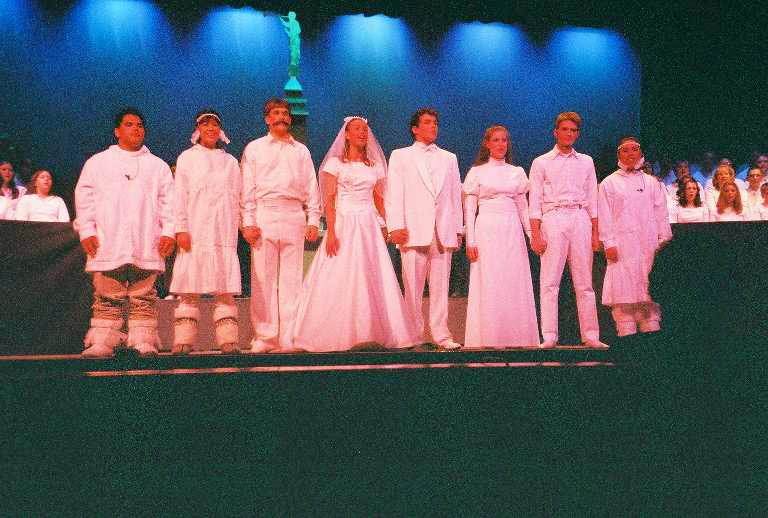
Ending pose of “In the Shadow of the Mountain,” February 2004. I’m second from the right.

Fast forward 2 decades and interestingly enough I found myself in a very similar situation, playing the lead role in an original musical production. Only this time, the character I was playing was a real person.

Joseph Smith Jr.

The musical was called “The Man Who Saw Heaven.” We just wrapped our last show this past weekend. Original music, inspiring messages, and a story based on the life of the first prophet of The Church of Jesus Christ of Latter-day Saints.

As soon as we started recording music and rehearsing, I turned back into that 18-year old boy. That boy had no idea that over the next 20 years of his life he would have some amazing opportunities to perform. Many of those opportunities came from his time attending BYU as he traveled abroad with the International Folk Dance Ensemble, and sang in front of TV cameras with BYU Vocal Point.
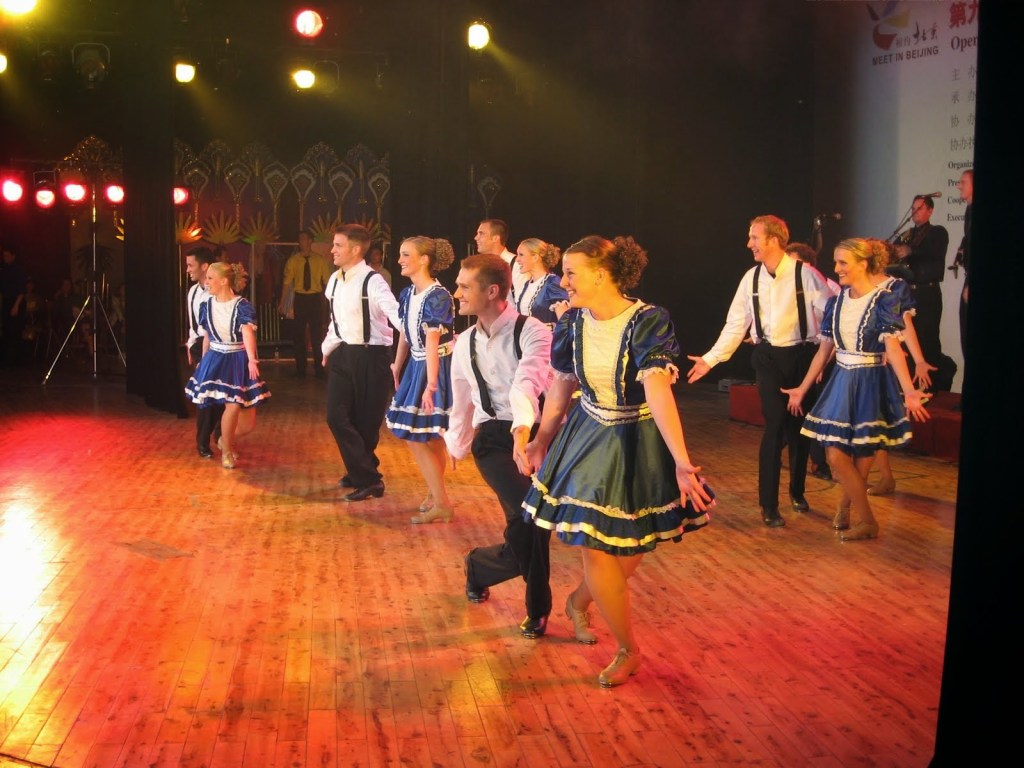
Performing a clogging dance number in Beijing, China with the BYU Folk Dance Ensemble, May 2009. That guy in the center of the photo, skinny skeleton neck, that’s me.
Performing with BYU Vocal Point on NBC’s “The Sing-Off,” September 2011. I’m on the far right.

He would also have 20 years of life experience, some of it joyous and happy as he would marry and start a family, raise children, and find different career opportunities, some of it painful and heartbreaking as he would… marry and start a family, raise children, and find different career opportunities…

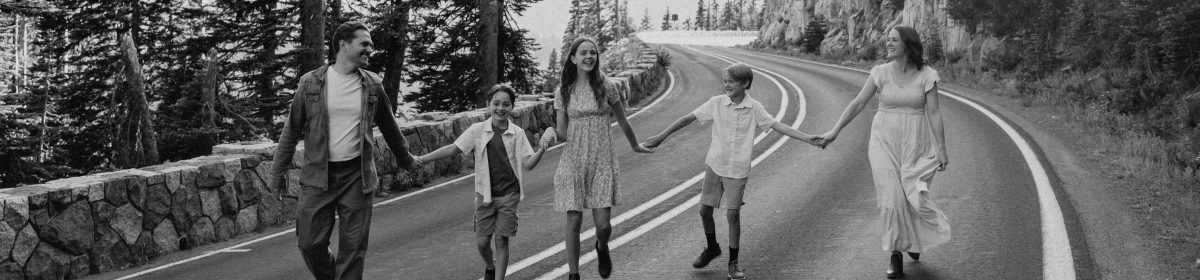
Family photos, July 2024. Yes we always walk in the middle of the road holding hands, smiling and happy.

The point is that the (recently) 40 year old man I am today is a much different person than that 18 year old boy. VERY different. But those feelings, those emotional, impactful, joyful and incredible feelings I felt back then, while they’re the same feelings, it’s like they’ve been bitten by a radioactive sentimental super spider and enhanced to meta-human emotional capacities.

It doesn’t take much these days for my emotions to pop out of my eyes and nose in the form of tears and snot, whether it’s uncontrollable laughter from a hilarious cast constantly cracking jokes, or channeling the painful thoughts of recently turning 40 years old in an intense emotional scene on stage as snot droops uncontrollably all over my hands and face.

Who knew that performing on a stage at a church building in my own backyard could be a more emotionally impactful experience than performing for foreign audiences and on reality TV shows.

Since I came in on this project, I’ve been considering how to portray, and how I feel about portraying Joseph Smith Jr. Before I do I think it’s important to note that I do not know everything about Joseph Smith or church history. But I have read, and studied, quite a bit about him. Over the years I’ve read about his life from many different sources, some very faithful, and some not so much. I’ve read Rough Stone RollingNo Man Knows My HistoryRemembering JosephThe CES Letter, and many more. I’ve listened to countless podcasts of people talking about him, again from all different perspectives. My focus here is not to dive into either side of any debate about who Joseph Smith was or was not. I simply want to share what my experience was portraying this man on stage as part of a theatrical musical production.

How do I portray him?

I decided I would take my cues from the inspiring music, the script, and the message of the show. Joseph Smith, the prophet of God, and a man, called to restore Christ’s church back to the earth. That’s the character I tried to portray. He shared his experiences with the world, and I wanted to help share his story from his faithful perspective. Say what you will about him, but he was earnest, sincere, and did everything he could to fulfill the calling he felt that God placed upon him. I hope I did that justice.

How do I feel about portraying him?

This was a little more complex for me. On one end, it’s just a character that I’m playing. The joy of being a nobody amateur actor is I don’t have to agree or disagree with the character I’m playing. I just get to play a role. I did a lot of plays back in high school and I played good guys and bad guys. Bad guys were often more fun to play. Not because I personally agreed with my character, but because it was fun to play someone so different than myself. How I feel about a character should be irrelevant.

But on the other end, especially in this case, the character of Joseph Smith, a real person who actually lived, and a person that is so engrained in my own religious upbringing, it was impossible for me to not have complex feelings about it. I understand the issues people have with him. I do. I get it. I also understand the faith people have in him as God’s prophet. I can see both sides and everywhere in between, and this effects me personally. How could it not?

But herein lies the message of the show. And for me, this was extremely helpful. It comes in the last two songs of the musical.

The first isn’t actually a song, but a speech entitled “The Living Christ,” delivered passionately by the actor playing the character of Brigham Young. In his speech, he asks:

“If there is something in your life that shakes your faith, then what? Do you look up to heaven and curse God? Do you throw away all the light that has ever illuminated your life? Or do you hold even faster to the little that you do know?”

The second and very last song of the musical is called “This I know.” The message of the song is that there are so many questions surrounding the life of Joseph Smith, and some of those questions might not ever be answered, even today, but despite those questions, the people that knew him and were next to him, felt heaven in his presence.

There is a lot that I don’t know. And my faith has definitely been shaken many times over the years for a variety of reasons. I have no intention of throwing away any light that has illuminated my life, even though it has often felt quite dark. I hope to take as many opportunities as possible to enhance light in my life. No matter what I believe or don’t believe, know or don’t know.

For me, this musical was an opportunity to enhance light in my life. I wasn’t alive back then. I can’t know for sure what happened or didn’t happen. I was never physically next to Joseph Smith. I can’t declare that I felt heaven in his presence. But if I’m lucky enough to get a chance to portray him, share his story, and the stories of those that did live back then and were in his presence, then that sounds like an opportunity to share some light.

And that light that those people felt, and shared, has to count for something.

Me portraying Joseph singing with Emma and some members of “The Man Who Saw Heaven” cast staring at us, November 2025

The Strength of Compassion

Photo by Rémi Walle on Unsplash

What exactly is compassion? And how can I show more of it?

I often find myself writing down thoughts of things I need to work on. Lately those thoughts have revolved around how I can be a more compassionate human.

Overall, I think I’m generally a decent person with an ability to feel love and show compassion to anyone around me. I’ve never doubted for one second the love I feel for other humans in my life, especially my wife and children. That love is unconditional, of course it will always be there, no matter what. But the older my children get, and the more strenuous the turmoil they tend to put me through, I often find myself realizing that I need to work on my own compassion.

If love is a deep and lasting feeling, compassion is how that feeling is expressed.

There have been moments when a child of mine has expressed that they don’t feel loved by me. This causes me enormous pain and confusion because it’s so ridiculously untrue. I can’t believe my child could actually feel that way. And it’s in these moments that I have to evaluate how I show love to each of my children, my wife, and other humans in my life.

I know that I love my family, and I try to express that to them verbally and daily. Verbal expressions of love are the low hanging fruit on the tree of compassion. But how do those verbal expressions of love stack up against the many other memorable and/or unfortunate expressions throughout the day? Expressions of frustration, annoyance, impatience, intolerance, and even anger. If I do an honest intake of my interactions with my children at the end of a difficult and stressful day, from the perspective of my child, it doesn’t take long for me to start to feel guilt for the many mistakes I often make as a parent.

To a child, verbal expressions of love are slippery, they might go in one ear and out the other, like most words a parent speaks to a child. However, visual and tonal expressions of anger are sticky. They don’t go anywhere for a while. There have been several times when my young children have reminded me of some mistake I’d made in the past that still sits with them. It breaks my heart. But it also provides me an opportunity.

I can’t go back and change any mistakes I’ve made. But maybe I can create new memories of sticky compassion.

“Your compassion is a weakness your enemies will not share.” -Ra’s al Ghul

“That’s why it’s so important. It separates us from them.” -Bruce Wayne/Batman

It’s a classic quote from a fantastic movie. And 100% true. Compassion is not weakness. It’s strength. Strength to not react to the anger of the moment. Strength to take a step back and consider the effects of my actions on others. Strength to hold my mortal tongue from speaking words I will regret, and may remain imprinted on the minds and hearts of someone I love.

Of course that’s not to say that we should never feel or express those feelings of anger, frustration, or pain. Holding in frustration and anger creates longer lasting damage within ourselves and likely those around us at some point when we inevitably explode.

But the few times in my life that I have been able to temper my emotions in the moment and allow myself to feel love and express compassion to that person I love, that’s a moment that sticks with me. Whether it’s acknowledged or not by the person to be loved, I can feel the strength of the moment. The strength of compassion. 

Like a muscle, I feel it get stronger every time I’m able to do it. It gets easier the next time I feel the weight of the moment. Sometimes it’s too much for me to bear, and I give up and don’t push through the pain. And that’s ok, life is just plain unbearable sometimes. The weight is too heavy. And in those moments, I have to remember to be compassionate with myself. I’m often too hard on myself, or get in my own head with the woulda coulda shoulda’s.

In those moments, I look to others. Who seems to show this strength of compassion better than me?

Sometimes it’s the very people I’m struggling to show compassion for, like my wife and children. For me, a gentle hug from a child instantly kills any and all feelings of frustration. It invites forgiveness and magnifies compassion. I’m grateful for amazing children who’ve given me this gift many times.

Of course one of the greatest examples of compassion is Jesus Christ. He is not remembered for his wielding of earthly positions of power, political prowess, or unmatched strength of legions and armies, besting his foes and parading about as a man of great pride with important possessions. He’s remembered for his compassion. For his humility. For his ability to feel love for his fellow man, and express that love with a perfect strength of compassion. And he taught us how to do it.

I’m a witness that it’s easier said than done, and that I’m far from perfect at it.

But there is strength in compassion. It may not be flashy or bold. It might seem quiet and content. And some might even call it weak. The loud voices of arrogance tend to drown out the whispers of compassion. So often humility is a hard pill to swallow, but it’s the fuel that keeps the strength of compassion burning.

I will never understand someone else’s life experience. I’ll never be able to feel everything they feel, or know why they make the choices they make. And I can (and have) easily sit back and judge people from a distance. From my limited world view and understanding. And unfortunately we live in a world today that not only praises that kind of behavior, but encourages it, and even claims it as necessary righteous dominion. Holds it up as a thriving and positive way of life. Something to be exonerated and worshipped.

But it’s dispassionate, unkind, and causes tremendous pain.

I firmly believe there is a whole world, an entire life experience, that we have just barely scratched the surface of. There’s a power that’s waiting to be tapped into. And the only way to tap in is to access our own internal sticky strength of compassion. It means letting go of judgement. It means finding some common ground. It means learning from someone different than you.

I hope that, especially as a husband and a father, I can increase my own strength of compassion. As I get older, I’m learning that the main purpose of me being alive is to show love and compassion to everyone around me.

That’s it. Anything else is secondary.

If I can do that better, maybe it will stick, and others can do it with me.

Learning To Be A Peacemaker

Photo by Istvan Hernek / Unsplash

Are you a peacemaker?

What does it mean to be a peacemaker?

In preparation for a talk I recently gave in church, I thought a lot about this. There have been several instances in my life that have taught me what it means to be a peacemaker. Here is what I’ve learned.

My Family

I’m all about family. I always have been. As number 5 of 8 children, I come from a big one. Too big, I’ll say, yes too big. Don’t get me wrong, as a kid I loved it. I was smack dab in the middle and always had someone to play with. But as a parent now, with my own children, the idea of having 8 children puts me into a coma. For us, three is good. Three is the number and the number shall be three.

There was something about being in the middle of all of my siblings that had a profound effect on my life and personality. I observed silently as my older siblings would summon conflict with my parents and each other, and I learned how to avoid said conflict. I watched my older siblings get in trouble, get grounded, and receive a wide variety of creative punishments my parents were quite expert in crafting. I, of course, never got in trouble… And since they aren’t likely to contradict on a blog post you’ll just have to take my word for it that my parents would wholeheartedly agree I was a perfect child.

Not because I actually was, but because I was a certified expert in avoiding conflict. Something that would later come back to haunt me in my first few years of marriage. But that’s a story for another time.

I guess as a result, I was told multiple times by my siblings that I was a peacemaker. I rarely ever got contentious, angry, or visibly upset. I developed a very passive and easy going personality. I thought I had it all figured out. Was this really all there was to being a peacemaker?

Missionary Companionship Inventory

The first time I ever had to forcibly deal with real conflict resolution was as a missionary serving in the Ecuador Guayaquil South mission. For those of you that have served, you know what I’m talking about. It’s called companionship inventory, and we scheduled it every Wednesday. It was your time to sit down with your companion, someone you did not choose to spend 100% of your time with, begin with a prayer, and then proceed to tell each other that they walk too slow, chew too obnoxiously, snore too loud, or talk too much. As much as I tried, I could not avoid the conflict of having another human around me 24/7, especially one I didn’t get along with. Luckily not every companion was like this, and for the ones that were, there was an end date in sight you could look forward to.

In the mean time, however, I tried as hard as I could to remember the words from Jesus’ Sermon on the Mount: “Love your enemies, bless them that curse you, do good to them that hate you, and pray for them which despitefully use you, and persecute you.”

This attitude was also encouraged from my mission president, who must have intentionally stuck me with certain companions to provide me this conflict learning opportunity. What this meant as a missionary was, if you aren’t getting along with your companion, go make their bed. Fix them some breakfast. Offer to do something kind, in spite of whatever conflict there might be. I wasn’t always great at this, but the few times I did do it, the tension in the room would cease, tempers dampened, and love increased for that companion.

It’s amazing how quickly service brings love and peace.

Among the many things I learned as a missionary, I learned that being a peacemaker was more than just avoiding conflict, but putting forth some conscious effort, in spite of that conflict, to choose to love that person with acts of service.

BYU Folk Dance Performance in Belarus

After my mission I went back to BYU provo, where I was immediately placed on to a folk dance team that would, unknowingly at the time, determine my future in more ways than I knew, despite my lack of dance experience. I entered the rehearsal room and introduced myself to the team, my awkward posture, perfectly parted hair and thin frame glasses speaking louder than any words I may have said about how recently I had just returned from my mission (it had been 1 week). Nobody on the team knew me and many faces stared back at the skeletal figure before them with wonder, possibly fear, at the idea that it seemed nobody had fed me the entirety of my mission. But there was one freckled face that saw past the gangly body and instead saw a future husband, father, and friend. Her name was Amanda and it was everything I could do to keep her off of me, to give me some space and not smother me as she relentlessly pursued me for a year and a half until I finally gave in and agreed to marry her.

Ok, Amanda’s version of those events might be slightly different, but since I have a blog and she doesn’t, you have no choice but to believe everything I say.

While attending BYU, Amanda and I both had the amazing opportunity to perform internationally with BYU’s Folk Dance Ensemble. Now before you get overly impressed, please understand that while all of the amazing women, including Amanda, were incredible dancers who had trained and prepared themselves most of their lives up to that point to be on a team like this, it was always difficult to fill up these teams with men, so for most of the men, including myself, if you could walk and chew gum you were on the team. Regardless, I began to grow an immense appreciation for the power and emotion that dance could bring to everyone we performed for.

While Amanda and I were dating we got to go to many eastern European countries with folk dance. One of those countries was Belarus. As we entered the country by bus and prepared for our show, we were instructed several times from our leaders that we were not to talk to people on the street or even smile too much, so as not to be accused of proselytizing in any way. We were even given expectations that many people might not come to the performance, and those that did might not give us a warm welcome and response that we were accustomed to. We barely knew anything about the people of Belarus or the politics at the time, just that we should put on a good show regardless of the response. So we did.

Halfway through the show, we could see ushers lining the aisles with additional chairs. The venue was at capacity and they were trying to make more room. It would have been a full on fire hazard. But not just that, out of all the crowds we performed for spanning across 6 different countries, they were the loudest, most energetic of all of them. They were on their feet, clapping, dancing, and fully enjoying the show. We couldn’t believe it.

I share this story because I learned another way to be a peacemaker. I didn’t know these people. I didn’t know their struggles or lives or conflicts they were going through. But somehow, through music and dance, peace was made all the same.

Construction Conflict

In a previous career, I spent 8 years as a construction superintendent and construction manager building new houses in the Seattle area. I learned everything I could about construction, safety, building codes, homeownership, but most importantly, I learned another lesson in how to be a peacemaker. You see, a construction manager is really a glorified babysitter of adults. From the foundation guy, to the framer, the plumber, the electrician, the drywaller, on and on, you have different companies, cultures, and people from all walks of life, stepping foot inside your house being built, and you are in charge of making sure they do their job. The environment is just ripe for conflict. Everybody is mad at each other, or mad at me, or the customers, or mad at the weather, or whatever else is preventing them from doing their job that day, and since I was the man in charge, it all came down on my shoulders. In the construction world, there are very aggressive personalities. People with short tempers. People that seem to enjoy yelling, arguing, and threatening. People that were so different than me in almost every way that it was difficult not to get pushed around for my first few years on the job.

I had to learn to be a peacemaker. And what that meant in this environment, was learn how to be a good listener. I’ll never forget one time in particular being yelled at several inches from my face by the drywall supervisor about some kind of scheduling mistake for his drywall guys to install. He seemed to have a lot to unload as he went on for about 20 minutes straight barely taking a breath. I stood, silent and didn’t say a word. Over the course of those 20 minutes, he began to slowly back away, almost looking exhausted. After a long pause, once he was all done and got it all out, I asked, in a sincere tone, if there was anything else. He waved his hand, slumped over on a bucket now, signaling for me to go away, which I did. About an hour later, he gave me a phone call, and calmly apologized for his behavior. Strangely, from then on, we got along pretty well. Any future conflicts or issues were handled with much more respect and mitigated tempers. I learned from this experience that most of the time when people got upset, they just needed someone to listen to them. I realized that I could be that person.

I ventured from the world of passive easy going nature, into one of assertiveness. It was uncomfortable. I wasn’t perfect at it and I’m still not. But it allowed me to better communicate and listen to everyone, and more effectively do my job.

In The Home

The most important example, however, of being a peacemaker, is within the walls of my own home. Some days start with “Love at Home” and end with “Master The Tempest Is Raging” (just a little hymnbook joke there, can’t remember where I first heard it).

I often worry about the example I set for my children. Am I a peacemaker in the home? I sometimes get upset when children don’t listen, or argue, or fight, or wipe their boogers in their sisters hair, or spew mouthwash all over the floor after being tickled by that same sister. I often have to ask myself if I can put forth the same effort, like I did with the drywall supervisor, or the crowd in Belarus, or that annoying missionary companion, to serve, to show love, and listen to my wife and children in times of conflict.

My children will be the first to tell you that dad can frequently get upset, and they enjoy mocking my authoritative voice every now and then, in a loving way of course. Now, as a father and husband, learning to be a peacemaker is a daily challenge. Nearly every day there is something that puts me on edge, tests my patience, or causes me to loose my cool. And that’s okay, that’s kind of the definition of parenting and marriage. It’s all a bunch of hard work. Peacemaking ain’t easy!

There’s a trick to getting through each day, despite those tough moments. And it’s actually quite simple, if you make time for it…

Find time for daily personal peace.

For me, it’s in the morning. Before the kids are awake. While the house is still silent. I know what time the kids wake up, so I get up before they do. I give myself whatever time I need to get ready, eat some breakfast, and spend some time alone. Meditate? Sure. Pray? Of course. Read? On occasion. Maybe even just pulling out my calendar and going through in my head what I have going on that day. It varies from day to day. But the point is, it’s my time. It’s my few minutes of peace. Like the calm before the storm. Like taking a breath before jumping into the deep end of the pool. Like the hushed silence from a crowd when the announcer yells “On your mark” moments before the race.

Although I think it’s ideal, it doesn’t have to be the morning. It can be whatever time works for you. I personally can’t stand waking up to the sound of screaming children. It makes me feel like I’m starting my day already underwater.

Also, daily personal peace doesn’t solve all your problems. But it does help you to feel some of that peace and remind you that you can offer some of that same peace to somebody else that day. Maybe a spouse, a child, a co-worker, or a friend. I believe that maintaining some semblance of inner peace, even just for a few minutes each day, and help you contribute immensely to the world around you, a world in desperate need of the peace you have to offer.

I don’t have teenagers yet, but those days are just around the corner and I’m sure my peacemaking abilities will be tried, scrutinized, and challenged in ways I don’t even understand yet. But I know that with acts of service, love, listening, and finding time for daily personal peace, I’ll hopefully be able to navigate those days ahead as I continue to learn how to be a better peacemaker.

The Water We Bring

“It’s not really about how much water we bring. It’s more about the change that occurs once we’ve brought whatever water we could.”

Recently we have been watching as a family the TV show “The Chosen.” This show depicts not only the life of Jesus Christ, but also many biblical people associated with Jesus during his earthly ministry. 

The show definitely takes some creative liberties in terms of dialogue and events from the Bible, but I absolutely love it. In fact I’d say it’s kind of the point of the show; to not only teach the stories we know and love, but bring them to life. And what better way to bring them to life than to re-enact these events, filling in the gaps with creative and culturally accurate portrayals of real people and what they might have been like or what they might have said.

Jesus Himself is portrayed not just as a teacher, philosopher, and eventually Savior, but also a person. Someone who smiles and cracks jokes with His disciples and the people who follow Him. He is handy with His carpenter skills. He sometimes lives in a tent and has to fend for Himself. He attends events and participates in conversations, dances, and festivities of the culture of His time. We find ourselves smiling and laughing at not only Him, but His disciples and followers. They all seem like normal people, just like us.

Water Into Wine

Recently we watched the episode where Jesus is attending a wedding and performs the well known miracle of turning water into wine. To be completely honest, I’ve never really thought much about this miracle. It always seemed kind of unimportant and silly to me. Among His many wondrous miracles, this never ranked very high. Of course it’s impressive, but I never really understood the meaning or reasoning behind it.

The show provides some creative and historical context for the need to perform this miracle, and that was helpful, but there was something else about this miracle that struck me. 

In the show, Jesus is summoned to a room where there are giant empty jars spread out on the ground. These jars had just recently been relieved of the last bit of wine for the wedding, and they had a big problem. They needed more wine! Jesus stands there silent for a moment, then he asks those with Him (including Thomas, one of his future disciples who would later be known as “Doubting” Thomas) to fill these jars with water. Thomas just looks at Jesus like He is crazy. But others, trusting that Jesus knows what he is doing, even if they don’t understand, go and get water to fill the jars.

My Question

The question I asked myself was this: Why couldn’t Jesus just make the wine appear?

He probably could have. He produced fish and loaves of bread in a later miracle. He obviously had the power summon wine at His command. But instead, he asked those with Him to fill the jars with water.

Why?

If I were Thomas, what would I do? Sure this is a familiar Biblical story now, but at the time, I may have felt more like Thomas than I care to admit. I’m sure my own brain would be thinking “What are you talking about? I need WINE, not WATER. What’s water going to accomplish? That seems like a lot of work for an unacceptable solution to our problem.”

Yes, often times when I read scripture, I find myself relating more to the doubters and the neigh-sayers than the fast responding faith-filled followers of Jesus.

I imagine it took some time to get those jars filled up with water. They couldn’t just turn on a faucet. But even if they could, that’s a lot of jars to fill. I get impatient just filling up my over-sized water bottle in the mornings for work.

The Water We Bring

Now obviously I don’t know Jesus’ reasoning for why He does what He does. As I understand it, scripture is meant to be read, felt, internalized, and interpreted in a way that is meaningful and impactful for us. Several people can read the same passage of scripture and derive different meanings and applications for their life. Or something that never provided much meaning before, all of a sudden will.

What impacted me while watching this episode was not just the declared faith in what Jesus said to do, but the mobilized faith put into action of doing what Jesus asked them to do. 

He asked them to bring water.

I began to think about the “water” that I bring. What actions of faith am I bringing? Am I bringing anything? Am I recognizing that Jesus has asked me to act, and not just declare my faith in Him? Declaring faith in my Savior is an important step in my personal faith journey, but sometimes it only brings me as far as “doubting” Thomas, who was perhaps slow or resistant to act or believe unless given some explanation or reason to do so.

I know I’m not the only one out there who sometimes stops and asks myself, “Wait, why am I doing this? What’s the meaning behind this? I want to understand this better.” Then I bring everything I have, all of my understanding, all of my strength, all of my doubting faith, and do my best to fill the empty jars before me.

The Power To Change

In this miracle, it was only after they brought water and filled all of the jars that Jesus changed the water into wine.

Jesus, with the almighty power to make wine appear if He so wished, thought instead that it was important to invite His followers to act. To bring their water and fill the jars. To participate in what would be an important miracle. A miracle that displayed the power to change.

It’s not really about how much water we bring. It’s more about the change that occurs once we’ve brought whatever water we could. Maybe it’s a few drops, a few cups, or a few waterfalls. It doesn’t really matter. What matters is the change, the real miracle, that comes from Jesus.

The power of this miracle is not in the amount of water we bring to fill the jars, but the power of change that only our Savior can give us.

Does He always require something of us before he decides to help us? No. His grace is given freely however he chooses. But sometimes, SOMETIMES, He does ask us to bring some water.

Sometimes I don’t understand why, and it may not seem like very much water, but I know He can work with whatever I bring.

Seeking Solace Among the Storms

“Where can I turn for peace? Where is my solace when other sources cease to make me whole?”

Photo by Dingzeyu Li on Unsplash

“Where can I turn for peace? Where is my solace when other sources cease to make me whole?”

These words, penned by poet and novelist Emma Lou Thayne, have had increasingly greater impact on me with each passing year of my life. Combine these profound words of self inquiry with the beautiful music composed by Joleen G. Meredith, and you have one of my favorite hymns of all time. 

Alone Time

We all need it. There’s nothing like having time to yourself. And lately, I’ve been struggling to find and use this time.

For the past 12 years in my career, I have been fortunate to have mornings to myself. Almost every job I’ve had has required an early morning start time. Whether it’s to the construction site, the office, or some training meeting, I’m usually out of the house by 6am to start my day. This means up and at ’em between 5–6am getting ready for the day, and if I throw in a morning workout, even earlier than that.

Typically my family is still asleep when I leave for work, which means the house is quiet. One to two hours of a quiet house has been a huge blessing for my own personal alone time.

Until recently.

Halfway through this past year, I found myself unemployed and nobody demanding an early morning start time from me. As I sought for new employment opportunities and pursued new career goals during the day, my forced habit of early to rise fell by the wayside. Instead of waking up to my alarm and quietly moving about the silent, peaceful house, I was now waking up to kids running around the house, yelling, and prodding me asking if they could watch TV, while informing me the morning cereal selection was below their approved sugary standard and instead they cooked themselves eggs for breakfast, threatening to burn the house down as the combined scent of natural gas and a burned cast iron pan lingers in the air and the sound of the smoke alarm blares punishingly to my sombre parental ears.

It was quite a shock to me to wake up this way on a daily basis. And I realized what kind of affect this was having on me as my morning alone time disappeared.

Fortunately it didn’t take too long to re-employ myself, however my new career path is the first job I’ve ever had that does not require an early morning meeting of some kind. I’ll admit it has been a nice change of pace being able to assist my wife in getting kids dressed and ready for school and out the door, a task that she’s handled basically solo for the past 7 years. However, my new habit of waking to the sounds of morning juvenile apocalyptic riotousness, has endured.

Finding some alone time has become much more difficult. Now, if I get up before the rest of my family to get some alone time, it is purely by choice, and not because anyone demands it of me.

I have found myself asking the same questions that Emma Lou Thayne poses, lamenting the source of my quiet mornings and seeking other opportunities to find peace and solace.

The Storms Never Stop

As I get older, it seems that the storms of life never cease. In fact, they increase. Family relationships become strained. Children’s emotions rage. People experience life changing and often tragic events of job loss, financial trouble, illness, and death. Just when you escape one storm, you get blasted by another. “Out of the frying pan and into the fire” becomes less of an effective metaphoric statement and more of a family motto. 

I used to think that if I could just achieve X or accomplish Y that maybe the surrounding storms of life would finally stop, or at least simmer down to a bearable light breeze. Maybe then and only then I could realize success, happiness, and comfort.  

However the storms of life are relentless. No matter what choices I make, what path I choose to follow, what beliefs I have, or what goals I pursue, the storms of life will never stop. In fact, quite the opposite. As I experience more of life, I realize just how big the storm is, and the impending doom of it all becomes unbearably overwhelming.

“Life is pain, Highness. Anyone who says differently is selling something” -Westley from The Princess Bride

Seeking Solace

Thankfully, there is actually something we can do about it. Not the storms, mind you, but our response to it. If I can accept that the constant raging storm is always there and out of my control, I’m going to acknowledge it’s ever-burdening presence, and then turn to what I can control.

And what I can control is seeking solace. Seeking peace. Finding, even if it’s just for a few minutes a day, a time when I can just be with my own thoughts. Away from the noise. Away from the distractions. Deciding to turn to something that brings me peace because I have the power to do that, regardless of whatever else is going on.

It just so happened that among my recent time of unemployment and painful morning wake-up calls, I happened to be training heavily for a half-marathon, something I had never done before but had nonetheless committed to almost a year prior. The time was drawing near for the race and I had set myself goals for training and physical preparation. This preparation included running, sometimes for over an hour, as I paced myself for success.

An entire hour, alone and unbothered. Alone time! Realized at last!

I sought solace in running. Sometimes running to the tune of my own thoughts, sometimes running as I listened to an inspiring or adventurous audiobook. It wasn’t always quiet, but if I could find the right location, either on a trail or a less traveled road, and even among my huffs and puffs and pains in my legs, there was actually solace there. I could find peace, if only for a short time, that began to be a source to make me whole.

The Right Sources

I love that included among Emma Lou Thayne’s words are “when other sources cease to make me whole.”

Ain’t that the truth.

It seems like we are a culture of people wandering from source to source trying to feel whole. How often have I turned to a source, hoping it will fill me and quench my emptiness, only to find out that the feeling was only temporary at best and completely unfulfilling at worst?

Everyone is demanding our attention. Everyone is “selling something.” Everyone is asking for subscriptions and follows and likes and comments. There are more distractions today than ever before. And we all give into it! We can’t even go to the bathroom without bringing in our phone and scrolling instagram or YouTube to get our fix of distractions. And the few times I happen to go to the bathroom and don’t bring my phone with me, I always have the same epiphany of how much more peaceful life was before I ever owned a phone and how many accumulative hours of life I spent sitting there, undistracted, forced to contemplate my existence for the briefest of moments and finding what simple solace I could because nature demanded it of me.

But I digress.

As for what sources help to make me feel whole, well I’m still figuring it out and it’s an ever changing and evolving experience. Over a year ago, I’m not sure I would have found much peace and solace in running. I also wasn’t running for over an hour on a regular basis. I was satisfied with my morning routine and quiet house before leaving soundlessly to work. Maybe next year life will change in a way that I look for solace elsewhere, maybe somewhere I haven’t even considered yet. It will depend entirely on me.

Nobody can tell you where you can truly seek solace. Where you might find peace and fulfillment. They can offer their experiences as examples, they can present evidence and stories, and even provide overwhelming authentic support for how they find it. It might work for you, it might not. It certainly doesn’t hurt to try and find out for yourself. But I can’t expect what brings me solace and peace to also bring you solace and peace.

All I know is that it’s important to seek it. Hopefully find it. Make time for it. And hold onto it so you can navigate the storms of life as they come.

If you’re looking for a place to start, give the bathroom a try and leave the phone behind 🙂