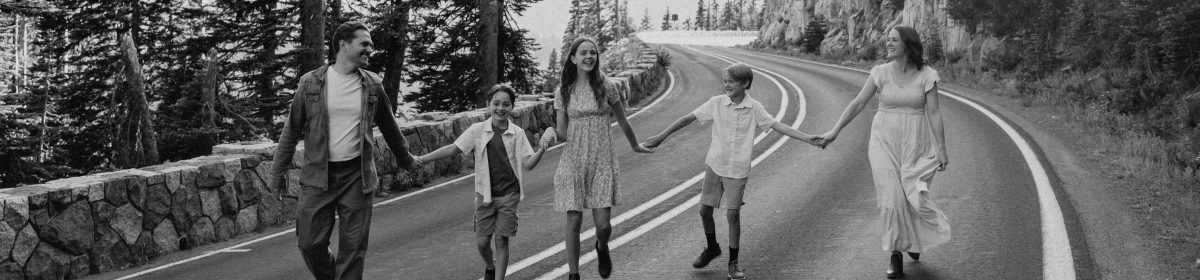
Learning To Be A Peacemaker

Photo by Istvan Hernek / Unsplash

Are you a peacemaker?

What does it mean to be a peacemaker?

In preparation for a talk I recently gave in church, I thought a lot about this. There have been several instances in my life that have taught me what it means to be a peacemaker. Here is what I’ve learned.

My Family

I’m all about family. I always have been. As number 5 of 8 children, I come from a big one. Too big, I’ll say, yes too big. Don’t get me wrong, as a kid I loved it. I was smack dab in the middle and always had someone to play with. But as a parent now, with my own children, the idea of having 8 children puts me into a coma. For us, three is good. Three is the number and the number shall be three.

There was something about being in the middle of all of my siblings that had a profound effect on my life and personality. I observed silently as my older siblings would summon conflict with my parents and each other, and I learned how to avoid said conflict. I watched my older siblings get in trouble, get grounded, and receive a wide variety of creative punishments my parents were quite expert in crafting. I, of course, never got in trouble… And since they aren’t likely to contradict on a blog post you’ll just have to take my word for it that my parents would wholeheartedly agree I was a perfect child.

Not because I actually was, but because I was a certified expert in avoiding conflict. Something that would later come back to haunt me in my first few years of marriage. But that’s a story for another time.

I guess as a result, I was told multiple times by my siblings that I was a peacemaker. I rarely ever got contentious, angry, or visibly upset. I developed a very passive and easy going personality. I thought I had it all figured out. Was this really all there was to being a peacemaker?

Missionary Companionship Inventory

The first time I ever had to forcibly deal with real conflict resolution was as a missionary serving in the Ecuador Guayaquil South mission. For those of you that have served, you know what I’m talking about. It’s called companionship inventory, and we scheduled it every Wednesday. It was your time to sit down with your companion, someone you did not choose to spend 100% of your time with, begin with a prayer, and then proceed to tell each other that they walk too slow, chew too obnoxiously, snore too loud, or talk too much. As much as I tried, I could not avoid the conflict of having another human around me 24/7, especially one I didn’t get along with. Luckily not every companion was like this, and for the ones that were, there was an end date in sight you could look forward to.

In the mean time, however, I tried as hard as I could to remember the words from Jesus’ Sermon on the Mount: “Love your enemies, bless them that curse you, do good to them that hate you, and pray for them which despitefully use you, and persecute you.”

This attitude was also encouraged from my mission president, who must have intentionally stuck me with certain companions to provide me this conflict learning opportunity. What this meant as a missionary was, if you aren’t getting along with your companion, go make their bed. Fix them some breakfast. Offer to do something kind, in spite of whatever conflict there might be. I wasn’t always great at this, but the few times I did do it, the tension in the room would cease, tempers dampened, and love increased for that companion.

It’s amazing how quickly service brings love and peace.

Among the many things I learned as a missionary, I learned that being a peacemaker was more than just avoiding conflict, but putting forth some conscious effort, in spite of that conflict, to choose to love that person with acts of service.

BYU Folk Dance Performance in Belarus

After my mission I went back to BYU provo, where I was immediately placed on to a folk dance team that would, unknowingly at the time, determine my future in more ways than I knew, despite my lack of dance experience. I entered the rehearsal room and introduced myself to the team, my awkward posture, perfectly parted hair and thin frame glasses speaking louder than any words I may have said about how recently I had just returned from my mission (it had been 1 week). Nobody on the team knew me and many faces stared back at the skeletal figure before them with wonder, possibly fear, at the idea that it seemed nobody had fed me the entirety of my mission. But there was one freckled face that saw past the gangly body and instead saw a future husband, father, and friend. Her name was Amanda and it was everything I could do to keep her off of me, to give me some space and not smother me as she relentlessly pursued me for a year and a half until I finally gave in and agreed to marry her.

Ok, Amanda’s version of those events might be slightly different, but since I have a blog and she doesn’t, you have no choice but to believe everything I say.

While attending BYU, Amanda and I both had the amazing opportunity to perform internationally with BYU’s Folk Dance Ensemble. Now before you get overly impressed, please understand that while all of the amazing women, including Amanda, were incredible dancers who had trained and prepared themselves most of their lives up to that point to be on a team like this, it was always difficult to fill up these teams with men, so for most of the men, including myself, if you could walk and chew gum you were on the team. Regardless, I began to grow an immense appreciation for the power and emotion that dance could bring to everyone we performed for.

While Amanda and I were dating we got to go to many eastern European countries with folk dance. One of those countries was Belarus. As we entered the country by bus and prepared for our show, we were instructed several times from our leaders that we were not to talk to people on the street or even smile too much, so as not to be accused of proselytizing in any way. We were even given expectations that many people might not come to the performance, and those that did might not give us a warm welcome and response that we were accustomed to. We barely knew anything about the people of Belarus or the politics at the time, just that we should put on a good show regardless of the response. So we did.

Halfway through the show, we could see ushers lining the aisles with additional chairs. The venue was at capacity and they were trying to make more room. It would have been a full on fire hazard. But not just that, out of all the crowds we performed for spanning across 6 different countries, they were the loudest, most energetic of all of them. They were on their feet, clapping, dancing, and fully enjoying the show. We couldn’t believe it.

I share this story because I learned another way to be a peacemaker. I didn’t know these people. I didn’t know their struggles or lives or conflicts they were going through. But somehow, through music and dance, peace was made all the same.

Construction Conflict

In a previous career, I spent 8 years as a construction superintendent and construction manager building new houses in the Seattle area. I learned everything I could about construction, safety, building codes, homeownership, but most importantly, I learned another lesson in how to be a peacemaker. You see, a construction manager is really a glorified babysitter of adults. From the foundation guy, to the framer, the plumber, the electrician, the drywaller, on and on, you have different companies, cultures, and people from all walks of life, stepping foot inside your house being built, and you are in charge of making sure they do their job. The environment is just ripe for conflict. Everybody is mad at each other, or mad at me, or the customers, or mad at the weather, or whatever else is preventing them from doing their job that day, and since I was the man in charge, it all came down on my shoulders. In the construction world, there are very aggressive personalities. People with short tempers. People that seem to enjoy yelling, arguing, and threatening. People that were so different than me in almost every way that it was difficult not to get pushed around for my first few years on the job.

I had to learn to be a peacemaker. And what that meant in this environment, was learn how to be a good listener. I’ll never forget one time in particular being yelled at several inches from my face by the drywall supervisor about some kind of scheduling mistake for his drywall guys to install. He seemed to have a lot to unload as he went on for about 20 minutes straight barely taking a breath. I stood, silent and didn’t say a word. Over the course of those 20 minutes, he began to slowly back away, almost looking exhausted. After a long pause, once he was all done and got it all out, I asked, in a sincere tone, if there was anything else. He waved his hand, slumped over on a bucket now, signaling for me to go away, which I did. About an hour later, he gave me a phone call, and calmly apologized for his behavior. Strangely, from then on, we got along pretty well. Any future conflicts or issues were handled with much more respect and mitigated tempers. I learned from this experience that most of the time when people got upset, they just needed someone to listen to them. I realized that I could be that person.

I ventured from the world of passive easy going nature, into one of assertiveness. It was uncomfortable. I wasn’t perfect at it and I’m still not. But it allowed me to better communicate and listen to everyone, and more effectively do my job.

In The Home

The most important example, however, of being a peacemaker, is within the walls of my own home. Some days start with “Love at Home” and end with “Master The Tempest Is Raging” (just a little hymnbook joke there, can’t remember where I first heard it).

I often worry about the example I set for my children. Am I a peacemaker in the home? I sometimes get upset when children don’t listen, or argue, or fight, or wipe their boogers in their sisters hair, or spew mouthwash all over the floor after being tickled by that same sister. I often have to ask myself if I can put forth the same effort, like I did with the drywall supervisor, or the crowd in Belarus, or that annoying missionary companion, to serve, to show love, and listen to my wife and children in times of conflict.

My children will be the first to tell you that dad can frequently get upset, and they enjoy mocking my authoritative voice every now and then, in a loving way of course. Now, as a father and husband, learning to be a peacemaker is a daily challenge. Nearly every day there is something that puts me on edge, tests my patience, or causes me to loose my cool. And that’s okay, that’s kind of the definition of parenting and marriage. It’s all a bunch of hard work. Peacemaking ain’t easy!

There’s a trick to getting through each day, despite those tough moments. And it’s actually quite simple, if you make time for it…

Find time for daily personal peace.

For me, it’s in the morning. Before the kids are awake. While the house is still silent. I know what time the kids wake up, so I get up before they do. I give myself whatever time I need to get ready, eat some breakfast, and spend some time alone. Meditate? Sure. Pray? Of course. Read? On occasion. Maybe even just pulling out my calendar and going through in my head what I have going on that day. It varies from day to day. But the point is, it’s my time. It’s my few minutes of peace. Like the calm before the storm. Like taking a breath before jumping into the deep end of the pool. Like the hushed silence from a crowd when the announcer yells “On your mark” moments before the race.

Although I think it’s ideal, it doesn’t have to be the morning. It can be whatever time works for you. I personally can’t stand waking up to the sound of screaming children. It makes me feel like I’m starting my day already underwater.

Also, daily personal peace doesn’t solve all your problems. But it does help you to feel some of that peace and remind you that you can offer some of that same peace to somebody else that day. Maybe a spouse, a child, a co-worker, or a friend. I believe that maintaining some semblance of inner peace, even just for a few minutes each day, and help you contribute immensely to the world around you, a world in desperate need of the peace you have to offer.

I don’t have teenagers yet, but those days are just around the corner and I’m sure my peacemaking abilities will be tried, scrutinized, and challenged in ways I don’t even understand yet. But I know that with acts of service, love, listening, and finding time for daily personal peace, I’ll hopefully be able to navigate those days ahead as I continue to learn how to be a better peacemaker.


Asking Questions: How To Level Up In Life

Photo by Adi Goldstein on Unsplash

“Can I ask you a question?” -Taylor Swift

Occasionally as a family, we get together in a “quiet” (just go with it for a second) setting like our living room, and attempt to sit calmly (haha) on the couch to have a little family pow wow. Sometimes we’ll watch a quick spiritual video of some kind, or we’ll read scriptures, or sometimes just discuss what’s going on with everybody that week.

When I say a few minutes, it really is a few minutes before the kids start throwing couch pillows, sitting on each others faces, or laughing uncontrollably at something someone said which all turns into wrestling on the floor.

Sounds crazy, I know… 🙂

Every now and then, unprovoked by my wife and I, we’ll get some genuine comments and questions from the kids. I love it when it happens because it means that our home has become, at least in that tiny moment, a place where our child can feel comfortable speaking his mind and being vulnerable enough to ask sincere questions from his heart.

Our son Jett, who just happens to be turning 11 this week, is an amazing boy. He doesn’t often speak his mind or show sincere emotion, but when he does, you know it’s real.

I’ll give a quick example. At the beginning of this last school year, Jett and his fellow 5th graders were getting ready to go to 5th grade camp. They would be gone for several days, camping in cabins with their classmates and school teachers. Jett was excited to go, and didn’t show any hesitation at all. We got everything packed up, and the morning of the first day, as we were about to head out the door to drop him off at the school with all of his camping gear, something inside him unleashed. Something he hadn’t even hinted towards, and my wife and I were somewhat surprised at what was going on. He was in tears as he told us over and over that he didn’t want to go. That he was scared. That he didn’t want to be away from home without us. That home was where he felt safe, and he didn’t want to leave that. We had no idea he was feeling this way. And it was true, as a 10 year old boy, he had never spent the night anywhere else without us, or some immediate family member that he knew and trusted. This would be the first time he would be “on his own” for several nights in a row in a strange new place.

Long story short, after some emotional and difficult conversations, while sitting on the curb outside the school with all of the other kids on the buses ready to go, and with some strong encouragement to him on my part, he ended up going. Of course, he had a blast and was glad he went, as were we.

The reason I share that quick story is to speak to Jett’s tender heart. While he keeps getting older and is becoming more and more guarded against his parents, and less willing to share his true feelings with us, he’s still got a soft spot for his safe place he calls home.

Ok, back to our family pow wow. I can’t even remember exactly what we were discussing at the time, but whatever it was, Jett decided to ask: “How do I even know that what you’re saying is true? What if you’re just making it up? How do we know what anybody says about anything is true? Any story that anyone tells about something else, or somebody else who isn’t alive anymore, or that happened a long time ago, how can we actually know if it happened or not? People could just be making things up.”

I had to take a minute as I realized my son was not just making jokes and being silly, he was sincere. He was speaking about real concerns from his heart. I don’t know that I gave him a very good answer in the moment, I probably said something about how the Gift of the Holy Ghost helps us know the truth of all things, and the only way we can know truth is by learning, studying, and prayer. At least that’s been my experience.

But more than my answers, I was fascinated and pleased at the wonderful questions my son was asking. I have no idea what prompted them, but in that moment I was proud that he felt the need to ask, that he felt home was a safe space in that moment to open up.

This prompted me to think about the importance of asking questions.

Video Games

Have you ever played a role player game? My son Jett loves this game called The Legend of Zelda. I’ve watched him play, and it’s really quite fun. It’s essentially a story that you get to play out. There are missions to accomplish, items you need to collect, and enemies you need to thwart. It’s an open world game where you can pretty much go anywhere you want. If you really wanted, you could wander around aimlessly for hours.

However, if you’d like to actually progress through the story of the game, you need to interact with the NPC’s, the Non-Player Characters. These characters can be quest-givers, vendors, companions, or even enemies. These interactions contain a lot of questions. Questions posed by the NPC, or by your character, something to help guide you on your way and dropping little hints for whatever you need to do next. By interacting with these NPC’s, you then discover clues about what you need to do next and where you need to go.

Simply said, asking questions is how you level up. It’s how you learn. It’s how you discover things you otherwise might not have noticed or thought about. And the more questions you have, the better you can progress. Until eventually, you beat the game.

I’ll be honest, I don’t have a lot of patience with these kinds of video games. I find myself too often wandering aimlessly trying to figure things out myself before I end up getting stuck, frustrated, and just quit.

Yikes am I relating video games to life? I guess video games can actually be helpful. I can see my wife rolling her eyes at the notion… (by the way, the only reason I know anything about the rules of football is because of Madden ‘94 on the Super Nintendo)

Ask Questions

I’m sure we’ve all been in this scenario, I know I have a hundred times: Usually a school or a work setting. Somebody opens up an opportunity to ask questions about a topic. In my brain, tons of questions are firing off, whether from a lack of understanding or paying attention or a desire to discuss more, I have questions… but I say nothing. I hold my tongue. I wait to see if maybe somebody else in the room will ask the question I have. I’m embarrassed to ask the question. Although I look around the room, and I get the sense that other people have the same concern or question, I still don’t want to put myself out there. I’d rather stay silent than give myself an opportunity to learn. Finally, some brave soul does decide to ask the question and I’m glad that I didn’t have to put myself out there. I sure would have felt stupid asking that question, and now I could pretend like everyone else that I knew the answer the whole time.

Yet there is something admirable in that person who asked the question. They understood how to level up and just needed to ask.

What’s the best way to behave on a first date?

Ask questions.

What’s the best way to sell a product or service?

Ask questions.

What’s the best way to understand and connect with your spouse?

Ask questions.

What’s the best way to understand anything you don’t understand?

Duh, ask questions. (Side note: Those last 2 questions are in no way connected…)

I don’t know why we are so afraid to ask questions sometimes. To put ourselves out there and be vulnerable just for a minute. To not care how people might judge us because there’s something we don’t understand.

Questions are like a secret super power to getting through life. A hidden key to unlock an unseen door. A tool that if used correctly and sincerely, can chisel and shape you and the people you talk to into stronger, more capable and connected versions of yourselves. You might even reveal truths and life experiences that were before hidden in plain sight. And you might empower someone within ear shot who maybe isn’t quite ready to ask questions, or be vulnerable, but is now one step closer to leveling themselves up.

Don’t you love it when somebody asks you questions? When somebody wants to know how you’re doing, and engages with you in conversation about your life? It feels good. It’s fulfilling. And when you also respond with questions, and allow others to open up, it creates this open environment where people can build a connection.

As the great philosopher of our time, Taylor Swift, has said (or rather, sang- from her Midnights album): “…it’s just a question.”

It’s all easier said than done. Myself included.

And once again, I’m glad I have my children in my life to remind me of the simple importance of just asking questions.

🎵 Ba da da da da da daaaaa da da da daaaaaaa 🎵 (to the tune of Super Mario finishing a level)

The Most Important Step A Man Can Take

“I have found, through painful experience, that the most important step a person can take is always the next one.” -Dalinar Kholin, Oathbringer

If you’ve read Brandon Sanderson’s third installment of “The Stormlight Archives,” those words are not only familiar, but memorable. Impactful. Inspiring.

Especially for me.

Oathbringer

In 2024, I ventured for the first time into the Cosmere- the high fantasy universe of Brandon Sanderson. I started with the “Mistborn” trilogy and now I’m halfway through the five-book series of “The Stormlight Archives.”

It’s possible I’m a little late to the party, but I have never read anything like it. The world building is intense and incomparable. The magic systems are fascinating and original. But most of all, the characters and their journeys are powerful and relatable. Brandon Sanderson knows how to tell a hell of a story.

I’ll admit I was hesitant to rove into these books initially because I had been warned of their intensity and vastness. But I’m a reader, I enjoy a good story, and I was sure I could handle it. Or so I said to myself. And more than anything I trusted my Sanderson advisor and navigator and took her at her word that the experience, the commitment, and the journey would be worth it.

After all, journey before destination, right?

Without spoiling any plot points, I’ll simply state that one of the titular characters of “Oathbringer,” Dalinar Kholin, is struggling with a lot of pain from his past. Pain that he caused from difficult choices he made and has been tormented with for years. This pain seems to be more than he can bear, and he is not sure he can live with it. To dull the pain, he looses himself in the thrill of war and the drink.

He’s a soldier, a warrior, a leader. He’s a friend, a husband, a father. He bears an enormous responsibility for uniting the world in which he lives. And he is haunted and tortured by his past. He believes that his past, his pain, will always get in the way of who he is and what he is meant to accomplish.

So at one pivotal point in the story, he is offered an opportunity to have his pain removed. To have someone else bear the thing that is holding him back. To allow him to become who he is destined to become. All he has to do is succumb to the offer to give that pain to someone else, and it will all go away. He’ll be free of it.

He courageously refuses. He declares that his pain is his, and nobody else can have it.

This is I believe the culminating statement statement and message of the book:

“A journey will have pain and failure. It is not only the steps forward that we must accept. It is the stumbles. The trials. The knowledge that we will fail. That we will hurt those around us. But if we stop, if we accept the person we are when we fall, the journey ends. That failure becomes our destination. To love the journey is to accept no such end. I have found, through painful experience, that the most important step a person can take is always the next one.”

It’s difficult to put into words the effect that this statement, and this story, has had on me. But here I am giving it a try.

Unemployment

2024 was a tough year for me. While I’m always someone who tends to look on the bright side and squint my eyes through the mists of pain around me in search of a silver lining, I’ll admit that last year, perhaps more than I ever have before, my squinted eyes closed on more than one occasion and those silver linings just weren’t bright enough to see.

The resulting inner turmoil and pain, while not literally relatable to Dalinar Khonlin’s experience of war and nobility, was enough for me to also question my own purpose, fulfillment, and sense of accomplishment.

At the beginning of 2024, we decided to move. There were certain needs and struggles we were experiencing as a family, and we felt impressed, inspired even, to pick up, move, and settle in a new place. Up until then, I had a great job and career path that was very promising, exciting, and fulfilling. I may not have always loved my job, but I felt valued, needed, and more importantly I felt I was fulfilling my duty as a father to provide for my family, something that has always brought me great happiness. Caring for my family is and has always been my number one priority.

Not long after we moved to a new area, we bought a house, we got settled, and we were feeling pretty good about things, aaaaand… then I found myself for the first time in my life…

…unemployed.

One of my greatest fears was realized. My principal role of being able to provide for my family was now in jeopardy.

I spent a lot of last year unemployed, and it was not a good feeling. Now I’ll be the first to tell anyone that there are more important things than money, and it’s true, but when you suddenly have zero income, money all of a sudden becomes extremely important. It becomes what you think about constantly. You start dreaming up creative ways to earn money. You start wondering why you ever spent any money ever on anything. And you start worrying as you watch your savings account start to dwindle and die an unexpected and pitiful quick death.

Loss of Purpose

But more important than the money, I felt I had lost my purpose. I am the provider. I have a family to care for. They depend on me, and all of a sudden I was undependable. Who was I as a father and a husband if I wasn’t taking care of the essential needs of my family? I had hung so much weight of my self-worth on being able to provide them, and now that worth was financially and figuratively, less.

I know there are many out there who have suffered through unemployment longer that I have, and perhaps on multiple occasions. For me, this was my first time. It was a new experience. And for a while, I was at a loss. I was naive and thought I would snag another job easily in a few weeks time. I took a lot of first steps, mainly hundreds of job applications. However, one month and a few interviews later, nothing came of it. It was very discouraging. I was dedicating nearly all of my time to job hunting. And I hated being home in the middle of the day on a weekday. There was just something off about that. I didn’t belong there, like a puzzle piece in the wrong box.

But I wasn’t going to just sit around. I couldn’t. I had to continue to take the next steps. More job applications, working on my side business, working temp jobs here and there, and even Door Dash. We entered what many have called, survivor mode.

Journey Before Destination

Now I’d love to say that after so much time, after all those next steps, it all worked out, I’ve got a great job now and everything’s great! But this isn’t that kind of story. And it’s also kind of the point.

Perhaps I used to have the mindset that if I could just accomplish X or achieve Y, that I’d reach this euphoric landing place in life where pain subdues, failure doesn’t exist, feelings of worthlessness would be gone, and happiness glows in abundance. That this seemingly miserable journey would be over and I could enjoy the carefree bliss of this distant bright destination. And once I got there, I could ultimately, finally, enjoy life.

It’s a lie. It’s always been a lie. No such place exists, at least not in this life, and I suspect as well in the life to come.

Journey before destination. There’s an eternal principle in there.

I have felt like a failure on so many levels over the past year. That failure has brought pain and a lot of it. But it’s my pain. Nobody can have it. I need it. It’s my fuel to keep going. I take great comfort in the worlds of Dalinar Kholin: “But if we stop, if we accept the person we are when we fall, the journey ends. That failure becomes our destination.”

I don’t accept that. I CAN’T accept that. I may not have the weight of an entire kingdom on my shoulders, but I’ve got something better, something more motivating for me: A family who means everything in the world to me.

I’m still in the thick of it. It’s still painful. It’s not over. But it will never be over. One year from now, five years from now, or twenty years from now, there will be different painful experiences and always a next step to take.

And the most important step I can take is always the next one.

Seeking Solace Among the Storms

“Where can I turn for peace? Where is my solace when other sources cease to make me whole?”

Photo by Dingzeyu Li on Unsplash

“Where can I turn for peace? Where is my solace when other sources cease to make me whole?”

These words, penned by poet and novelist Emma Lou Thayne, have had increasingly greater impact on me with each passing year of my life. Combine these profound words of self inquiry with the beautiful music composed by Joleen G. Meredith, and you have one of my favorite hymns of all time. 

Alone Time

We all need it. There’s nothing like having time to yourself. And lately, I’ve been struggling to find and use this time.

For the past 12 years in my career, I have been fortunate to have mornings to myself. Almost every job I’ve had has required an early morning start time. Whether it’s to the construction site, the office, or some training meeting, I’m usually out of the house by 6am to start my day. This means up and at ’em between 5–6am getting ready for the day, and if I throw in a morning workout, even earlier than that.

Typically my family is still asleep when I leave for work, which means the house is quiet. One to two hours of a quiet house has been a huge blessing for my own personal alone time.

Until recently.

Halfway through this past year, I found myself unemployed and nobody demanding an early morning start time from me. As I sought for new employment opportunities and pursued new career goals during the day, my forced habit of early to rise fell by the wayside. Instead of waking up to my alarm and quietly moving about the silent, peaceful house, I was now waking up to kids running around the house, yelling, and prodding me asking if they could watch TV, while informing me the morning cereal selection was below their approved sugary standard and instead they cooked themselves eggs for breakfast, threatening to burn the house down as the combined scent of natural gas and a burned cast iron pan lingers in the air and the sound of the smoke alarm blares punishingly to my sombre parental ears.

It was quite a shock to me to wake up this way on a daily basis. And I realized what kind of affect this was having on me as my morning alone time disappeared.

Fortunately it didn’t take too long to re-employ myself, however my new career path is the first job I’ve ever had that does not require an early morning meeting of some kind. I’ll admit it has been a nice change of pace being able to assist my wife in getting kids dressed and ready for school and out the door, a task that she’s handled basically solo for the past 7 years. However, my new habit of waking to the sounds of morning juvenile apocalyptic riotousness, has endured.

Finding some alone time has become much more difficult. Now, if I get up before the rest of my family to get some alone time, it is purely by choice, and not because anyone demands it of me.

I have found myself asking the same questions that Emma Lou Thayne poses, lamenting the source of my quiet mornings and seeking other opportunities to find peace and solace.

The Storms Never Stop

As I get older, it seems that the storms of life never cease. In fact, they increase. Family relationships become strained. Children’s emotions rage. People experience life changing and often tragic events of job loss, financial trouble, illness, and death. Just when you escape one storm, you get blasted by another. “Out of the frying pan and into the fire” becomes less of an effective metaphoric statement and more of a family motto. 

I used to think that if I could just achieve X or accomplish Y that maybe the surrounding storms of life would finally stop, or at least simmer down to a bearable light breeze. Maybe then and only then I could realize success, happiness, and comfort.  

However the storms of life are relentless. No matter what choices I make, what path I choose to follow, what beliefs I have, or what goals I pursue, the storms of life will never stop. In fact, quite the opposite. As I experience more of life, I realize just how big the storm is, and the impending doom of it all becomes unbearably overwhelming.

“Life is pain, Highness. Anyone who says differently is selling something” -Westley from The Princess Bride

Seeking Solace

Thankfully, there is actually something we can do about it. Not the storms, mind you, but our response to it. If I can accept that the constant raging storm is always there and out of my control, I’m going to acknowledge it’s ever-burdening presence, and then turn to what I can control.

And what I can control is seeking solace. Seeking peace. Finding, even if it’s just for a few minutes a day, a time when I can just be with my own thoughts. Away from the noise. Away from the distractions. Deciding to turn to something that brings me peace because I have the power to do that, regardless of whatever else is going on.

It just so happened that among my recent time of unemployment and painful morning wake-up calls, I happened to be training heavily for a half-marathon, something I had never done before but had nonetheless committed to almost a year prior. The time was drawing near for the race and I had set myself goals for training and physical preparation. This preparation included running, sometimes for over an hour, as I paced myself for success.

An entire hour, alone and unbothered. Alone time! Realized at last!

I sought solace in running. Sometimes running to the tune of my own thoughts, sometimes running as I listened to an inspiring or adventurous audiobook. It wasn’t always quiet, but if I could find the right location, either on a trail or a less traveled road, and even among my huffs and puffs and pains in my legs, there was actually solace there. I could find peace, if only for a short time, that began to be a source to make me whole.

The Right Sources

I love that included among Emma Lou Thayne’s words are “when other sources cease to make me whole.”

Ain’t that the truth.

It seems like we are a culture of people wandering from source to source trying to feel whole. How often have I turned to a source, hoping it will fill me and quench my emptiness, only to find out that the feeling was only temporary at best and completely unfulfilling at worst?

Everyone is demanding our attention. Everyone is “selling something.” Everyone is asking for subscriptions and follows and likes and comments. There are more distractions today than ever before. And we all give into it! We can’t even go to the bathroom without bringing in our phone and scrolling instagram or YouTube to get our fix of distractions. And the few times I happen to go to the bathroom and don’t bring my phone with me, I always have the same epiphany of how much more peaceful life was before I ever owned a phone and how many accumulative hours of life I spent sitting there, undistracted, forced to contemplate my existence for the briefest of moments and finding what simple solace I could because nature demanded it of me.

But I digress.

As for what sources help to make me feel whole, well I’m still figuring it out and it’s an ever changing and evolving experience. Over a year ago, I’m not sure I would have found much peace and solace in running. I also wasn’t running for over an hour on a regular basis. I was satisfied with my morning routine and quiet house before leaving soundlessly to work. Maybe next year life will change in a way that I look for solace elsewhere, maybe somewhere I haven’t even considered yet. It will depend entirely on me.

Nobody can tell you where you can truly seek solace. Where you might find peace and fulfillment. They can offer their experiences as examples, they can present evidence and stories, and even provide overwhelming authentic support for how they find it. It might work for you, it might not. It certainly doesn’t hurt to try and find out for yourself. But I can’t expect what brings me solace and peace to also bring you solace and peace.

All I know is that it’s important to seek it. Hopefully find it. Make time for it. And hold onto it so you can navigate the storms of life as they come.

If you’re looking for a place to start, give the bathroom a try and leave the phone behind 🙂