Become As Little Children

Jesus invites us to become like little children. Not childish, but childlike- aspiring to have attributes that children naturally possess.

Have you ever given your child a balloon and watched their face light up with immeasurable happiness, only to be completely distraught moments later when the balloon pops?

I find myself thinking about my childhood often. Sometimes it’s when I’m tired of adulting and briefly wishing I could return to those days of simplicity. Other times it’s when I’m with my own children remembering that their childhood memories are being made right now and these will be the memories they will look back on years later.

Which memories will stick with them? What will they think about their childhood? How will they remember it?

There was a period of time as a very young parent I remember thinking I’m glad they’re so little and probably won’t remember this horrible parenting mistake I just made! My youngest is now 7 so it’s safe to say that time has passed. Their long term memory has come online. They will remember things that happen now, a thought that scares me sometimes. And I don’t get to pick and choose what those memories will be.

A lot of my childhood memories are extremely happy ones. Exploring the woods by my house. Building 3-story tree houses in the forrest (and somehow surviving). Riding my bike with friends or by myself around the neighborhood. Playing games in the street at night with other neighborhood kids. Playing sports with my brother or friends. Hiking in the beautiful Alaska mountains around my house. I feel fortunate to have grown up in a time when on Saturdays and summer break, as long as my chores were done, I would pretty much be gone all day and back in time for dinner. I had lots of freedom to play. I was a 90’s kid.

Some of that is lost now days, depending on where you live I suppose. It’s a different time to be a kid.

My children are young and innocent, I want to preserve that.

My children are impressionable and trusting, I want to protect that.

My children are curious and adventurous, I want to nurture that.

Preserve. Protect. Nurture.

Some quick examples with my children:

I like watching sports with my boys, especially football. We have a rule when we watch sports that when commercials are on, we mute the commercials. Not that there is anything wrong with commercials, I just don’t need all of that unnecesary extra noise and information filling up their heads. Instead we chat, or go get a snack, or play around until the game is back on.

Another football example. Right now Jett plays flag football. He loves it, and if I say so myself, he’s quite good at it! One of the highlights of my week is watching him play and revel in his passion. Last year after he finished his 2nd season of flag football, he expressed interest in playing tackle football. My wife and I considered it, but ultimately decided against it for the time and put him back in flag football this year. We want to protect him from potential physical injury for just a little bit longer.

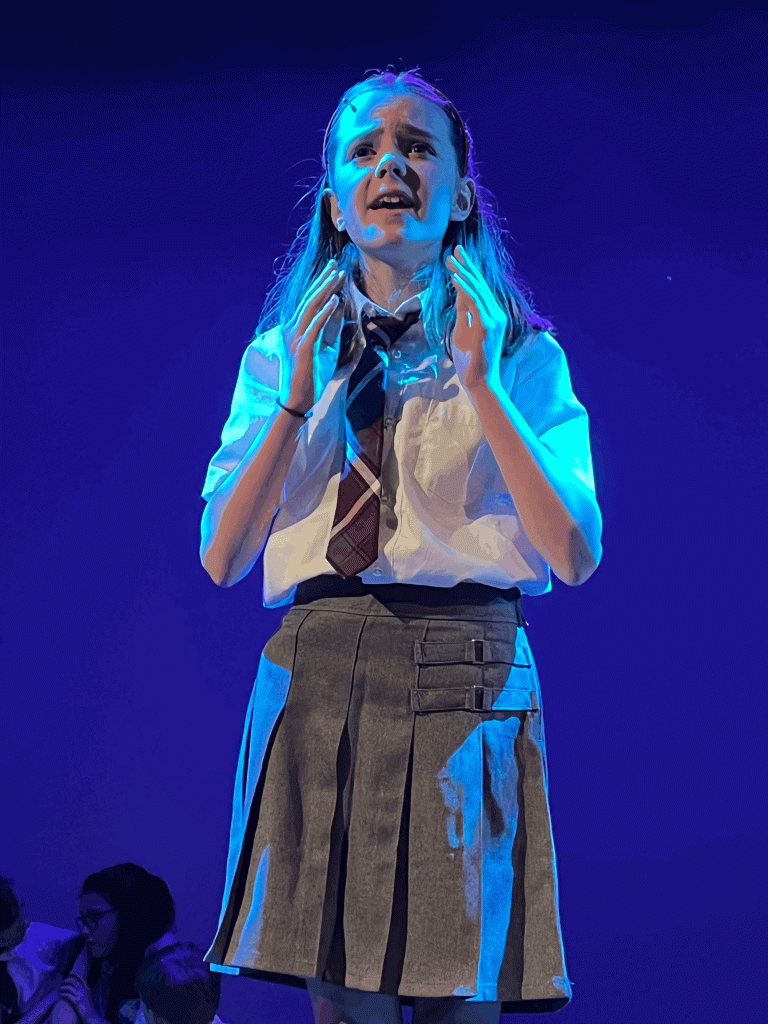
My daughter Zoe earlier this year got involved in local musical theater. She had never done a play before, and since both my wife and I have, we took the time to help her with her audition for Matilda the Musical Junior. We assisted her during the audition process. She was very expressive and energetic throughout the audition, and we were blown away when she was cast as Matilda understudy! Zoe never really needed any push from us to memorize lines, learn dance moves, and play a character, she is quite the creative spirit, but we wanted to nurture this passion she had so we took time to run lines, talk to her about acting, and invest financially and physically to make it happen. Having spent a lot of time in theater productions in my youth, I know what kind of challenging environment the theater can be. And for this I was grateful it was a 20 minute drive to and from rehearsals, plenty of time to talk to Zoe about her experiences and discuss new or interesting people or ideas she hadn’t been exposed to yet.
The Family Unit

One of the most important documents in my lifetime is The Family: A Proclamation To The World.

Unfortunately in today’s world, these ideas are often viewed as old fashioned, out dated, or irrelevent in society. I believe the family unit is more relevent now than ever before. And it’s within that family unit, children must be taught, protected, nutured, and prepared for life after childhood. We all come from different backgrounds and ideals, have different families and beliefs, and different individual experiences within those families that will heavily determine the choices we make and the path we will follow in life.

I come from a big family, I’m number 5 of 8 kids. I consider myself lucky to have a mother and father who love and care for me. I know that even now if my life got flipped turned upsidedown (🎵”I’d like to take a minute just sit right there”🎵😁) I could count on them and my siblings to be there for me and help me. I know the importance of preserving, protecting, and nurturing children within a family unit because I lived it as a child and teenager. And because I lived it and saw the value in it, I made choices in my life to do the same with my own family.
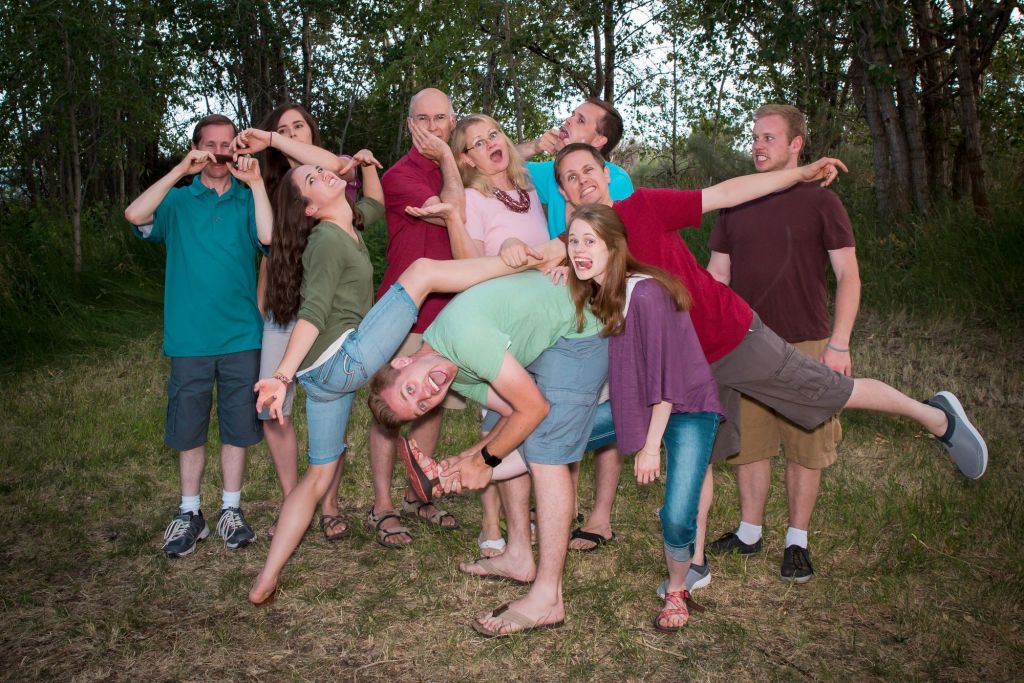
These are some of the choices I’ve made

  1. Talk to my children. When I’m home and my children are around, I try to get off my phone and go talk to them. Play with them. Be with them. All the to-do lists will get done, all the tasks will get completed. But those things are not as important as the limited time I have to spend with my children. I’m not great at this myself, but the days I do come home from work and immediately put my phone away upstairs and don’t touch it again until my alarm goes off the next morning, those are the days I hope my children remember. I hope that talking to my children will heighten my chances of them still talking to me, trusting me, and listening to me during the teenage years when friends and outside forces start pulling them in other directions. Also I hope it will open up opportunities to have conversations with my children, together as parents, that need to be had to prepare my children for adulthood. I hope we become an impactful voice to guide them to success and happiness for when they’re on their own.
  2. Listen to my children. They will tell me what’s on their mind if I will listen. When they’re little, sometimes it’s just a bunch of nonsense and gibberish, but every now and then, a gold nugget of profound importance reveals itself. Just the other night I was laying with my 7 year old son in bed at bedtime, just talking about his day, he was telling me about a bunch of random thoughts on his mind, none of which was of any real importance, but all of a sudden he asked me, “Dad, what happens when we die?” I responded, “What do you think happens when we die?” He said, “I know we go to heaven, but… is it scary?” “Is what scary?” I said. “When we die, is it scary? I’m scared to die.” We talked a little more about death and fear and happiness and love and family, and it was a great little conversation we had. And it wouldn’t have happened if I hadn’t been spending time with him, listening to him.
  3. Say no. Sometimes my children come up with some weird ideas. I have to remember I’m interacting with someone who’s brain is not fully developed and cannot make rational decisions on their own. I’m talking to people who still believe in the tooth fairy and Santa Claus (although I think Zoe has figured it out). My children may not have the ability to distinguish fantasy from reality yet. They will experiment. They’ll ask odd questions and have bad ideas. Not long ago, my son threw the cat on the trampoline and bounced it around. The poor cat was terrified and clawed it’s way to the opening in the net and scurried off traumatized. When I asked why he did that, he looked at me blankly and simply said “I don’t know!” So we had to make a rule: No Cats On The Trampoline. We try to establish rules, structure, and guidelines. Sure they’ll break them, they’ll rebel, they’ll figure out clever ways around them (I’m mainly speaking from my own experience there) but at least they’ll have that structure in place and then get to live with the consequences of making bad choices.
  4. Love- No Matter What. My daughter Zoe and I have a little phrase we say to each other every night when I go in to say goodnight. I say “I Love You- N-M-Dub,” and she repeats it back to me. N-M-Dub or N-M-W which stands for No Matter What. No matter if I got upset at her, no matter if she made a mistake, no matter if we are busy or feeling sad or had a bad day. I will always love her, all my children, No Matter What.

Jesus’ Invitation

Mathew 18:1-6

1 At the same time came the disciples unto Jesus, saying, Who is the greatest in the kingdom of heaven?
2 And Jesus called a little child unto him, and set him in the midst of them,
3 And said, Verily I say unto you, Except ye be converted, and become as little children, ye shall not enter into the kingdom of heaven.
4 Whosoever therefore shall humble himself as this little child, the same is greatest in the kingdom of heaven.
5 And whoso shall receive one such little child in my name receiveth me.
6 But whoso shall offend one of these little ones which believe in me, it were better for him that a millstone were hanged about his neck, and that he were drowned in the depth of the sea.

Children are humble. Children are charitable. Children are loving, kind, forgiving, and innocent. Jesus invites us to become like little children. Not childish, but childlike- aspiring to have attributes that children naturally possess.

If I could choose to wave a magic wand and return to childhood today, as much as I might be tempted, I wouldn’t do it. I’d rather keep those innocent childhood memories with me in my head and my heart for when I need them most. I’d rather accept Jesus’ invitation to become like a little child.

And hopefully my own children can hold on to that balloon just a little bit longer before it pops.
Don’t Quit the Piano

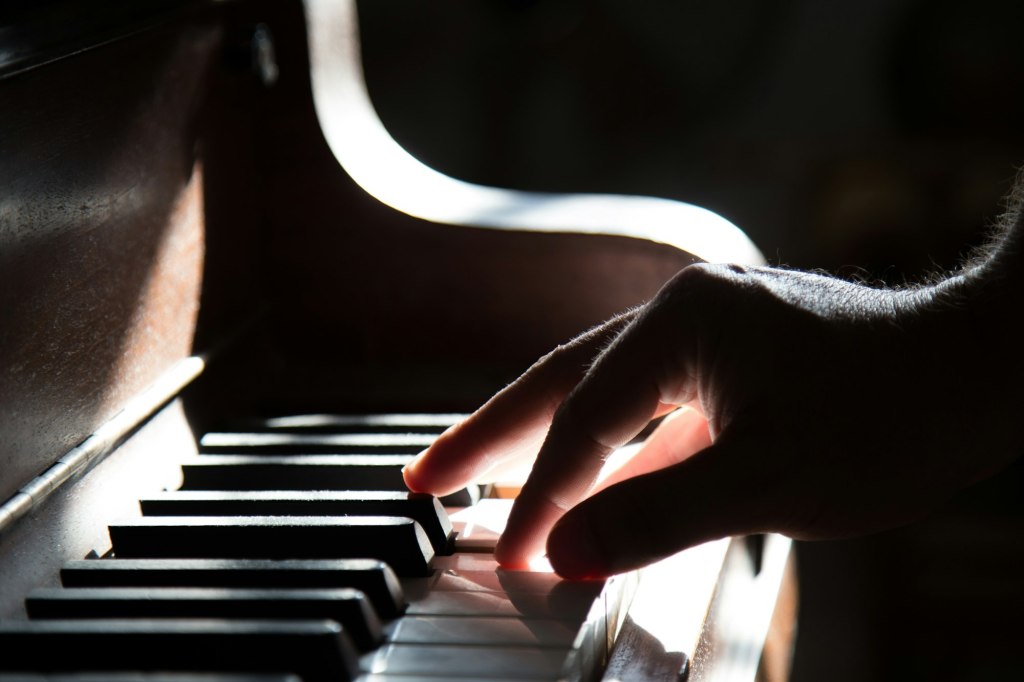
To those that have taken the time to learn and carry with them years of practicing piano… it almost feels like a superpower. A gift you’ve been given. A gift that keeps on giving. The musical version of teaching a man to fish.

Did your parents ever say “You’ll be grateful someday!” when trying to get you to do something you did not want to do?

I heard this over and over again in my youth. Particularly when it came to practicing piano.

Growing up, we had the wonderful blessing of a full grand piano in our home. We kept it tuned and clean, and with 8 kids in the family, it seemed like it was constantly being played. Everyone in my family took piano lessons. Everyone. We honestly had no choice in the matter. It was part of life.

I cycled through many different piano teachers, each of them with their own unique teaching style.

My first piano teacher was a middle aged man that would come to our house and have 30 minute lessons with each kid. My 4 older siblings would go first, and me being 5-6 years old, would go last. The entire process would take 2 1/2 hours. I was quite young, but I do remember that his teaching style was very passive. Or maybe he was just tired after 2 hours of my older siblings hammering wrong notes while the echos of other kids screaming elsewhere in the house reverberated into his brain (sometimes he would wear ear plugs… haha). He would place my music book in front of me on the piano, then sit back in a chair, his glasses poised on the end of his nose, and read a book. As I played the notes in front of me, any time I fumbled or hit a wrong note, I would hear from behind me a soft, monotone voice quietly mumble “whoops,” eyes still fixed to his book, glasses still perched on his nose. There was no movement, no further comments or words to elaborate, and I was left to figure out what I messed up on and try again. “Whoops,” again. “Whoops,” over and over as I stumbled through my music. He was a professional pianist himself and I’m sure a wonderful teacher, but at the time I did not think so.

My family later moved to Alaska and I filtered through several piano teachers over the years. As good as the teachers were, and as much as I enjoyed goofing off on the piano with my siblings at home, and especially as I got to my pre-teen years, I absolutely HATED piano lessons. I dreaded going. I hated learning technique and music theory. I hated the feeling of knowing I hadn’t practiced what I was supposed to last week, and I had to pretend or lie that I had. I’m sure they just rolled their eyes while I unconvincingly professed my diligence in practicing the correct fingering and dynamics of my assigned songs.

I wanted to quit.

Quitting piano in my family was not an option. “Stick to it,” my parents would say. “You’ll be grateful someday!”

“No I won’t!” I would respond. “I hate piano!” This was an obvious lie as I very much enjoyed playing piano. I just didn’t like LESSONS!

One piano teacher I had got so fed up with me not practicing, she refused to teach me anymore. She told my mom that every week I would show up to play the same assigned songs and make the same mistakes and concluded I was obviously not practicing. Now my parents were very diligent in making sure their children accomplished all of their tasks on a daily basis: chores, dishes, homework, making our bed, and of course, 30 minutes of practicing piano. Each kid. Each day. Like I said, the piano was constantly being played in our home. So when this particular piano teacher kept explaining to my parents that I obviously wasn’t practicing, after further investigation they learned that the mere sound of piano in the background at home didn’t necessarily mean I was practicing the assigned music given to me. They learned I was spending most of my piano practice time making up tunes and playing songs I liked by ear. Things didn’t improve and she refused to teach me anymore. And I don’t blame her, I was not a good student.

However, I remember towards the beginning of my senior year having an “Aha!” moment. By this time, despite my best efforts, I had become fairly accomplished on the piano. Not just in the assigned music I was forced to memorize in my lessons, but also at my ability to sight read, play songs by ear, and make up songs on the spot. One day at school I was sitting at the piano in the choir room during lunchtime playing around on the piano. At one point I looked up and there were about 10 girls gathered around me, listening, smiling, and singing along to whatever I was playing. In my teenage girl-driven brain, I very much liked this situation. What I probably lacked in looks and charm with the ladies, I seemed to be making up for in musical abilities.

Abilities that would not be there without more than a decade of dreaded, awful, annoying, frustrating… wonderful piano lessons.

I found myself saying in my mind “thank you mom and dad!”

I hated to admit it, but turns out they were right. I WAS grateful for piano lessons. All the googley eyes that surrounded me in that choir room were proof of that!

I still managed to get out of piano lessons when my parents decided that the only way I could quit lessons was to teach piano to others. I happily did. I had 3-4 beginning students who would come over to our house and I’d “teach” them (I had no idea what I was doing). But it got me out of having to go to lessons myself, so I was perfectly happy with this arrangement (And I didn’t mind the money!)

I don’t consider myself an accomplished piano teacher, but I have taught several times, mostly to kids. It’s interesting being on the other side of the piano, per se. The frustration of teaching kids that don’t want to be there, or don’t practice and as a result, don’t improve. Who’dathunk. I knew some of these kids were begging their parents to quit. Of course, I could relate. Some of the parents did let their kids quit.

Every person I’ve ever met that quit piano lessons as a kid regrets it. Without question. They wish they’d have stuck it out. They wish their parents had pushed them a little harder, maybe forced them a little longer. They look back at the piano as a valuable skill they could have learned and used throughout their life. But they didn’t. And picking it up again as an adult just isn’t the same. Not to discourage anyone from doing that, but it’s much easier to learn piano as a kid (and it’s free!).

Someone recently posted this, and I really liked it:

“Music is science.
Music is mathematical.
Music is foreign language.
Music is history.
Music is physical education.
Music develops insight and demands research.
Music is all these things, but most of all, music is art.
That is why we teach music. Not because we expect you to major in music. Not because we expect you to play or sing all your life. But so you will be human. So you will recognize beauty. So you will be closer to an infinite beyond this world. So you will have something to cling to. So you will have more love, more compassion, more gentleness, more good. In short, more LIFE.”

And in my opinion, the quickest and best way to experience music is through the piano. Not just to listen and have a love for music, but to know and understand how that music came to be. The piano is the foundation for all things musical. If you can play the piano, you can pick up any instrument and learn it. You can learn to sing. You can learn rhythm. You can gain a greater appreciation for music.

And eventually you can create. You can make up something that’s never existed before. There are 88 keys on the piano and infinite ways to play them. Infinite rhythms, notes, tempos, chords, combinations and melodies to compose. The piano is an extension of feelings. Like a dancer expressing outwardly what they feel inwardly with movement, the piano expresses innermost feelings and thoughts outwardly through the fingers to the ivory keys banging hammers on strings. The result is original, powerful, authentic music, that can be shared, felt, and connected with anyone who listens. You can’t listen to someone play the piano and NOT feel something.

I remember those girls surrounding me at the piano in the choir room asking me afterwards how I was able to play by ear, or make up songs on the spot like that. I had a hard time explaining because for me it was simple. Just variations of basic I, IV and V7 chords that almost every song is structured around, and throwing in improve notes in the scales of the key signature. It honestly wasn’t a big deal, and trust me, I’m no piano prodigy here (for that, you’d have to look to my brother Jarom, one of those weirdos that loved piano lessons…).

To the untrained eye, the piano must look so strange. Like a foreign object. Like when I look at computer code (even after one semester of learning Java in college). Or anyone looking at or listening to any foreign language. Just complete gibberish.

But of course to those that have taken the time to learn and carry with them years of practicing piano, by choice or by force, it almost feels like a superpower. A gift you’ve been given. A gift that keeps on giving. The musical version of teaching a man to fish.

If you’re a kid in piano lessons, keep it up. I know it sucks. Scales and chords and theory… bleh. But it’s worth it. If you’re a parent with a kid taking lessons, don’t let them quit. It’s worth it. They will tell you when they’re older how grateful they are you kept them in piano lessons. I promise you.

In my adult years I’ve always strived to have a piano in our home. Not a grand piano (I wish!) but something I can play and my own kids can practice on. I didn’t turn into a professional pianist or singer or musician. But I have the foundation of piano underneath me, and with a piano in our home, I’ve been able to play, compose, write, perform, make videos, play with my kids, make up silly songs with them, and enjoy the substantial blessings that a piano brings into the home.

There’s something about playing the piano quietly, especially at night once the kids are in bed, that sooths the soul, warms the home, and heals the stress and axiety of the day.

Imagine if everyone played the piano. If everyone could end their day that way. It might not result in significant life changes, but it would bring more peace to a world that desperately needs it.

And to my parents, I’ve said it before and I’ll say it again:

I’m grateful I leaned the piano.

Swimming In A Straight Line

Swimming in a straight line is easy when we’re just practicing in the pool. But when race day comes and that line is gone, we may have to stop and adjust every now and then to make sure we’re still on course.

Last week I participated in my first ever Olympic triathlon in Lake Stevens, Washington. Swimming. Biking. Running.

I’ve always enjoyed running, I had that down. And ever since I got a road bike 6 years ago I’ve loved biking, check that off as well.

As for swimming, well… I learned to swim in my youth and I’ve got the Boy Scout swimming merit badge to prove it! But by far this needed the most work. It actually seems to be the main reason people don’t do triathlons. Nearly every person I discussed my triathlon goals with gave me almost the exact same response:

“I’d love to do a triathlon someday! But I don’t feel I could do the swim portion.”

So I started swimming. I joined the local YMCA and I started going back and forth in the pool. Or at least I tried. No goggles. Normal baggy swim trunks. No idea what I was doing. But hey, “I’m young,” I thought to myself, “if these old people in the lanes all around me can go back and forth for 45 minutes without stopping to rest, I’m sure I can!”

Nope.

After 2 or 3 laps I was exhausted! I couldn’t believe it! I thought I was in shape! I ran every other day! I had just completed a Ragnar race! I rode my bike 20+ miles every weekend! How are these old people doing this?

I’ll tell you.

One: They’ve been doing it for 50 years.

Two: They have that old person super strength ignited by a life of healthy choices and enduring time spent with their great-great-grandchildren.

And three: They’ve decided that even though they’re retired and haven’t worked in 20 years, and could easily sleep in as long as they’d like and go swimming some time during the day when young fathers like myself are working, they’d rather wake up at 4am, huddle outside the front doors of the YMCA with their walker posse at 4:30am, burrow through the doors like it’s Black Friday when they open at 5am and with quantum inter-dimensional lightning speed be in the pool at 5:01am taking up all the lanes before young fathers like me, who have a job to get to by 7am, have a chance to barely emerge from the locker room, get tired of waiting for an open lane, and eventually end up just sitting in the hot tub for 20 minutes before giving up, showering, and heading to work.


Regardless… I decided to look up a few freestyle swimming videos. I got the proper apparel (goggles, proper swim suit, swim cap) and practiced how to breathe properly. I’m no expert, but over the course of the next few weeks, I figured out how to rotate my head left to right, breathing out while my head was under water, and breathing in quickly when I turned my head side to side every 3rd stroke.

For anyone looking for swimming tips, you’ve come to the right place 🙂

Re-learning to swim in a pool was challenging but fun! My endurance picked up and I found myself swimming for 15-30 minutes without stopping to rest. I even got to the point where I could dive down, flip around, and push myself off the wall instead of stopping every lap, touching the side, and turning around! Though I was far from it, I felt like a pro.

For anyone who has swam in an indoor public pool, you’re likely familiar with the painted line down the middle of the lanes on the bottom of the pool. When there is more than 1 swimmer in a lane, this line serves as the dividing line for the 2 or more swimmers so we don’t run into each other. However when you do manage to get a lane to yourself, the painted line is a wonderful guide for keeping you swimming in a straight line. Since your head is underwater looking down most of the swim, you just can’t go wrong. There is no veering to the left or right unnecessarily. No wasted energy. It’s all very efficient and helpful. It’s so innate that you actually don’t even think about it.

Unfortunately, they generally don’t hold triathlons in pools. Most are open water swims. At my Lake Stevens triathlon, they placed 3 large orange buoys out in the lake in the shape of a triangle, and the .93 mile swim required us to swim counterclockwise around these buoys twice. No problem. I’ve swam the distance in the pool, I can do it in a lake, right?

I’ve heard it said that a good training for a triathlon swim is to swim and have people beat you with boat paddles as you go.

Spot on.

The first few minutes are chaos. All you can think about is not kicking someone in the face or getting kicked in the face. Or the arms. Legs. Sides. This hoard of swimmers in close proximity creates a bit of a fiasco, with a lot of stops and adjustments. At least that’s how it was for me. Again, I’m no pro 🙂

Once the crowd thinned out a bit, and I could actually take a few strokes without getting kicked, I realized something very obvious that I should have thought about before.

There is no straight painted line.

Regardless, I swam confidently, assuming I was swimming straight towards the first orange buoy. But after a minute or so when I stopped to confirm where I was, I was way off course. Almost by a 90 degree angle veering away from the buoy. Wow.

Ok, adjust, and keep going. A minute later, same thing.

Every few minutes I found myself checking and adjusting. Checking and adjusting. It started to get frustrating. I was really missing that painted straight line. I hadn’t realized how sideways my swimming was without that constant guide and reminder. The buoys were large and bright orange, quite easy to see from a distance even with foggy goggles on, but when my head was down and I wasn’t looking at it, it was all too easy to get off course.

My mom taught me an old farming trick when I would mow the lawn as a teenager. She grew up on a farm, so she would know (and she’s mom, so she was always right!). She said that when farmers would plow their first row of a field, they would pick a spot straight ahead, and with eyes constantly focused on that one spot, move forward. As long as the eyes remained on that spot, the end result would be a straight line, and every row after that would follow suit. This proved to be true with mowing the lawn as well, something I’ve put into practice over the years and taught my own kids when engaging in the joys of lawn mowing.

I thought of this after I completed one triangle lap. How can I swim in a straight line without that constant guide to help me?

At this point everyone was so spread out, I almost felt like I was swimming alone. I squared my body to the next buoy and started on the 2nd lap. But with my head facing down, the lawn mower analogy doesn’t work because it’s impossible to keep my eyes focused straight ahead on the buoy when you’re swimming! Instead I just pictured it in my mind, and as I swam I lengthened my reach towards it with each stroke. I only stopped twice to make sure I was on course (I had veered slightly, but not by much) before I reached the buoy. I rounded it and continued this until the next one and the final one before I headed to the beach.

As I hopped on my bike and began the 2nd leg of the event, I thought about the swim. I checked my watched which had timed and mapped my swim. Apparently I’d swam just a little over a mile, instead of just the .93 required. Oops. And the lack of people remaining behind me was a good indication of how I faired against the other probably more experienced athletes. If only I hadn’t had to stop so much and correct my positioning, perhaps I would have finished quicker.

If only I’d had that straight painted line to follow.

Swimming in a straight line is easy when we’re just practicing in the pool. But when race day comes and that line is gone, we may have to stop and adjust every now and then to make sure we’re still on course.

How well we visualize our goal, or how far we lengthen our reach, may help for a little while. But for me, especially as a husband and a father, having to stop and re-position myself is almost a daily task. The orange buoys in my life, my wife and my children, as well as my beliefs and my values, keep me focused on my goal. Even though most days I feel like my head is face down in the waters of work, schedules, kid activities, car troubles, toilet cleaning and weed whacking, I try to take a moment, usually as I’m putting the kids to bed and say good night to them one by one, or saying my prayers, or writing, to re-calibrate myself. Re-focus my aim. Square my shoulders, take a deep breath, and dive back in.

If I’m lucky, I’ll still be working on swimming in a straight line until I’m the old person in the pool. Future young fathers beware.

A Father’s Love

Embracing softly with a squeeze, The silence of the moment speaks: “Dear child, don’t you know that I, Will never leave your gentle side?”

A fathers love is strong and firm,
The fusing bond outlasts it’s term,
There is no pain, there is no hurt,
Forgiving arms cannot assert,

Forgiveness learned from innocence,
Bestowed by young of insolence,
And in that moment sting is gone,
Like magic, disappeared, forlorn,

With quickness as a thought or breath,
There enters in a swelling depth,
It fills within the cavities,
Extends beyond extremities,

It pulses, pushing through thin air,
Magnetic forces drawing near,
Connecting to a child’s soul,
A heart that’s pure as precious gold,

Embracing softly with a squeeze,
The silence of the moment speaks:
“Dear child, don’t you know that I,
Will never leave your gentle side?

For all your needs I will provide,
I will protect, I will reside,
That if it came to you or I,
That in a heart beat I would die?

My life for you I’d freely give,
No hesitation that you live,
But live for you, now that attains,
A worthy, more important gain,

I’ll listen softly every day,
No matter what your troubles sway,
I’ll clutch the burdens that you bear,
I’ll even grasp if I’m not there,”

But live or die, the task at hand,
Of being Father rightly stands,
An honor and a blessing for,
My quiet inundated soul,

And as I kiss your head goodnight,
I leave the room, turn out the light,
I think of my Father Divine,
The One who gave to all mankind,

The God of Heaven and of Earth,
Who knew me since before my birth,
Do all these feelings I assess,
Profoundly kept within my chest,

Align with how my Father feels?
Is He attentive when I kneel?
Is He desirous, just as I,
To be enthused when at my side?

To watch with pride and joyful heart,
When I accomplish? Learn? Impart?
To mourn with me when I’m in pain,
Forgiveness bursting through His veins?

Perhaps the next time I forget,
And feel alone, filled with regret,
That there’s a Father’s love, like mine,
A love no less than His divine,

Just waiting to be thus unleashed!
It fiercely flows to never cease!
Until the next time I fall through,
Just like, indeed, my children do.

The Fight

Compromising values for friendship puts you in compromising positions. Quite literally in some cases.

Have you ever been in a fight?

I have.

I was young. 12 years old. But I’ll never forget it. I had never been in a fight before and didn’t know what to do.

Now I was raised by good parents who taught me to be kind to others. I considered myself a pretty good kid. However towards my middle school years, I found myself running with a “bad crowd.” They were a group of my friends from elementary school, most of whom lived in my neighborhood and got on and off the bus with me daily. So naturally, throughout my elementary school years, we all became friends.

The gods of popularity must have deemed us worthy because as we got to 6th grade (last year of elementary school for me) at Ravenwood Elementary, we were kings. We rode in the back of the bus. We played football at recess. We started experimenting with crude jokes and inappropriate language. It felt good to be included. I liked my friends.

There were other kids in my neighborhood that also got on and off the bus, however they were not deemed worthy. They were labeled as nerds. Losers. Kids to be mocked and made fun of. I’m not even sure why or who decided this, but I do know that I carelessly laughed along as my popular friends continued to belittle them.

Once we entered 7th grade, we were no longer on top. But we were in middle school now. Lockers. Different teachers. Different environment. I still ate lunch with my popular friends. I still rode the same bus to and from school with the same people. Soon laughing, teasing, and mocking weren’t enough for the unfortunate “nerds” that rode the bus with us. I’m not sure how it started, and it seems so ridiculous when I think back on it, but for whatever reason, after we all got off the bus and it pulled away, me and my popular friends would start chasing the “nerdy” kids around the neighborhood.

There was one kid in particular, I’ll call him Ben (not his real name), that for whatever reason it became my duty to chase him. Maybe it was because he lived closer to me, I’m not quite sure how the decision was made, but I was complicit in this now daily task of chasing Ben around the neighborhood after the bus dropped us off. I never actually caught him. Eventually he would end up home, and then I would walk home, and that was that. My 12 year old brain didn’t think much of it. This went on for some time.

And then one day, as I was fulfilling my daily duty of chasing Ben around the neighborhood after the bus dropped us off, all of a sudden he stopped, turned around, and faced me. I froze, genuinely surprised to see tears in his eyes, looking at me with intense anger and hatred. No one had ever looked at me like that before. He put up his fists in front of his face and screamed at me that he was sick of this, he didn’t want to take it anymore and wanted to fight me. I wasn’t quite sure how to respond. I was shocked! I had no idea he was feeling this way. I looked around to see if any of my friends were in the vicinity watching, but realized we were alone in the woods, not too far from our houses. Despite my stunned surprise, I snarked some cool remark back to him, welcoming the fight, and raised my own fists. We both threw a few lame punches, nothing connecting, nor was there any injury. Ben then took off to his home. I watched him go and didn’t pursue.

I stood there for a moment, re-capping what had just happened in my head. I was alone in the woods, nobody to chase, nobody to be cool in front of. It was just me. Guilt and shame started to sweep in. Everything I had always been taught about being kind to others began to overcome me. What had I done? Why hadn’t I realized that Ben was feeling so hurt by my actions? What could have driven me to behave in such a way towards someone else? I felt absolutely miserable. I felt the need to apologize immediately, I did not want to carry this with me. Maybe if I stopped by to say I’m sorry it would help. The truth was, I didn’t have anything against Ben. I liked him. I played with him on multiple occasions when I was younger. But because popularity was bestowed upon me and not him, the result was unnecessary violent actions that I knew I did not want to participate in.

I wish I could say that I went to Ben’s house, knocked on the door, apologized, he returned the apology and we became friends from then on.

But that’s not what happened.

I did go knock on his door. I saw his tear-filled face in the window, then he disappeared. I waited a minute or so and knocked again. Another minute passed by. Then Ben emerged from his front door…

Carrying with him an axe.

I was terrified. His face was flush with tears, his anger intensified, and he began screaming at me to get the $@%& out of there. A simple apology was not going to solve this. He wanted nothing to do with me. I had caused him so much pain that he was ready to return that pain with a weapon. I tried to yell at him to calm down and I was just coming by to say sorry, but he could have cared less. He swung the axe at my leg.

Lucky for me, the back side of the axe.

I collapsed to the ground. It hurt. Now I was the one screaming in pain and swearing profanities. He continued to scream as well, turned around, went inside, and slammed the door. I’m not sure how long I sat there on the ground clutching my left leg and sobbing, but eventually I picked myself up and limped home.

I lacked the creativity and energy to come up with a lie to my mom when I hobbled through the door, so the truth spilled out of my reluctant cries. Not long after I ended up at Ben’s house with my parents and his parents. I don’t remember much what was said, but I do remember how I felt.

I never wanted to feel this way again. I never wanted to be in this situation again. Even though Ben nearly chopped my leg off with an axe, I realized the internal emotional pain I had caused him for so long was much more than the physical pain he reciprocated to me.

And with time, I was grateful. It was a wake up call for me. 7th grade was the year I voluntarily left my popular group of friends.

The group of friends that I ended up gravitating to during middle school was my church friends. Jared. Carter. Mason. Shelby. Jessica. Karlee. These were people that until this time I had been casual friends with from church activities and such, but soon they would become my best friends (and some college roommates).

My 7th grade popular friends, realizing I’d made the grave mistake of choosing not to hang out with them anymore, quickly resorted to mocking, teasing, and making fun of me. I learned a lot about friendship when I was 12.

A few years later my family moved away, but then happened to moved back and my senior year of high school was spent among many of these childhood friends. At some point during my senior year, Ben and I were able to talk about that fight. I don’t remember exactly what we said, so many years had passed that we probably just laughed a little as we discussed the unpleasant memory. We never became good friends, we graduated, he went his way and I went mine. But with years of maturity and perspective now, I wish I would have told him thank you. He may have saved me from a path I didn’t realize I was on. If Ben hadn’t responded the way he did to my bullying, and given me the axe chop of a wake up call I needed, maybe things would have turned out differently for me. I’ll never really know.

My senior year in high school, my friend Tracy taught me that “friends are people who make it easier to live the gospel of Jesus Christ” (Robert D. Hales). I learned I didn’t have to choose between making a friend or living gospel principles. Compromising values for friendship puts you in compromising positions. Quite literally in some cases.

Since my 7th grade fight, I’ve never been in another physical fight. I feel lucky for that. Lucky to have had that experience at a young age. Lucky to have had a great group of church friends to take me in. Lucky it was the back of the axe. But most of all, lucky to have learned what friendship is and what it isn’t. I didn’t struggle much with friendship after that. Not to say I always had great friends, but that friends came and went, and as my family moved a few more times, I learned not to care too much what others thought about me. I didn’t need to do things I didn’t really want to do just to have a certain group of friends. As long as I tried to treat others with kindness and love, the right friends would be there for me, and me for them.